Arachne Variable Line Width Complete Guide: Settings, Classic Comparison, and Practical Examples for OrcaSlicer and PrusaSlicer
swiftwand swiftwand.ai
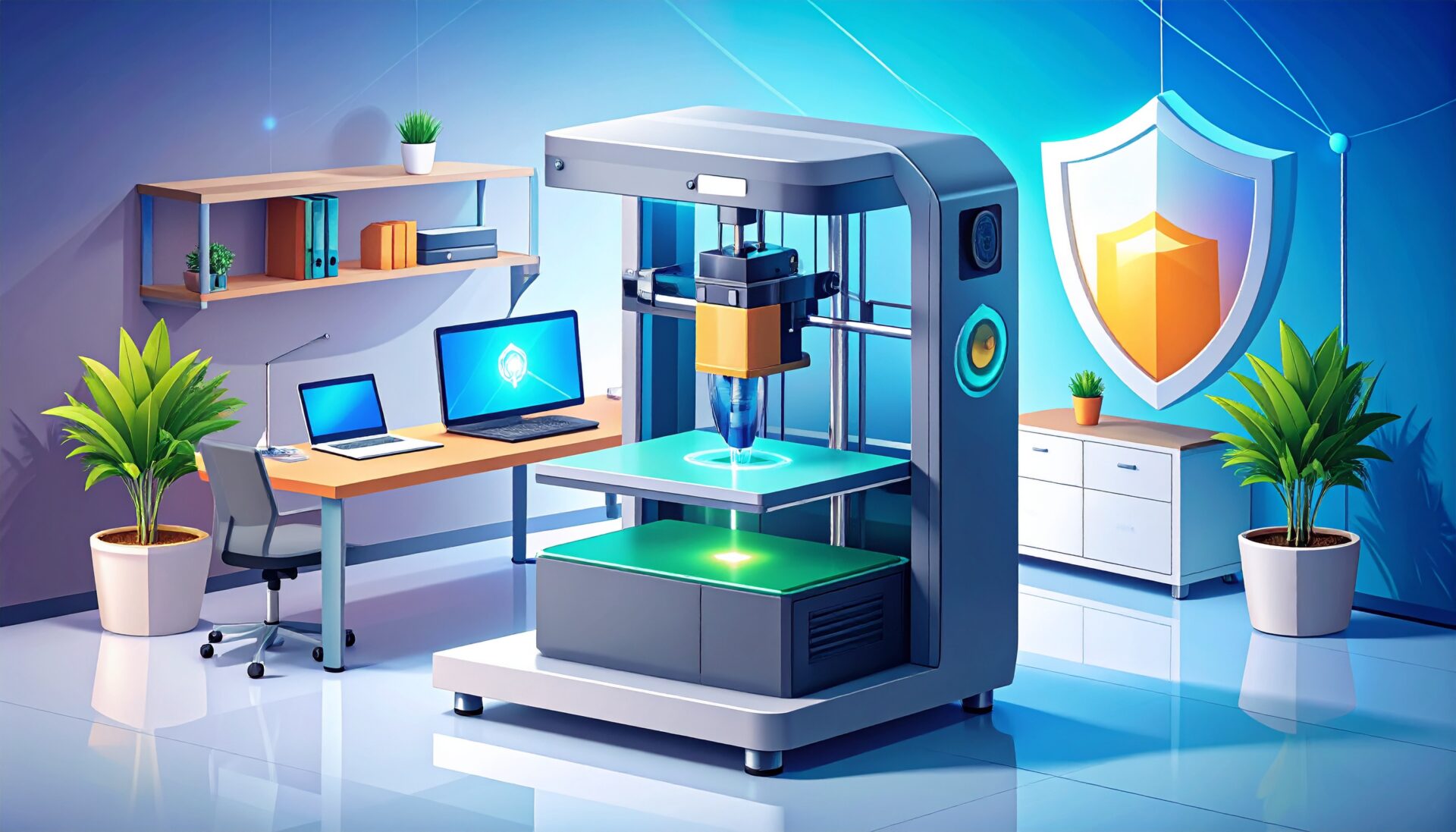
The Bambu Lab X1E isn’t just another desktop 3D printer — it’s a serious production tool designed for manufacturing environments. While most 3D printers target hobbyists and prototyping, the X1E was built from the ground up for enterprise and factory use, with features like an enclosed chamber, industrial-grade materials support, and network security that traditional consumer printers simply can’t match.
In this article, we explore why manufacturing companies are increasingly adopting the Bambu Lab X1E, what makes it different from consumer-grade printers, and how it addresses critical concerns around security, material compatibility, and production reliability.
The Bambu Lab X1E is an enterprise-focused CoreXY 3D printer released in 2024. It builds on the foundation of the popular X1-Carbon but adds several critical features for professional and industrial environments:
One of the most overlooked aspects of deploying 3D printers in manufacturing is network security. Most consumer and prosumer 3D printers require cloud connectivity to function — they send print data to external servers, require user accounts, and often have limited control over data flow.
For manufacturing companies, this creates serious security concerns:
The Bambu Lab X1E was specifically designed with enterprise IT requirements in mind:
The real advantage of the X1E for manufacturing is its ability to reliably print engineering-grade materials that consumer printers struggle with. The active chamber heating is the key differentiator here.
| Material | Key Properties | Common Applications |
|---|---|---|
| PA6-CF (Nylon Carbon Fiber) | High strength, stiffness, heat resistance | Jigs, fixtures, structural parts |
| PC (Polycarbonate) | Impact resistance, optical clarity, heat resistance | Protective covers, housings, lenses |
| ABS | Good balance of strength and flexibility | Functional prototypes, enclosures |
| ASA | UV resistance, weather resistance | Outdoor parts, automotive components |
| PA12-CF | Chemical resistance, low moisture absorption | End-use parts, chemical environments |
| PPA-CF (High-temp Nylon) | Extreme heat resistance (up to 170°C HDT) | Under-hood automotive, high-temp tooling |
| TPU | Flexibility, impact absorption | Gaskets, seals, vibration dampeners |
Engineering plastics like Nylon, PC, and ABS are prone to warping, cracking, and delamination when printed in an uncontrolled environment. The rapid cooling of deposited layers creates internal stresses that cause parts to warp or crack — especially on larger prints.
The X1E’s active chamber heating maintains a consistent ambient temperature around the part during printing. This dramatically reduces:
Perhaps the most common enterprise application. Manufacturing lines need custom jigs, fixtures, and assembly aids that are specific to each product. Traditional manufacturing (CNC machining, injection molding) of these tools is expensive and slow. With the X1E, a factory can design and print a custom fixture in hours rather than weeks, using PA6-CF or PC for the required strength and durability.
For production runs under 500-1000 units, 3D printing can be more cost-effective than injection molding (which requires expensive tooling). The X1E’s material compatibility means these parts can meet real-world performance requirements — not just serve as visual prototypes.
Testing a prototype made from PLA tells you very little about how the final part (made from PA or PC) will perform. The X1E allows engineers to prototype in the actual production material, giving meaningful mechanical and thermal test results before committing to mass production tooling.
Manufacturing facilities with aging equipment often struggle with obsolete spare parts. Rather than maintaining expensive parts inventories or waiting weeks for custom machined replacements, the X1E enables on-demand production of replacement parts in engineering-grade materials.
How does the X1E compare to dedicated industrial 3D printers from companies like Stratasys, Markforged, or Ultimaker?
| Feature | Bambu Lab X1E | Industrial FDM Printers |
|---|---|---|
| Price | ~$2,500 | $15,000–$100,000+ |
| Build Volume | 256 x 256 x 256mm | Varies (often larger) |
| Chamber Heating | Up to 60°C (active) | Up to 70–120°C |
| Material Range | Excellent (PA, PC, ABS, CF composites) | Excellent to Specialized |
| Print Speed | Very fast (CoreXY, up to 500mm/s) | Moderate (typically 50–150mm/s) |
| Multi-material | Yes (AMS, 4 materials) | Limited (usually dual) |
| Network Security | LAN-only mode available | Varies by vendor |
| Service/Support | Community + Bambu support | Dedicated enterprise support |
| Certification | CE, FCC | Often UL, CE, additional certs |
The X1E’s main advantage is its price-to-performance ratio. At roughly $2,500, you can deploy multiple X1E units for the cost of a single industrial printer. This distributed approach offers redundancy (if one printer goes down, production continues on others) and flexibility (each printer can run different parts simultaneously).
When printing ABS, ASA, and other materials that emit VOCs and ultrafine particles, proper ventilation is critical — especially in enclosed factory environments. The X1E includes built-in HEPA and activated carbon filtration, but for continuous production, additional measures are recommended:
The X1E is impressive for its price point, but it’s important to understand its limitations in an enterprise context:
The Bambu Lab X1E represents a paradigm shift in accessible manufacturing-grade 3D printing. It doesn’t replace dedicated industrial systems for high-volume or exotic-material applications, but it fills a critical gap: affordable, reliable, secure 3D printing for everyday manufacturing needs.
For factories looking to start or expand their 3D printing capabilities — especially for jigs, fixtures, prototyping, and low-volume production — the X1E offers an unbeatable combination of material versatility, print quality, speed, and enterprise-ready security at a fraction of the cost of traditional industrial solutions.
The question isn’t whether manufacturing companies will adopt desktop 3D printing — it’s how quickly. And the X1E is making that transition easier than ever.
さらに詳しい情報はAll3DPでご覧いただけます。