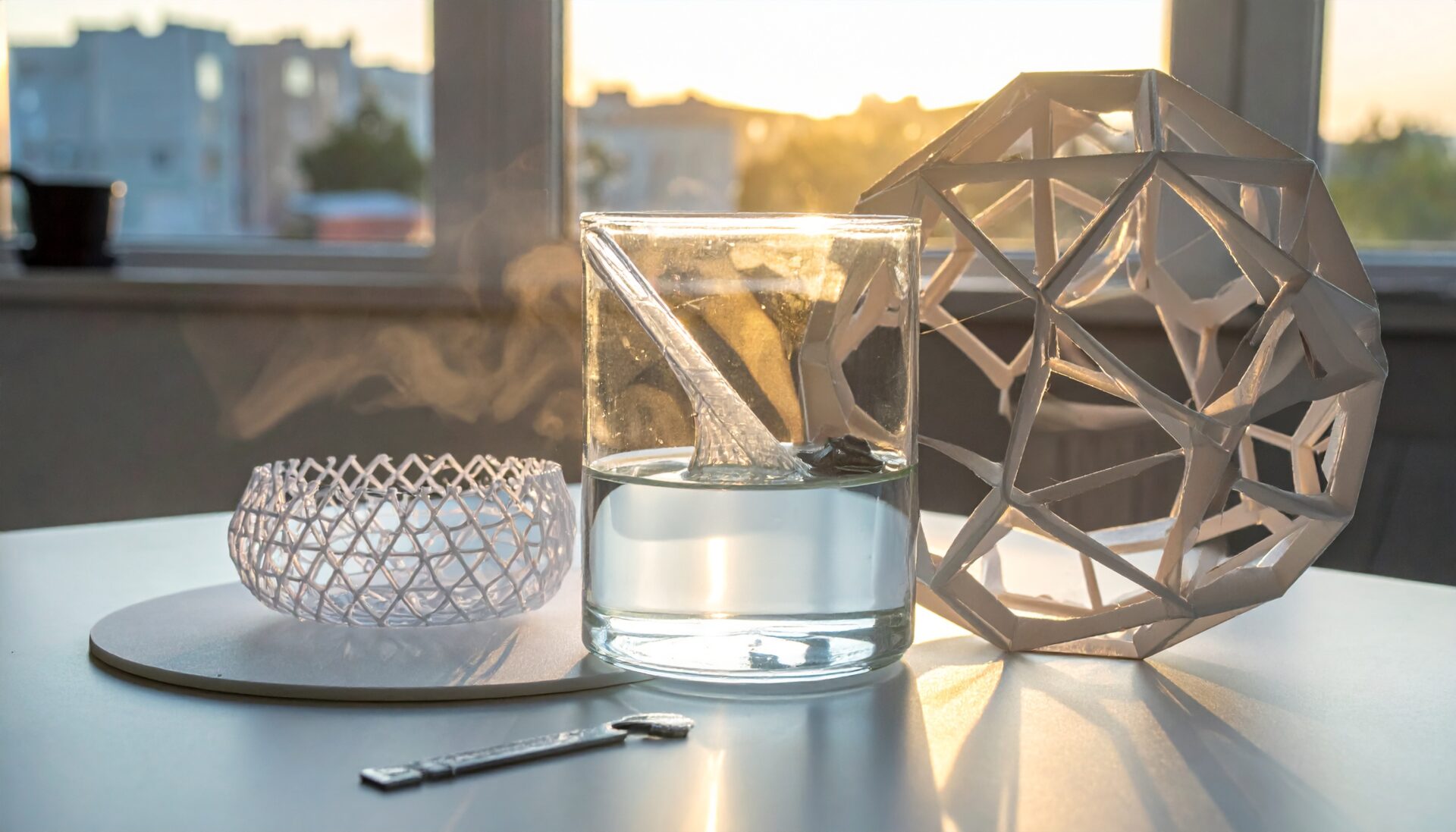
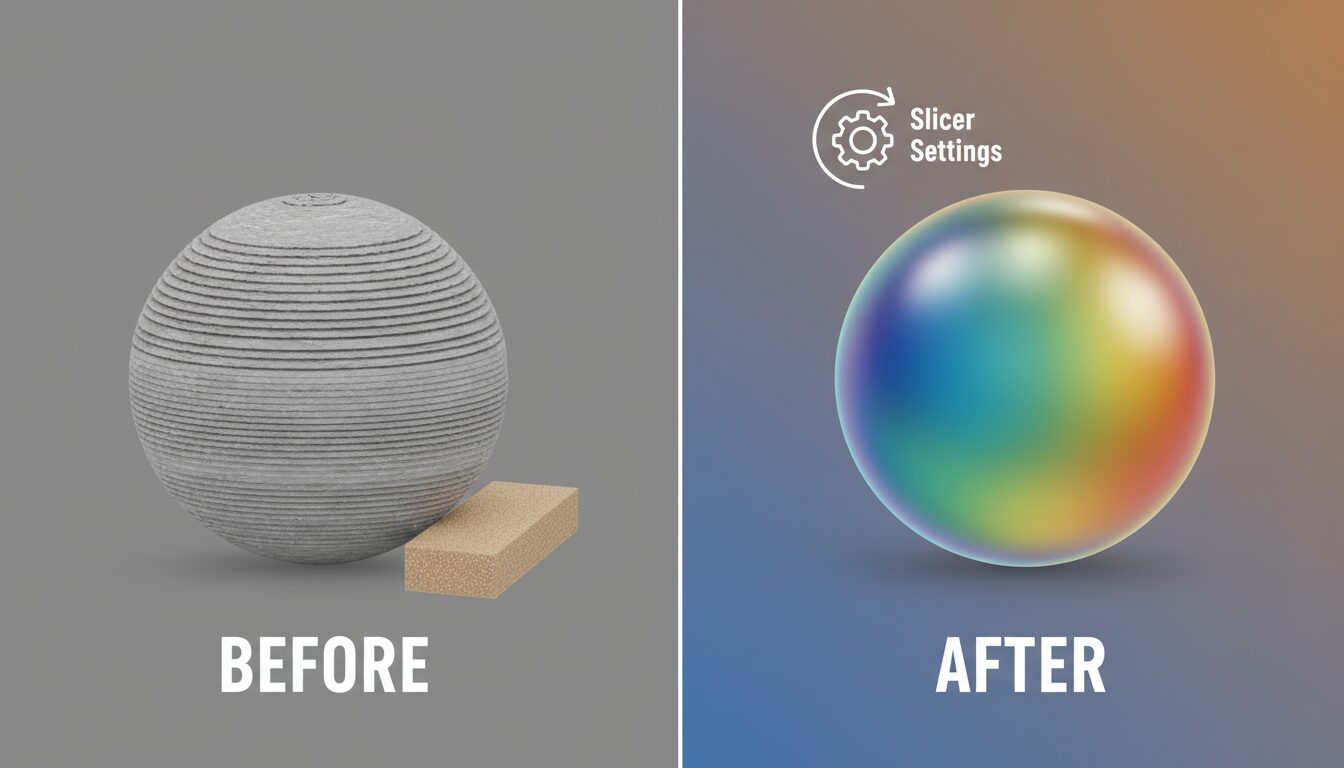
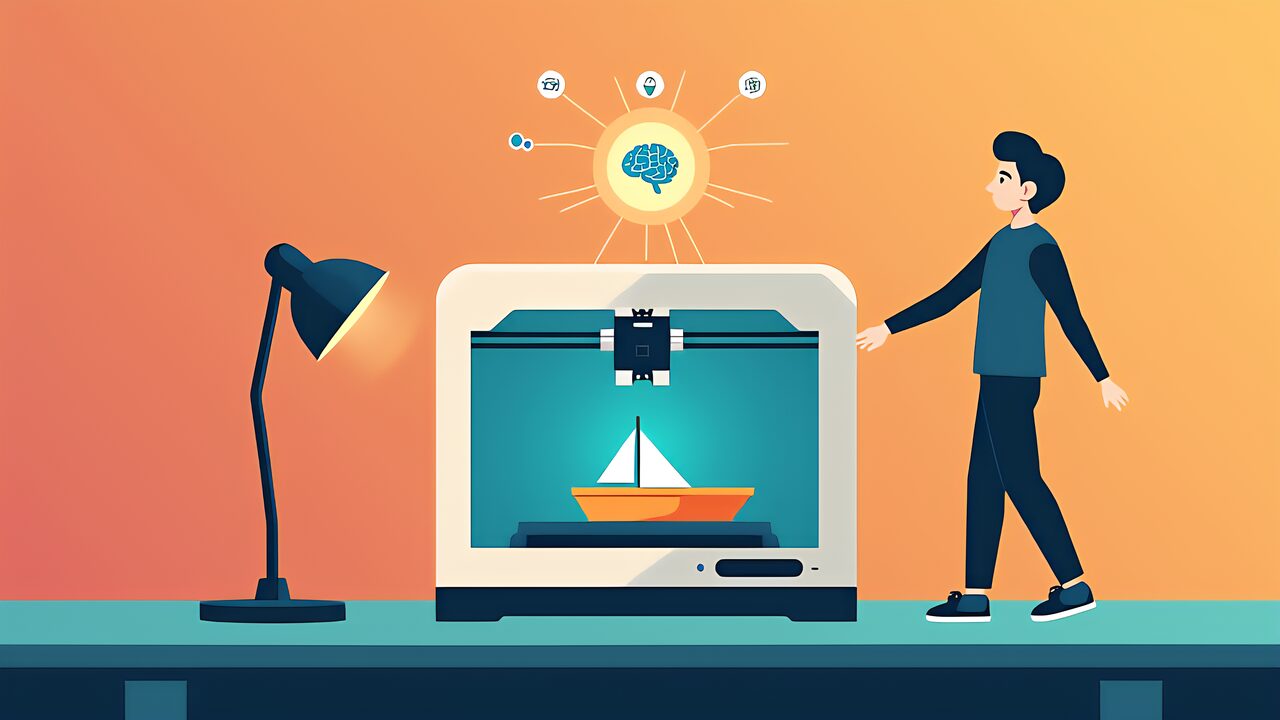
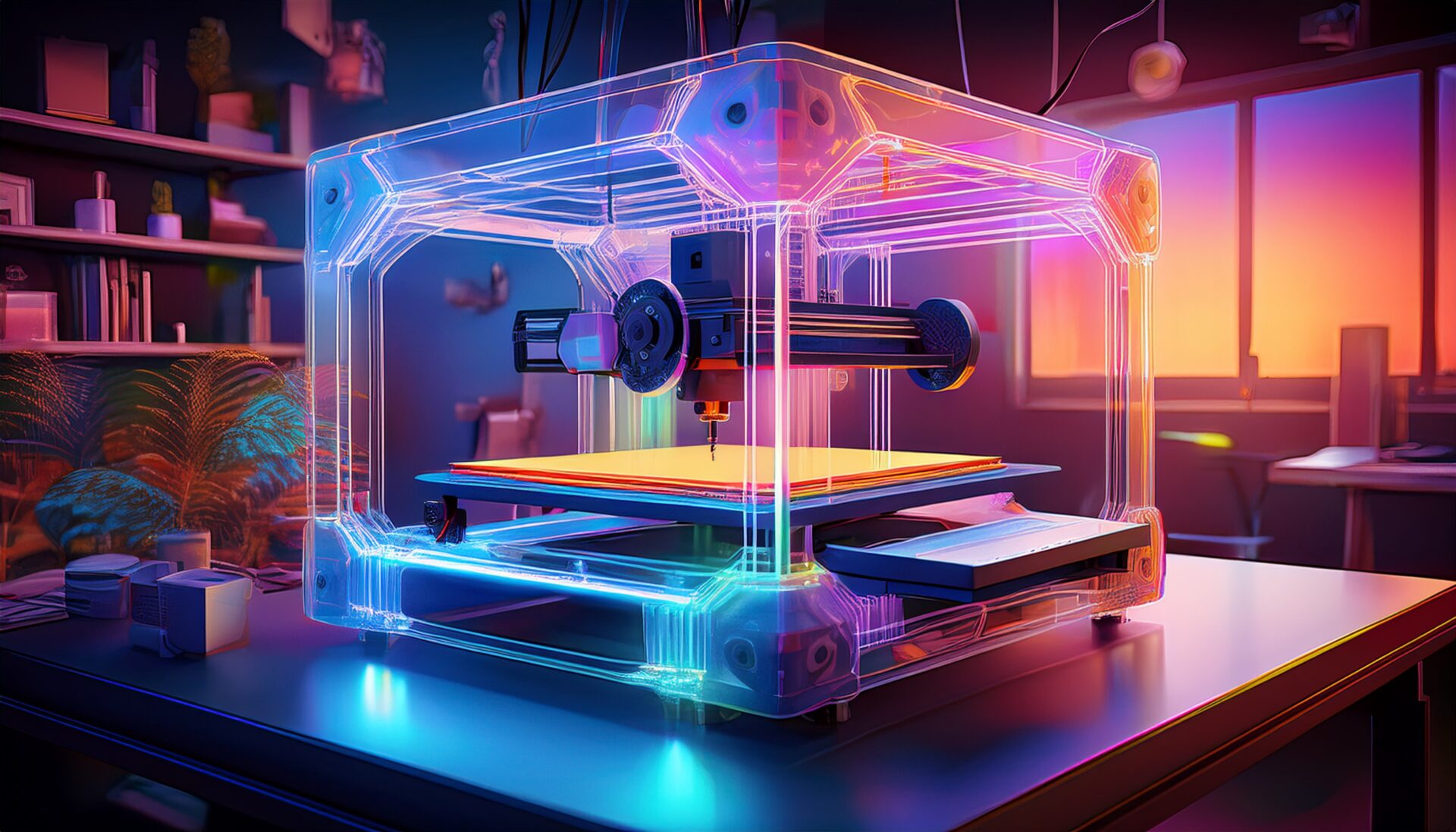
A 3D-printed object that folds itself in response to heat or water. This “fabrication with a time axis” is 4D printing. As of 2026, shape memory programming using PLA’s glass transition temperature (approximately 60-65°C) is now achievable on home FDM printers. This article thoroughly covers everything from the principles of 4D printing to at-home practice, applications, and monetization ideas.
What Is 4D Printing: The Fourth Dimension of Time
4D printing is a technology where 3D-printed structures autonomously change their shape, function, or properties in response to external stimuli (heat, water, light, magnetic fields, pH changes, etc.). First proposed by MIT’s Self-Assembly Lab in 2013, research has progressed rapidly since. While conventional 3D printing creates “static shapes,” 4D printing programs “dynamic behavior.” The key is the Shape Memory Effect, achieved by controlling residual stress within the material at the design stage.
The Principle of Shape Memory: Why PLA “Remembers”
PLA’s shape memory mechanism is based on changes in molecular chain mobility around the glass transition temperature (Tg). Below Tg, molecular chains are frozen in a rigid state. Above Tg, they become mobile and deformable.
- Programming: Heat above Tg → Deform with external force → Cool to fix shape (temporary shape)
- Recovery: Reheat above Tg → Internal stress releases → Returns to original (permanent) shape
- Recovery rate: PLA achieves 90-98% shape recovery under proper conditions
- Cycle life: Recovery rate degrades with thermal cycling (creep), making 5-10 cycles the practical limit
5 Stimulus Types and Application Areas
- Thermal: Most common. PLA, PU, epoxy systems. Activated by hot water or warm air. Used in self-folding structures and smart textiles.
- Water-responsive: Hydrogel-based materials. Applied to humidity sensors and agricultural auto-irrigation devices.
- Light-responsive: UV-curing resins with photochromic molecules. Enables non-contact remote actuation.
- Magnetic: Shape memory polymers with magnetic nanoparticles. Research focuses on in-body medical devices (stents, drug delivery).
- pH-responsive: Hydrogel-based. Used in biosensors and controlled drug release.
Printer and Material Comparison
- Home FDM (Bambu Lab P1S, Creality K1, etc.): PLA shape memory is the easiest entry point. Print at 210°C nozzle, 60°C bed, recover with 60-70°C water.
- Resin (Elegoo Saturn 4 Ultra, etc.): DLP/SLA for high-precision 4D structures with shape memory additives mixed into photoresin.
- Industrial SLS (EOS P396, etc.): Nylon 12-based shape memory powder for complex hinge structures in single prints.
- Research Multi-material (Stratasys J850, etc.): Simultaneous hard/soft material printing for precise 4D mechanisms.
Hands-On Tutorial: Self-Folding Lampshade at Home
Using just a home FDM printer and PLA filament, we will make a lampshade that opens like a flower when hot water is poured on it. No special materials or equipment required — this is a perfect beginner project to experience 4D printing firsthand.
Equipment and Settings
- Printer: Any FDM (Bambu Lab P1S, Creality K1, Prusa MK4, etc.)
- Filament: PLA (standard grade is fine). Different colors make before/after deformation more visible
- Slicer settings: 0.2mm layer height, 15% infill, 2 walls. 210°C nozzle, 60°C bed
- Tools: 60-70°C hot water, heat-resistant gloves, mold (bowl or cylinder)
- CAD software: Fusion 360 or OnShape (free versions work)
Step-by-Step Procedure
- Step 1 – Modeling: Arrange petal-shaped flat panels (0.8mm thick) radially. Set hinge sections to 0.4mm thick for easy folding.
- Step 2 – Printing: Print in the flat, unfolded state. Orient so the layer direction is perpendicular to fold lines.
- Step 3 – Programming: Immerse in 70°C water for 30 seconds → Shape softened petals over a bowl → Flash-cool in cold water to fix temporary shape.
- Step 4 – Recovery test: Immerse in 65°C water and petals open in about 10-15 seconds, returning to flat. Recovery rate approximately 95%.
- Step 5 – Completion: Place an LED tea light in the center for an interactive lampshade that opens and closes with hot water.
Applications: From Industry to Everyday Life
Biomedical
Vascular stents made from shape memory polymers self-deploy at body temperature, enabling minimally invasive surgery. Drug delivery systems using 4D-printed structures that release medication in response to body temperature or pH changes are also under active research. Self-deploying scaffolds for bone regeneration that fit into defect sites are being developed.
Soft Robotics
Carnegie Mellon University has developed soft microrobots using magnetically responsive shape memory elastomers. Hydrogel actuators operate without electric motors, responding to humidity changes. Applications in autonomous agricultural watering devices and environmental monitoring sensors are expected.
Aerospace
NASA’s Jet Propulsion Laboratory is researching solar panels that fold compactly during launch and self-deploy in space using solar heat. Self-deploying antennas and booms made from shape memory composites are also nearing practical use.
4D Print Material Guide: Selection by Purpose
Thermal Response (Beginner)
- PLA (standard grade): Tg ~60-65°C. Cheap and accessible. Easy shape memory experiments with hot water. 90-95% recovery rate.
- PCL (Polycaprolactone): Melting point ~60°C. Softens in hot water for hand shaping. Ideal for art and jewelry.
- PU (Polyurethane SMP): Adjustable Tg (-30 to 80°C). Rubber-like elasticity with high recovery (98%+). For research and industry.
- Epoxy SMP: High mechanical strength and heat resistance. For aerospace components. DLP/SLA fabrication.
- Hydrogel composites: Water-responsive actuators. For bio and agricultural sensors.
- Magnetic SMP: Fe3O4 nanoparticle-loaded. Contactless heating via alternating magnetic field. For medical device research.
Design Techniques: Fail-Proof 4D Modeling
- Hinge golden ratio: Set hinge thickness to 40-60% of panel thickness. Too thin and it breaks; too thick and it will not deform.
- Layer direction vs fold line: Parallel alignment causes delamination — perpendicular orientation is recommended.
- Annealing: Heating at 50°C for 30 minutes after printing increases crystallinity and improves shape recovery by 10-15%.
- Multi-material design: Combining rigid (PLA/PETG) and flexible (TPU) sections enables selective deformation. Requires dual extruder.
- Simulation: Use Fusion 360 FEA to predict deformation behavior and drastically reduce prototype iterations.
One-Week Start Roadmap
- Day 1-2: Print a thin plate (30x10x0.8mm) in PLA. Bend in 70°C water → cool → reheat to confirm recovery. Get the feel for shape memory.
- Day 3-4: Design and print a 2-panel model with hinge structure. Compare 0.4mm vs 0.6mm hinge thickness to find the optimum.
- Day 5-6: Build the self-folding lampshade (4-petal design). Document the programming and recovery with photos and video.
- Day 7: Share photos/videos on social media. Write up the process for your blog and start preparing STL files for sale.
Monetizing 4D Prints: 4 Revenue Ideas
- Interactive educational toys: Dinosaurs and flowers that transform in hot water. Sell STL + explanation PDF on Gumroad ($5-15 per set).
- 4D print workshops: Host “hot-water origami” workshops at makerspaces or online ($30-50 per participant).
- Smart packaging prototypes: Packaging with temperature-activated opening indicators. Contract prototyping for food/pharma companies.
- Educational content: Online courses or Udemy videos covering 4D printing from material science basics to practice.
Frequently Asked Questions
Q1. Do I need a special printer for 4D printing? No. For PLA shape memory, any standard FDM printer (Bambu Lab P1S, Creality K1, Prusa MK4, etc.) works. No special hardware needed — the key is material and design ingenuity.
Q2. How many times can PLA shape memory be repeated? Practically 5-10 cycles. Repeated thermal cycling causes creep (accumulated permanent deformation) that degrades recovery rate. Research-level special polymer blends have achieved 50+ cycles.
Q3. Can shape recovery be triggered without hot water? Yes — a heat gun (60-70°C setting) or hair dryer works. For precise temperature control, a water bath is optimal. Light-responsive and magnetic materials enable non-contact recovery but are currently hard-to-source research materials.
Q4. How does 4D printing differ from bimetals or SMA? Bimetals are plates that bend due to differential thermal expansion of two metals. SMA (Shape Memory Alloys) are metal alloys like Nitinol. 4D printing is polymer-based — lightweight, inexpensive, highly designable, and FDM-printable. Accessibility is its greatest strength.
Conclusion: 4D Printing Is the Gateway to Moving Fabrication
4D printing extends the possibilities of 3D printing into the time axis. Shape memory using PLA glass transition can be started today on a home FDM printer, with monetization paths through educational toys and workshops already open. Start with a simple hinge structure prototype and experience your first 4D print that moves with hot water. Once you understand the principles of shape memory, applications from biomedical to soft robotics that surpass imagination will come into view.
For more information, visit All3DP.
ブラウザだけでできる本格的なAI画像生成【ConoHa AI Canvas】
ABOUT ME
AIを使って、毎日の生活をもっと快適にするアイデアや将来像を発信しています。
初心者にもわかりやすく、すぐに取り入れられる実践的な情報をお届けします。 Sharing ideas and visions for a better daily life with AI.
Practical tips that anyone can start using right away.