知識がなくても始められる、AIと共にある豊かな毎日。
未分類

Two Technologies Reshaping 3D Printing in 2026: Image-to-3D AI and Belt Printers

swiftwand

Two disruptive innovations are hitting the 3D printing world simultaneously. One is Image-to-3D AI — technology that generates 3D models from a single photograph. The other is belt printers — machines that fundamentally break the concept of build volume limitations. When combined, these two technologies are simultaneously eliminating the barriers to entry and scale constraints of 3D printing. Here’s a comprehensive look at the latest developments for 2026.

忍者AdMax

Innovation 1: Image-to-3D AI Ends the “Blender Training” Era

Traditionally, creating models for 3D printing required 3D modeling skills in Blender or Fusion 360. But with the evolution of Image-to-3D AI, we’ve entered an era where a single smartphone photo can automatically generate a 3D model.

NeRF and Gaussian Splatting: Two Revolutions

Two core technologies power Image-to-3D. Neural Radiance Fields (NeRF), introduced in 2020, is a deep learning method that reconstructs photorealistic 3D representations from a small number of 2D images. NVIDIA’s Instant NeRF achieved 1,000x speedup over previous methods, learning from dozens of photos in seconds and rendering new viewpoints in milliseconds.

3D Gaussian Splatting (3DGS), presented at SIGGRAPH 2023, takes a volumetric point-cloud approach rather than neural networks, achieving real-time performance surpassing NeRF. Its strengths include faster generation times, mobile device compatibility, and better handling of transparent and reflective materials. Industry analysts have called 3DGS “the JPEG moment for spatial computing.”

2025-2026 Standardization and Tools

In August 2025, Khronos officially added 3DGS to the glTF ecosystem (KHR_gaussian_splatting extension), establishing it as an industry standard. Compression technology has also evolved — Niantic’s open-source SPZ format achieves 90% compression (250MB PLY files down to ~25MB).

Practical tools are now mature. ComfyUI-3D-Pack generates 3D Gaussians from a single image in under 30 seconds on an RTX 3080 with mesh conversion capability. LichtFeld Studio achieves 2.4x faster rasterization with C++23/CUDA 12.8+. 4D Gaussian Splatting (dynamic scene capture) has reached 82 FPS at 800×800, with real-time playback on VR headsets already underway.

Image-to-3D Print Practical Workflow

  1. Capture: Take 20-50 photos of the subject from multiple angles with your smartphone. Keep backgrounds as simple as possible
  2. 3D Reconstruction: Generate 3D Gaussians using Luma AI, Polycam, or ComfyUI-3D-Pack
  3. Mesh Conversion: Convert Gaussian splats to STL/OBJ mesh. SuperSplat and gsbox are convenient options
  4. Cleanup: Remove noise, fill holes, and adjust scale in MeshLab or Blender
  5. Slice and Print: Generate G-code in PrusaSlicer/OrcaSlicer and execute the 3D print

Innovation 2: The Impact of Infinite Z-Axis Belt Printers

Traditional 3D printers are constrained by their “build volume” — a physical box that limits maximum print size. Belt printers fundamentally overturn this assumption.

What Is a Belt Printer?

A belt printer replaces the build plate with a nylon conveyor belt, extending the Z-axis to infinity. The print head is tilted at 45 degrees, and as the belt rotates, it continuously feeds out the printed object. In theory, you can print swords, pipes, and other elongated objects in one piece.

Key Model Specifications

  • Creality CR-30 (3DPrintMill): ~$999-1,099, build size 200×170×∞mm, 45-degree CoreXY structure, nylon belt, max 100mm/s print speed
  • SainSmart INFI-20: About $200 cheaper than CR-30, WiFi-enabled with OctoPrint integration, popular as an entry-level belt printer
  • BlackBelt 3D: $9,000+ industrial model with high-precision, high-durability belt, designed for production line integration

3 Things Belt Printers Change

  • One-piece elongated printing: Architectural model columns, fishing rod cases, plumbing parts — products that previously required splitting can now be printed as one piece
  • Continuous batch production: The belt rotates and auto-ejects finished products, enabling unmanned overnight production. Dramatically reduces labor costs for small-lot manufacturing
  • Minimized support material: The 45-degree tilt angle enables support-free printing for many shapes, saving material costs and post-processing time

Limitations to Know

  • Uniformly heating the entire belt is difficult — ABS and other high-temp materials risk warping
  • The 45-degree tilt may reduce horizontal surface accuracy compared to standard printers
  • Regular belt surface replacement is required, adding to running costs
  • Slicer settings are unique — understanding OrcaSlicer or Cura belt printer profiles is essential

Business Applications Combining Both Technologies

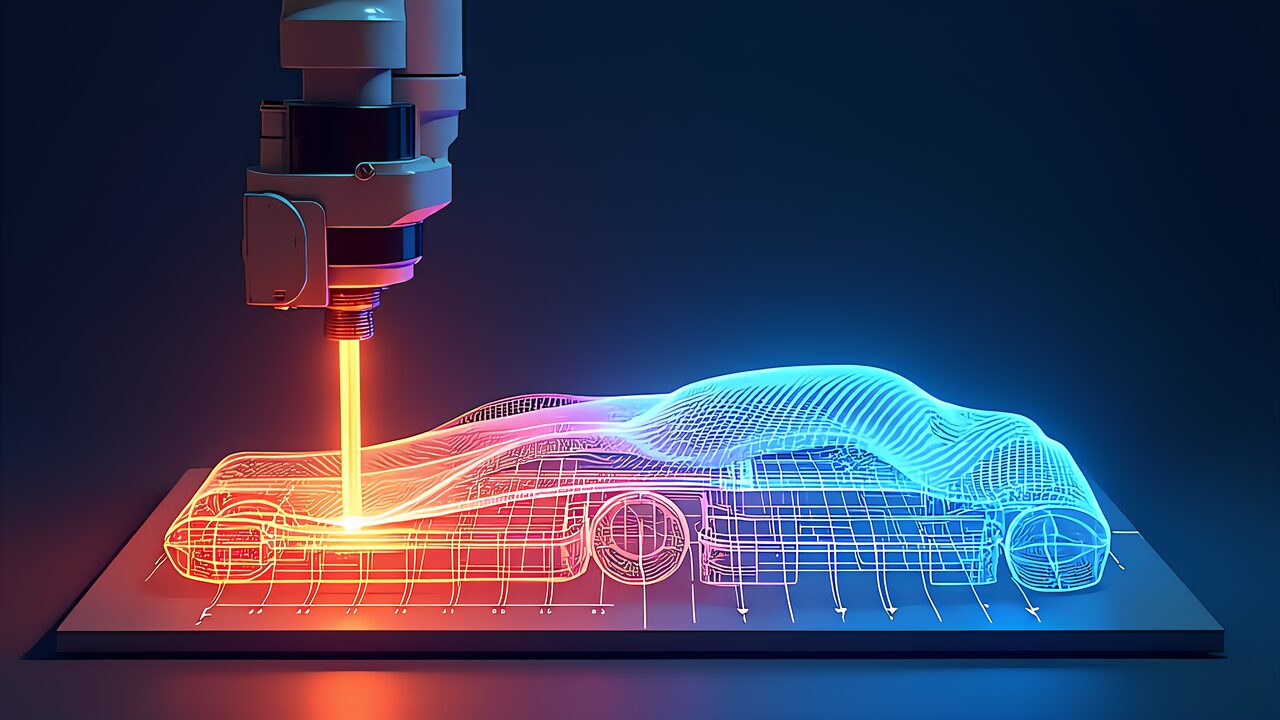
Combining Image-to-3D AI with belt printers enables business models that were previously impossible. Photograph real objects with a smartphone, convert to 3D models with AI, and mass-produce on a belt printer — this end-to-end workflow is now achievable by individuals.

5 Monetization Ideas

  • On-demand architectural models: Generate 3D models from client building photos and output elongated architectural models in one piece on a belt printer. 70% lead time reduction compared to traditional handmade models
  • Figure and merchandise batch production: Create characters or pet figures from photos with Image-to-3D, auto-batch overnight using belt printer continuous ejection. Under $3 per unit material cost for dozens of pieces
  • Custom plumbing and duct parts: 3D scan existing plumbing from on-site photos and produce perfectly fitting joints and covers as one-offs. B2B service for contractors
  • Educational STEM materials: Digitize museum exhibits and fossils from photos, mass-produce replicas for schools. Growing demand as hands-on learning materials
  • Prototype service for e-commerce: Instantly generate prototypes from product idea photos or sketches, providing verification samples before crowdfunding launches

Complete Software and Tool Guide

Image-to-3D AI Tools

  • ComfyUI-3D-Pack: Open-source node-based UI with Gaussian Splatting support. Generates 3D models from single images in under 30 seconds on RTX 3080. Highly customizable with workflow automation
  • Luma AI: Smartphone app for NeRF capture. Just record 30 seconds of video to auto-generate 3D models. Free tier available, glTF/OBJ/PLY export supported
  • Polycam: High-precision scanning with LiDAR devices (iPhone Pro, etc.). Also handles indoor space scanning, gaining traction in real estate and interior design
  • Meshroom: AliceVision-based open-source photogrammetry. Reconstructs high-accuracy meshes from 50-200 photos. Free but longer processing times

Belt Printer Slicer Settings

  • OrcaSlicer: Rich CR-30 profiles with automatic 45-degree angle correction, support minimization settings, and continuous printing G-code post-processing scripts
  • Cura (Belt Plugin): Belt printer plugin for Ultimaker Cura with basic tilt correction and infinite Z settings, though less optimized than OrcaSlicer
  • CrealityPrint: Creality’s official slicer with built-in CR-30 presets, but less customizable than OrcaSlicer

Mesh Repair and Post-Processing Tools

  • MeshLab: Open-source mesh processing tool for hole filling, non-manifold repair, and decimation. Essential for fixing AI-generated models
  • Meshmixer: Free Autodesk tool with intuitive UI for mesh repair, remeshing, and support generation. Beginner-friendly
  • Blender (3D Print Toolbox): Free integrated 3D software with the Print Toolbox add-on for model printability checks and auto-repair

Beginner’s First Week Roadmap

Day 1-2: Experience Image-to-3D

  • Install the Luma AI app on your smartphone and capture a small object (mug, figurine) with a 30-second video
  • Export the generated 3D model in OBJ format and verify in MeshLab
  • Check for mesh holes and run auto-repair

Day 3-4: Try 3D Print Output

  • Load the repaired model into OrcaSlicer and test print on a standard FDM printer
  • Verify scale adjustment, orientation optimization, and support settings
  • Note improvements needed for capture angles and lighting based on output quality

Day 5-7: Explore the Belt Printer World

  • Watch CR-30 setup videos and check community resources for cost and space requirements
  • Download OrcaSlicer belt printer profiles and study the settings
  • Prepare a 3D model of an elongated object (30cm+) and simulate with slice preview
  • Learn the basics of continuous printing G-code post-processing (auto-ejection scripts)

2026 and Beyond Roadmap

In the Image-to-3D space, 4D Gaussian Splatting (dynamic scene reconstruction) was presented at CVPR 2024, achieving 82 FPS real-time rendering. By 2026, startups like Gracia AI are deploying commercial 4DGS platforms, making 3D capture of moving objects mainstream.

In belt printers, heated belt uniformity technology and multi-material support are advancing. By around 2027, heated belts compatible with ABS/nylon are expected to become standard, enabling continuous production with engineering-grade materials. A fully automated pipeline — from AI model generation to auto-repair to belt printer output to quality inspection — is coming into view.

FAQ

Can Image-to-3D AI models be 3D printed directly?

In most cases, mesh repair is needed. AI-generated models often contain holes and non-manifold edges. The standard workflow is to auto-repair in MeshLab or Meshmixer before loading into a slicer. However, the repair effort decreases each year as tools improve.

Should I choose Gaussian Splatting or NeRF?

As of 2026, Gaussian Splatting (3DGS) is becoming mainstream. It’s orders of magnitude faster in learning speed, enables real-time rendering, and glTF standardization is progressing. NeRF produces high-quality results in research settings, but 3DGS has the practical edge.

What materials can belt printers use?

PLA and PETG work most reliably. The CR-30 also supports TPU flexible material. ABS is prone to warping due to belt heating uniformity issues and is for advanced users. Pay attention to build surface sheet compatibility with the nylon belt.

Is belt printer quality equal to standard printers?

XY-axis precision is comparable, but the 45-degree tilt makes layer lines more visible in the Z direction (actually diagonal). Best practice: use standard printers for finish-quality prints, belt printers for elongated objects and continuous production.

What PC specs are needed for Image-to-3D?

For Gaussian Splatting, a GPU with 8GB+ VRAM (RTX 3060+ recommended) is needed. ComfyUI-3D-Pack completes processing in under 30 seconds on RTX 3080. Lightweight CPU-only tools exist but GPU is essential for practical speeds.

How much initial investment for both technologies combined?

Minimum configuration: CR-30 (~$999) + PC with RTX 3060 (~$1,000) + free software (ComfyUI-3D-Pack, OrcaSlicer) = starting from roughly $2,000. Near-zero software costs make this combination extremely attractive.

Summary: 2026, 3D Printing Enters the “Snap and Print” Era

Image-to-3D AI has demolished the biggest barrier to entry: “You can’t 3D print without 3D modeling skills.” With Gaussian Splatting standardization and mature tooling, a single smartphone can generate high-quality 3D data.

Belt printers simultaneously eliminate two constraints: “build size limitations” and “manually removing parts one by one.” One-piece elongated printing and unmanned overnight production give individuals the foundation to run micro-factories.

At the intersection of these two technologies, 2026 marks the turning point where 3D printing evolves from “an expert’s tool” to “a production method anyone can use.” Start by photographing everyday objects with your smartphone and converting them to 3D with AI. That’s where your new making journey begins.

ブラウザだけでできる本格的なAI画像生成【ConoHa AI Canvas】
ABOUT ME
swiftwand
swiftwand
AIを使って、毎日の生活をもっと快適にするアイデアや将来像を発信しています。 初心者にもわかりやすく、すぐに取り入れられる実践的な情報をお届けします。 Sharing ideas and visions for a better daily life with AI. Practical tips that anyone can start using right away.
記事URLをコピーしました