What Is AI Sports Coaching? From Pro Use Cases to Personal Apps – A Complete Guide
swiftwand swiftwand.ai
AI art has been making headlines everywhere lately, and it’s truly amazing that AI can now create visual artwork. But here’s the big question: who owns the copyright to AI-generated art? Does it belong to the AI itself, the company that built the AI, or the person who gave the instructions? These questions are sparking heated debates around the world. Let’s dive into the fascinating and complex world of AI art, its legal implications, and what it means for the future of artistic expression.
Imagine a stunningly beautiful landscape painting generated entirely by AI. Who does it belong to? The AI? The developer? Or the person who prompted the AI to create it? Under current law, works autonomously generated by AI are generally not eligible for copyright protection. Copyright is reserved for works created through human creativity.
However, when a human provides specific instructions or uses AI as a creative tool with significant creative input, copyright may be recognized for that human. The key principle is that AI itself cannot hold copyright — it’s the human creative involvement that matters.
From an artist’s perspective, there’s a legitimate concern: “AI learns from massive amounts of existing artwork, so couldn’t it create something that looks just like mine? Isn’t that plagiarism?” This concern is well-founded. In 2023, overseas artists filed copyright infringement lawsuits against AI art generation services including Stability AI, Midjourney, and DeviantArt. By August 2024, a partial ruling in favor of the artists was delivered, highlighting the legal complexities surrounding AI art.
Despite the controversies, AI art isn’t all bad news. When used skillfully, AI opens up possibilities for entirely new forms of expression. For instance, you can instruct an AI to “paint a cat in Van Gogh’s style” and get a result in seconds. Rather than being a rival to artists, AI might be better understood as an “assistant” — handling time-consuming tasks so artists can focus on more creative work.
This philosophical question remains unanswered. Art created without human emotion or experience can feel cold and impersonal. Yet AI art has its own unique beauty and fascination — AI can generate innovative ideas that humans might never conceive and create complex patterns in an instant. While the debate continues, one thing is certain: AI art provides us with fresh perspectives on creativity.
Here are five user-friendly AI art tools for anyone interested in exploring this creative frontier. Many offer free trials, so feel free to experiment.
A high-quality art generation tool trusted by professional creators. It operates through Discord — simply type text prompts to generate stunning images. Starting at $10/month for paid plans, its output quality is exceptional.
An open-source image generation AI that can be installed on your own computer. Its high customizability allows you to train custom models to your preferences, making it popular among technically-minded users. Commercial use is permitted under its license.
Developed by OpenAI, DALL-E 3 is available at no additional cost to ChatGPT Plus subscribers. It responds to natural language prompts in Japanese and English, generating high-quality images from descriptions like “a cat reading under cherry blossoms.”
Adobe’s AI image generation tool, designed with commercial use in mind. Its training data comes from licensed Adobe Stock materials, resulting in relatively lower copyright risk. It also integrates seamlessly with Photoshop.
An AI image generation feature built into the popular design tool Canva. Generate images from text and incorporate them directly into your designs. Available on the free plan with a monthly usage limit, making it ideal for design beginners.
Under Japanese copyright law, a “work” is defined as “a creative expression of thoughts or emotions.” Since autonomously AI-generated works don’t reflect human “thoughts or emotions,” they are generally not recognized as copyrightable works. However, when a human uses AI as a tool and exercises creative direction and selection, copyright may be recognized for that person. Japan’s Agency for Cultural Affairs published “Perspectives on AI and Copyright” in March 2024, organizing these legal positions.
In 2023, the U.S. Copyright Office ruled that “portions without human creative involvement are not eligible for copyright” regarding AI-generated images. However, for AI-created comic works where humans designed the layout and crafted the story, copyright was granted for the human-created elements — demonstrating a case-by-case approach.
It depends on the tool’s terms of service. Midjourney, DALL-E 3, and Adobe Firefly permit commercial use on their paid plans. However, selling images that closely resemble existing works carries copyright infringement risks, so aim for originality in your creations.
This debate continues, but remember that when photography first emerged, people asked “Is photography art?” AI is simply a new creative tool. What matters most is your creative vision — what you want to express and how.
Absolutely. Since you generate images through text prompts, drawing skills aren’t necessary. What becomes important in AI art is the ability to articulate what you want to express in clear, descriptive language.
AI art is bringing major transformation to the advertising industry. Previously, creating advertising visuals required days to weeks and costs ranging from thousands to tens of thousands of dollars for photography or illustrator commissions. With AI art, multiple visual concepts can be generated in minutes during the ideation phase, dramatically speeding up client consensus. Major advertising agencies like Dentsu and CyberAgent are actively advancing their AI art utilization.
In game development, AI is increasingly used for concept art creation. The workflow of generating large volumes of character designs and game world landscapes with AI to determine creative direction is becoming standard. However, final in-game assets are typically polished by human artists, with AI positioned as a “source of inspiration.”
More publications are using AI-generated images for book covers and web article thumbnails. For individual bloggers and indie authors who lack the budget to commission professional illustrators, AI art offers a way to create attractive visuals. However, concerns about displacing illustrators’ work persist, and industry-wide rule-making is being called for.
AI art brings not just technical possibilities but also ethical challenges. The biggest issue concerns the rights of images used in AI training data. Many AI models are trained on vast image datasets collected from the internet, which may include artists’ works used without permission.
In 2023, a class-action lawsuit in the United States by artists against Stability AI, Midjourney, and DeviantArt drew major attention. The claim that “my work was used to train AI without consent” strikes at the very foundation of AI art. The outcome of this litigation is expected to significantly shape the future of AI art.
The problem of deepfakes — fake images and videos generated by AI — is also growing more serious. Cases have been reported of AI being trained on real people’s facial photos without consent to create videos of them saying things they never said, prompting regulatory discussions in multiple countries. For AI art technology to develop healthily, it’s essential to advance regulations that protect creators’ rights while preventing misuse.
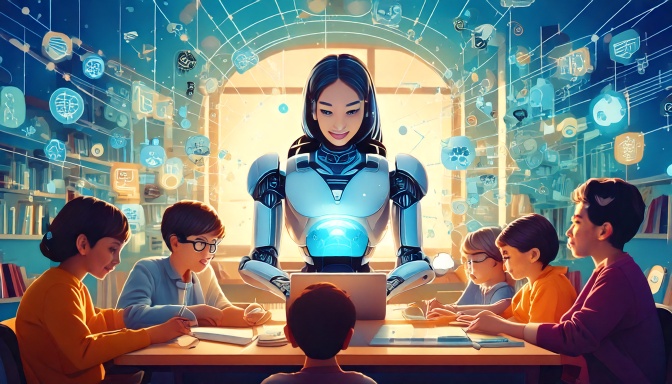
AI art is gaining attention in education as well. Art classes are beginning to incorporate AI tools, using the experience of “verbalizing your mental image and communicating it to AI” to develop expression and communication skills. Schools equipped with one-device-per-student under Japan’s GIGA School Initiative are increasingly adopting AI art as a creative tool.
Universities and design schools are also integrating AI art tools into their curricula. The skills gap between those who can use AI and those who cannot is expected to widen, making it increasingly important for younger generations to develop AI literacy early. Future creators will need both the ability to understand and utilize AI’s characteristics, and the cultivation of unique sensibilities that AI cannot replicate.
AI art is sparking debates about copyright, ethics, and the very definition of art, while simultaneously expanding the possibilities of creative expression. The fact that anyone can now create beautiful visuals could be called a democratization of creativity.
さらに詳しい情報はAll3DPでご覧いただけます。
Of course, we should be cautious about claiming AI-generated output as solely “our own work.” However, the approach of mastering AI as a tool and pursuing unique personal expression has genuine value as a new form of art. Why not try creating something with an AI art tool? You might be surprised by the unexpected discoveries that await.