The Psychological Relationship Between AI and Humans: Balancing Trust and Anxiety, Dependency Prevention, and Workplace Guide
swiftwand swiftwand.ai
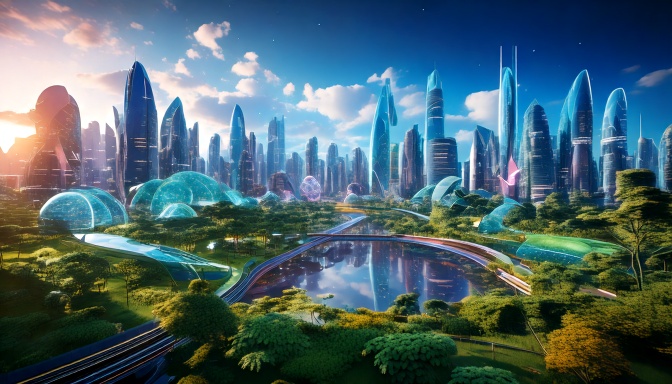
AI technology is revolutionizing architecture and urban design at an unprecedented pace. Traditional design processes were constrained by time and resources, but AI is now solving these fundamental challenges with remarkable efficiency. This article explores how AI is transforming building design, enabling smart cities, strengthening disaster prevention, and driving carbon-neutral construction — shaping the cities of tomorrow.
AI is fundamentally changing the architectural design process. Tasks that once took designers weeks can now be completed in hours. Structural analysis and environmental simulation — computationally intensive work — are handled by AI, freeing designers to focus on creative and conceptual aspects.
Generative AI is particularly noteworthy: architects input basic requirements and AI produces multiple design proposals, analyzing the pros and cons of each. This dramatically accelerates early-stage decision-making, with studies showing AI-assisted design processes reducing design time by approximately 40%.
Beyond individual buildings, AI plays a critical role in making entire cities smarter. In smart cities, data collected from sensors and IoT devices is analyzed by AI to optimize traffic flow, improve energy efficiency, and enhance public services.
Singapore’s “Virtual Singapore” digital twin integrates and analyzes all city data to support urban development decisions. This kind of technological integration simultaneously improves both urban functionality and residents’ quality of life.
As climate change and resource depletion intensify, sustainable urban development is more critical than ever. AI provides powerful solutions: designing buildings that minimize energy consumption and proposing optimal renewable energy integration plans can dramatically reduce environmental impact.
Specifically, AI optimization of building materials, orientation, and window placement based on climate conditions has achieved 20%+ reductions in heating and cooling energy in documented cases. At the city level, AI supports nature-harmonious design through optimized green space placement and efficient stormwater management systems.
With natural disasters increasing worldwide, strengthening urban disaster resilience is urgent. AI plays vital roles across all phases — from disaster prediction to damage mitigation. It can assess earthquake and flood risks to identify vulnerabilities in buildings and urban infrastructure.
In Japan, AI-powered earthquake simulation systems now predict building seismic performance with high precision. During actual disasters, AI analyzes damage in real-time to optimize rescue operations and evacuation guidance. These advances dramatically improve urban resilience and minimize human and economic losses.
As AI evolves, a new paradigm of “human-AI co-creation” is emerging in architecture and urban design. AI handles massive data processing and optimization while humans contribute creativity, ethical judgment, and cultural values. In this collaborative approach, human designers select contextually and culturally appropriate options from AI-generated proposals and develop them further through an interactive dialogue process.
Singapore has built a nationwide digital twin, fully leveraging AI for urban planning. By integrating 3D building models with real-time traffic and weather data, planners can precisely simulate how new construction will affect surrounding wind patterns and sunlight. This initiative has improved city-wide energy efficiency and significantly enhanced residents’ quality of life.
Barcelona has deployed AI-powered smart streetlights and waste collection systems. Streetlights automatically adjust brightness based on pedestrian and vehicle traffic detected by sensors, dramatically reducing power consumption. Waste collection trucks follow AI-optimized daily routes based on container sensor data, cutting both fuel and labor costs.
Japan, centered on Tokyo, is advancing AI disaster prevention systems for earthquakes and typhoons. AI evaluates building seismic performance and creates high-precision regional damage prediction maps. Evacuation route optimization using AI enables real-time crowd analysis during disasters, allowing efficient evacuation guidance that avoids congestion.
AI-driven urban management requires collecting vast amounts of sensor data, but balancing this with resident privacy is a major challenge. Even when using camera footage for traffic analysis, proper anonymization is essential. In Europe, GDPR-compliant data operations are mandatory, requiring careful attention to legal frameworks alongside technical solutions.
Smart city benefits tend to skew toward digitally literate populations. To prevent elderly residents and those with low digital literacy from being left behind, parallel analog solutions and intuitive interface design are essential. A truly inclusive smart city requires social inclusion perspectives alongside technology.
Reduced traffic congestion, lower energy costs, and stronger disaster prevention all improve daily convenience and safety. Some cities report AI-optimized traffic signals reducing average commute times by 10–15%.
Initial investment is higher than conventional infrastructure, but massive improvements in energy efficiency and reduced maintenance costs make smart cities cost-effective long-term. Most expert estimates project investment recovery within 5–10 years.
Yes — Japan’s Ministry of Land, Infrastructure, Transport and Tourism is driving smart city pilot programs nationwide. Cities like Aizu-Wakamatsu, Tsukuba, and Kakogawa are leading pioneering initiatives, with coverage expected to expand further.
AI architecture isn’t limited to large-scale urban projects — it’s now accessible for individual home design. Online services let you input floor plan requirements and receive multiple AI-optimized layouts within minutes, considering lot shape, sunlight conditions, and family composition. AI interior design tools also let you photograph a room and receive furniture placement and color scheme suggestions, perfect for renovation planning.
The fusion of AI design and 3D printing technology is opening new possibilities in construction. Concrete 3D-printed houses are already entering practical use, with some projects completing in half the time of conventional methods. AI calculates structural strength while generating optimal printing paths, minimizing material waste while achieving earthquake-resistant construction.
In Japan, labor shortages in construction are driving rapid interest in AI design and automated construction. Major general contractors are conducting robotic construction trials, and fully automated AI-managed construction sites — from design through construction management — may become reality in the near future.
The building sector accounts for approximately 40% of global CO2 emissions, making carbon neutrality the industry’s top priority. AI enables lifecycle CO2 optimization starting from the material selection stage. For example, AI can calculate the optimal ratio of wood-concrete hybrid structures that maintains strength while minimizing environmental impact.
During building operations, AI auto-optimizes HVAC and lighting control, with multiple documented cases achieving 20–30% energy reduction versus conventional systems. AI-managed solar power and battery storage systems, integrated with weather forecast data, maximize self-consumption rates — simultaneously cutting power costs and achieving decarbonization.
AI has the power to transform every aspect of urban life — from design efficiency and energy management to disaster prevention. But the ultimate goal isn’t deploying cutting-edge technology for its own sake; it’s improving the daily lives of the people who live in these cities. By addressing privacy concerns and bridging the digital divide, humans and AI can collaborate to build sustainable, prosperous future cities together.
さらに詳しい情報はAll3DPでご覧いただけます。