AI Ocean Research: Deep-Sea Exploration, Coral Reef Monitoring & Smart Fisheries (2026)
swiftwand swiftwand.ai
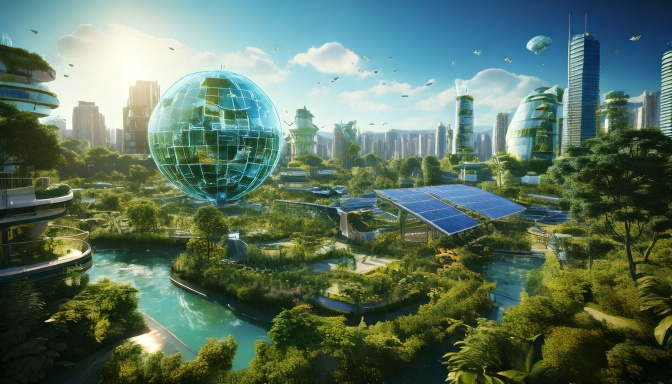
In recent years, the worsening of environmental problems has led many people to seek a path toward a sustainable future. The challenges facing our planet — climate change, resource depletion, rising CO2 emissions — are growing increasingly complex. In this context, AI technology is gaining attention as a powerful ally in solving environmental issues. This article explores the relationship between AI and environmental problems, introducing the potential of AI technology and specific use cases for achieving a sustainable society.
Environmental problems consist of many intricately intertwined factors rather than a single cause. AI’s pattern recognition capabilities and massive data processing power hold the potential to discover solutions that conventional methods could not find.
AI can analyze vast amounts of meteorological data to build more accurate climate change prediction models. For instance, IBM’s “Deep Thunder” project has successfully achieved high-precision local weather prediction using an AI-powered forecasting system. This enables proactive disaster preparation, advancing efforts to minimize damage.
AI contributes to improving energy efficiency through power grid optimization and building energy consumption pattern analysis. Google’s DeepMind successfully reduced energy consumption by approximately 40% by applying AI to data center cooling systems. Such initiatives directly translate to both corporate energy cost reduction and reduced environmental impact on the planet.
Household energy consumption accounts for approximately 30% of the total. The combination of smart home technology and AI is achieving significant energy efficiency improvements in this area.
Smart thermostats use AI to learn residents’ living patterns and automatically perform optimal temperature adjustments. Devices like Nest smart thermostats automatically switch to power-saving mode when users are away, achieving approximately 10-15% annual energy reduction. Smart lighting systems similarly adjust lighting based on human movement and time of day, suppressing wasteful power consumption.
AI-equipped smart irrigation systems combine weather forecast data with soil moisture sensor information to supply only the minimum necessary water. Research results show this can reduce household water usage by up to 50%. In regions where water resource depletion is a concern, such technology contributes significantly to sustainable water use.
The proliferation of renewable energy holds the key to CO2 emission reduction. However, natural energy sources like solar and wind have the challenge of unstable output. AI plays a major role in solving this challenge.
AI analyzes weather data to predict solar and wind power output with high accuracy. For example, U.S. renewable energy companies have reduced power generation forecast errors by over 30% by introducing AI prediction technology, contributing to power grid stabilization. This improves renewable energy reliability and enables reduced dependence on traditional fossil fuel power plants.
AI-powered smart grid technology adjusts electricity supply and demand in real-time, minimizing energy waste. In Germany, an AI-driven smart grid project improved renewable energy integration efficiency by 15%, achieving both enhanced grid stability and reduced power costs simultaneously.
With the global population increasing, improving food production efficiency while ensuring sustainability is an urgent challenge. AI is providing innovative solutions in the agricultural sector as well.
Precision agriculture combining AI and drone technology enables monitoring crop growth conditions and applying the necessary amount of fertilizer and pesticides to exactly where they’re needed. Cases have been reported of reducing pesticide use by up to 90% while increasing harvests by 20%. This achieves the seemingly contradictory goals of reducing environmental impact while increasing food production.
Agriculture accounts for approximately 70% of global freshwater usage. AI-powered irrigation systems analyze soil conditions and weather forecasts to determine optimal watering timing and volume. A California wine vineyard successfully reduced water usage by 45% while also improving grape quality after implementing this system.
While AI contributes to solving environmental problems, the energy consumption and environmental footprint of AI technology itself is a significant concern. Training large-scale AI models in particular requires enormous amounts of electricity.
Research into “Green AI” — minimizing AI’s environmental impact — has been advancing in recent years. Microsoft has set a goal to become carbon negative by 2030, working on developing more efficient AI algorithms. Research is also underway to significantly reduce energy consumption by optimizing AI model sizes while maintaining equivalent performance.
Major tech companies like Google and Amazon are working toward powering their data centers with 100% renewable energy. Google sourced 61% of its purchased electricity from renewable energy in 2020 and aims for complete decarbonization by 2030. Such efforts are enabling the coexistence of AI technology advancement and environmental conservation.
Concrete examples demonstrate AI’s environmental impact. Google DeepMind reduced data center cooling energy by 40% using AI optimization. Microsoft’s AI for Earth program has funded over 900 projects using AI for biodiversity monitoring, climate research, and sustainable agriculture. In Japan, AI-powered smart grid systems are optimizing renewable energy distribution, helping balance the intermittent nature of solar and wind power across the national grid.
In agriculture, AI-driven precision farming tools analyze satellite imagery, soil sensors, and weather data to optimize irrigation, reduce pesticide use by up to 80%, and predict crop yields months in advance. Companies like Blue River Technology use computer vision to identify and target individual weeds, dramatically reducing herbicide application.
It is important to acknowledge that AI itself has a significant environmental cost. Training large language models like GPT-4 consumes enormous amounts of electricity and water for cooling data centers. A single ChatGPT conversation uses roughly 10 times more energy than a Google search. The AI industry is increasingly aware of this paradox and investing in more efficient architectures, renewable energy for data centers, and smaller models that achieve comparable performance with less computational cost.
You do not need to be an engineer or environmental scientist to leverage AI for sustainability. Consumer apps powered by AI can optimize your home energy usage, plan more fuel-efficient routes, identify recyclable materials through photo recognition, and calculate the carbon footprint of your purchases. Small individual actions, multiplied across millions of users, create meaningful environmental impact.
AI and environmental issues are closely related, and when properly utilized, AI can greatly contribute to achieving a sustainable society. AI technology holds the key to solving environmental problems across various fields including climate change countermeasures, energy efficiency improvements, and renewable energy optimization.
At the same time, it’s important to address AI technology’s own environmental footprint and pursue sustainable AI development. Efforts to maximize AI’s benefits while minimizing environmental impact through Green AI promotion and renewable energy utilization are essential. Each of us can also contribute to the coexistence of AI and the environment through adopting smart home technologies and choosing environmentally conscious products. Let’s make the most of AI’s potential for a sustainable future.
さらに詳しい情報はAll3DPでご覧いただけます。