NVIDIA Omniverse Complete Guide: Digital Twins, USD, RTX Real-Time Rendering, and 3D Collaboration (2026 Edition)
swiftwand swiftwand.ai
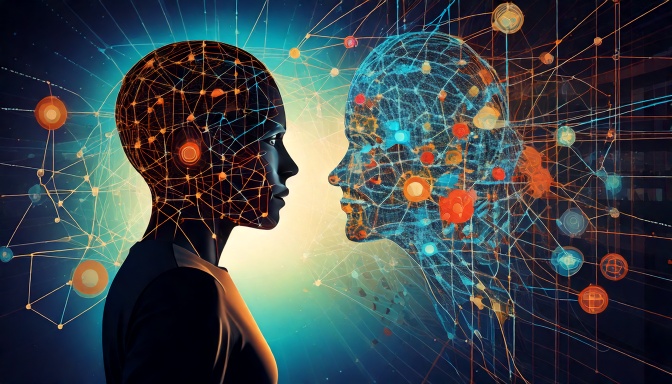
As AI permeates our daily lives, we are building new psychological relationships with it. The psychological relationship between AI and humans is a complex one, intertwined with trust and anxiety. When we speak to smart speakers or consult AI chatbots, we unconsciously project emotions while simultaneously seeking rationality. This article examines the psychological impact of AI and considers how we should build our future relationship while balancing emotion and rationality.
The psychological mechanism behind human trust in AI is fascinating. Research shows that the more consistent and predictable AI responses are, the more human trust increases. Additionally, when AI exhibits human-like characteristics, we unconsciously begin to perceive it as a social entity.
However, this trust relationship has a pitfall called “automation bias.” This refers to the tendency to trust information provided by machines or AI more than that from humans. A 2019 Stanford University study showed that 73% of participants tended to trust AI’s clearly incorrect answers over correct human answers.
Trust in AI is built on three main elements. First, “competence” — whether AI can produce accurate results. Second, “transparency” — whether you can understand how AI made its judgment. And third, “alignment of intent” — whether the AI’s purpose aligns with the user’s. When these elements are balanced, a healthy trust relationship is established between humans and AI.
AI’s evolution generates anxiety alongside expectations. At the root of this anxiety lies the “fear of losing control.” The fear that your job might be replaced by AI or that AI might act beyond human intentions creates psychological resistance.
An Oxford University study suggested that approximately 47% of occupations are at risk of being automated by AI and robots within the next 20 years. While this figure itself fuels anxiety, psychologically speaking, it is “uncertainty” rather than concrete threats that generates the strongest anxiety. The more limitless AI’s possibilities appear, the greater human anxiety becomes.
Psychological approaches are effective for reducing anxiety about AI. First, accurately understanding AI’s limitations and possibilities reduces uncertainty. Additionally, gaining experience working with AI helps distinguish between real and imagined threats. Furthermore, preventing AI from becoming a black box and increasing transparency is also important. By engaging with AI while maintaining psychological safety, unnecessary fears can be reduced.
Humans have a tendency to anthropomorphize even tools. With advanced technology like AI, this tendency is even stronger. Getting angry at Siri or naming a robot vacuum are natural reactions of our brains trying to recognize them as social entities.
This anthropomorphism plays an important role in AI-human coexistence. According to research by psychologist Clifford Nass, humans exhibit social etiquette and emotional responses even toward computers. This is not merely an illusion but a natural way we interact with technology.
Emotional bonding with AI has two sides. Benefits include more intuitive interfaces and higher user satisfaction. On the other hand, there are risks of excessive dependency and blurring the line between reality and artificiality. A 2018 survey found that 42% of children consider AI assistants to be “friends.” Building a healthy emotional relationship with AI requires being conscious of these balances.
The ideal relationship with AI is built upon a balance of rationality and emotion. AI’s strengths lie in rational judgment and massive data processing capabilities, while human strengths lie in contextual understanding, emotional intelligence, and creativity. Leveraging this complementary relationship is key to coexistence.
Psychologist Daniel Kahneman divided human thinking into “System 1 (intuitive and emotional)” and “System 2 (logical and analytical).” A similar framework can be applied to our relationship with AI. An “augmented intelligence” approach that utilizes AI’s logical judgment while incorporating human intuition and values into final decision-making charts a path toward a balanced relationship.
The psychological relationship between AI and humans will only grow more complex. To maintain this relationship in a healthy way, several principles are important. First, increasing AI transparency and explainability. Second, respecting human autonomy and final decision-making authority. And third, improving AI literacy to avoid excessive dependency or fear.
Psychologist Sherry Turkle stated that “technology gives us something while also taking something away.” In our relationship with AI as well, while gaining convenience and efficiency, there are risks of reduced human-to-human relationships and self-reflection opportunities. Building our relationship with AI while being conscious of these trade-offs is what is required.
First, it is important to objectively assess how dependent you are on AI. If three or more of the following apply to you, you may need to reconsider your distance from AI: “You ask AI even for simple decisions,” “You accept AI answers without question,” “You feel you cannot work without AI,” “You feel more comfortable with AI conversations than human relationships,” “You ask AI before thinking for yourself.” These are signs of dependency, and consciously creating time to think on your own is the first step toward improvement.
Rule 1: Recognize that “AI is a tool, not a partner.” Becoming too emotionally invested in AI impairs objective judgment. Rule 2: Always cross-reference AI answers with your own knowledge and experience. Rule 3: Designate one day per week as an “AI-free day” where you think and act solely on your own abilities, maintaining your thinking and decision-making capabilities.
Psychologist Sherry Turkle noted in her book “Alone Together” that the deeper our relationship with technology becomes, the greater the risk of weakening human bonds. The growing phenomenon of users interacting with AI chatbots as if they were friends supports this concern.
On the other hand, research has also shown that people with social anxiety disorder who practice interpersonal communication through AI dialogue have seen improvements in their real human relationships. The key is positioning the relationship with AI as a complement to — not a substitute for — human relationships. AI is a convenient entity available 24/7, but empathy and true understanding can only come from human interaction. The healthiest approach is using conversations with AI to organize your thoughts, then applying those insights to conversations with family and friends.
In workplaces where AI adoption is advancing, many people feel anxious about their jobs being taken away. However, looking back at history, new technology has always transformed existing jobs while creating new ones. Consciously developing abilities that are difficult for AI to replace — namely creativity, empathy, and complex situational judgment — can help alleviate this anxiety.
When properly utilized, AI can significantly reduce mental burden through automation of routine tasks. By delegating repetitive work like data entry, schedule management, and email sorting to AI, you can focus on more creative and satisfying work. Employee satisfaction surveys at companies that have adopted AI tools show that approximately 65% of respondents reported “reduced work-related stress.”
Within moderate limits, it is not a problem. However, caution is needed if AI conversations are replacing human relationships. AI merely returns programmed responses and does not possess genuine empathy or understanding. Use AI dialogue as a tool for self-organization, and seek important emotional support from trusted humans.
At the developmental stage, human-to-human communication experiences are essential for children. While AI dialogue is useful as a learning aid, actual human interaction is necessary for developing interpersonal skills. Limiting usage time and encouraging children to share what they learned from AI conversations with family helps achieve balance.
The rapid evolution of AI is having a psychological impact on society as a whole. The frustration of not keeping up with the pace of change and the vague anxiety of being replaced by AI are stress factors unique to our era. Building psychological resilience is effective for dealing with such anxiety. Specifically, consciously recording small daily successes, openly discussing AI-related anxieties with trusted people, and gradually learning new skills are all effective actions.
AI counseling apps are also an option. Available 24/7, they serve as a low-barrier entry point for people who resist face-to-face counseling. However, for serious psychological issues, consulting a professional psychologist or medical institution is essential. AI counseling is merely a supplement to self-care and cannot substitute for professional treatment.
Creating regular opportunities to discuss AI interactions with family and friends is also recommended. Sharing how each person utilizes AI and what effects they are experiencing reduces feelings of isolation and enables exploring healthier ways to engage with AI.
The psychological relationship between AI and humans is built upon a balance of trust and anxiety. Neither excessive trust nor excessive fear of AI represents a healthy relationship. What matters is correctly understanding AI’s capabilities and limitations, maintaining your own thinking and judgment abilities, and wisely utilizing AI.
Even as technology evolves, the value of human emotions, creativity, and interpersonal relationships remains unchanged. Let us maintain a healthy distance from AI while building richer lives.
さらに詳しい情報はAll3DPでご覧いただけます。