AI Ocean Research: Deep-Sea Exploration, Coral Reef Monitoring & Smart Fisheries (2026)
swiftwand swiftwand.ai
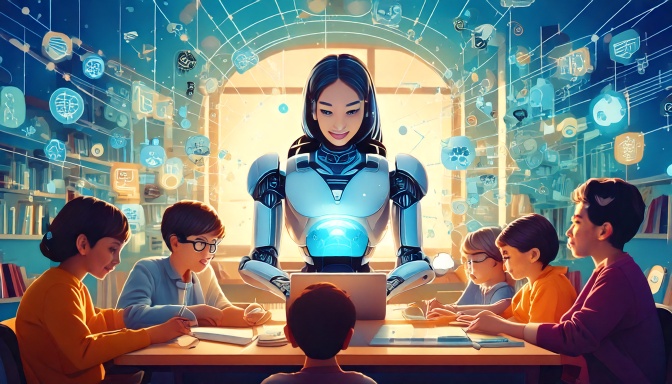
Modern classrooms face a persistent challenge: while individualized instruction tailored to each student’s pace and comprehension is the ideal, limited time and human resources make it nearly impossible to achieve. Teachers must attend to multiple students simultaneously, making it difficult to provide optimal learning experiences for each individual. Additionally, remote learning—which expanded rapidly during the pandemic—still struggles with building effective learning environments and managing student progress.
AI technology holds tremendous potential to solve these educational challenges. In this article, we explore how AI is transforming education—from enabling personalized learning to reshaping the teacher’s role and fostering human-AI coexistence—painting a picture of what the future of education might look like.
AI can analyze vast amounts of data to continuously assess each learner’s comprehension level, learning style, and progress. This enables a shift from traditional “one-size-fits-all” instruction to curricula optimized for individual students. For example, systems that automatically present advanced problems to math-proficient students while offering foundational exercises to those who struggle are already being deployed.
AI-powered learning analytics go beyond simple right-or-wrong assessments—they understand patterns of confusion and thought processes, enabling deeper levels of personalization. By adjusting content to match each learner’s pace and delivering appropriately challenging tasks at optimal timing, these systems promote highly efficient learning.
One of the greatest strengths of AI education systems is instant feedback. When learners receive results immediately after solving problems and understand why they made mistakes, learning effectiveness improves dramatically. Traditional education often suffered from delays between assignment submission and evaluation, breaking the continuity of learning.
Adaptive learning systems analyze learner responses and dynamically adjust the next content presented. If understanding of a topic is insufficient, supplementary explanations are provided; if comprehension is solid, the system advances to the next level. This real-time adaptation increases learning efficiency and helps maintain learner motivation.
With AI handling routine tasks like grading and administrative work, teachers can focus on more creative and human-centered aspects of education. This includes individual discussions with students, developing critical thinking skills, and providing emotional support—areas where AI falls short.
Research suggests that teachers spend approximately 30% of their working hours on administrative tasks. Automating these through AI directly contributes to improving educational quality. When teachers can concentrate on their core educational activities, stronger relationships with students and enriched individual guidance become possible.
In future classrooms, AI assistants are expected to function as partners to teachers. For instance, AI could analyze learning data in real-time during class and alert teachers when specific students are struggling, enabling timely intervention. AI can also support lesson preparation and planning by making suggestions based on past successes and student characteristics.
In effective collaboration models, the key is a complementary relationship where AI and teachers leverage their respective strengths. AI handles large-scale data processing and objective analysis, while teachers provide uniquely human education—emotional understanding and values formation. Striking this balance is the key to successful technology-enhanced education.
With AI advancement, remote learning is evolving from a mere substitute for in-person classes into an entirely new form of education unconstrained by location or time. Special lectures by geographically distant experts and collaborative projects with students from different cultures—learning experiences that were previously difficult to realize—are now becoming possible.
Furthermore, improvements in AI-powered automatic translation and subtitle generation are facilitating the formation of international learning communities that transcend language barriers. This expands access to diverse perspectives and knowledge, creating environments that nurture the competencies needed for success in a global society.
One of remote learning’s biggest challenges has been maintaining learner engagement and managing progress. AI addresses this by analyzing behavioral patterns and sending individually optimized study reminders and encouraging messages.
AI learning platforms incorporating gamification elements stimulate feelings of achievement and healthy competition, promoting continuous participation. For example, badges and points earned based on learning goal completion, along with virtual reward systems, have proven effective. These mechanisms make it possible to maintain high motivation even in remote environments.
As AI education systems become widespread, enormous amounts of learner data will be collected and analyzed. Strict privacy protection and ethical considerations are essential in handling this data—particularly when it involves minor students, where even greater caution is required.
The issue of “algorithmic bias”—where AI algorithms disadvantage certain groups—is also critical. Systems that unfairly evaluate learners from specific cultural backgrounds, for example, could undermine educational equity. Multi-perspective system design by diverse development teams and continuous monitoring are necessary.
As AI permeates education, the aspects that only human teachers can provide are receiving renewed attention. Empathy, ethical judgment, creativity, and critical thinking—areas where AI struggles—are expected to become even more important in future society.
The essence of education lies not only in knowledge transfer but also in character development and social skill building. While leveraging AI, intentionally designing spaces for learning through human dialogue and collaboration is essential for creating balanced educational environments. Harmonizing technology and humanity will be the central challenge of future education.
The ideal future education leverages the strengths of both AI and humans in a mutually complementary environment. AI handles massive data processing, objective evaluation, and personalized learning paths, while human teachers promote creative thinking, values formation, and emotional support.
This complementary approach enables what was previously difficult—achieving both personalized optimization and collaborative learning simultaneously. While AI provides optimal content for individual learners, human teachers facilitate collaborative learning spaces, promoting both personal growth and social development.
Thriving in a society where humans coexist with AI requires a different skill set than before. Rather than areas where AI excels—memorization and simple calculations—creativity, critical thinking, communication skills, and adaptability will be increasingly valued.
Educational institutions need curriculum reform that anticipates these changes. For instance, developing talent capable of creating value while collaborating with AI through project-based and problem-solving learning becomes crucial. Cultivating a lifelong learning mindset and the ability to continuously update oneself alongside technological evolution will be essential preparation for future learners.
The fusion of AI and education holds possibilities far beyond mere efficiency and automation. Personalized learning enables each individual to achieve maximum growth at their own pace and method. Teachers, through collaboration with AI assistants, can focus on more creative and human-centered educational activities.
In remote learning as well, AI utilization creates learning opportunities that transcend spatial and temporal constraints, enhancing both continuity and effectiveness. However, amid these developments, we must not forget the importance of data privacy protection, educational equity, and the irreplaceable human aspects of education.
さらに詳しい情報はAll3DPでご覧いただけます。
The future of education will evolve while balancing technology and humanity. Educators, parents, and learners themselves must understand the changes AI brings and actively engage in shaping a richer learning environment together. Why not join the discussion about AI and the future of education, and contribute to building optimal educational environments for the next generation?