Luma Ray3 HDR Video Generation Complete Guide: Cinematic Footage, Color Grading, Monetization (2026 Edition)
swiftwand swiftwand.ai
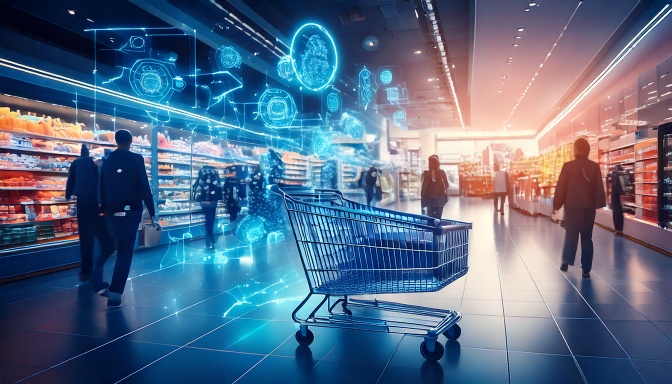
“I want to shop more efficiently.” “I want to find products that truly suit me.” AI is now making these wishes come true. Smart shopping is no longer just a trend — it is becoming an integral part of our daily lives. This article explains how AI is revolutionizing the shopping experience and providing more convenient, personalized experiences.
When visiting e-commerce sites, you often see “Recommended for you.” This is the result of AI-powered personalized recommendation systems. They analyze your browsing history, purchase patterns, time spent on pages, and other behavioral data to learn individual user preferences. For example, Amazon suggests related products with “Customers who bought this also bought…” based on purchase history. Similar AI technology is also used by services like Netflix and Spotify, contributing to enhanced user experiences.
AI-powered cashierless checkout systems that free us from the stress of waiting in line are rapidly spreading. The “Just Walk Out” technology represented by Amazon Go completes checkout automatically just by picking up items. The combination of cameras, sensors, and AI image recognition accurately identifies who picked up what.
In Japan, self-checkout has become common at convenience stores like Seven-Eleven and Lawson, and experiments with even more advanced fully unmanned stores are underway. This is creating an environment where comfortable shopping is available 24/7, while also addressing labor shortages.
Virtual try-on services powered by AI are solving the online shopping challenge of “you can’t know until you actually wear it.” You can simulate how chosen clothing will look on you by uploading your body measurement data or using images captured through your smartphone camera.
Services like ZOZOTOWN’s “ZOZOSUIT” and UNIQLO’s in-app virtual try-on feature are expanding in Japan. Virtual try-on combined with AR technology is also becoming available for other categories like eyewear and cosmetics, contributing to reduced return rates.
AI chatbots handle questions like “Which product suits me?” and “I want more detailed information” 24/7, 365 days a year. Advances in natural language processing technology have enabled responses close to human customer support.
Many retailers including fashion brands like UNIQLO and H&M, and electronics retailer Yodobashi Camera have adopted AI chatbots to improve customer satisfaction. Beyond simple Q&A, they can now learn customer preferences and provide personalized product suggestions.
The future of smart shopping will evolve even further. Voice shopping is expanding, where simple commands like “Alexa, order milk” complete daily supply replenishment. IoT integration is also advancing, where appliances like refrigerators connect with AI to monitor contents and automatically order missing groceries.
Furthermore, the fusion with blockchain technology will increase transparency in production processes and distribution routes, enabling more trustworthy shopping experiences. Improved accuracy of AI demand forecasting also leads to optimized inventory and more efficient pricing.
Browser extensions that automatically compare prices across multiple e-commerce sites and present the lowest price are gaining popularity. They also analyze past price trends to help you judge whether now is the right time to buy. Some even include sale period prediction features, making them powerful allies for smart shopping.
Apps have emerged that let you photograph and register your wardrobe with AI, which then suggests outfits and recommends items you’re missing. They can even suggest outfits based on weather and your schedule, solving the daily “what should I wear?” dilemma. Even people who lack fashion confidence can easily try new styles with AI suggestions.
Apps that manage refrigerator contents with AI and automatically suggest recipes using ingredients nearing their expiration date are also available. They reduce food waste while suggesting nutritionally balanced meal plans, achieving both food cost savings and health management simultaneously.
AI analyzes supply and demand data in real time to enable dynamic pricing — adjusting prices on the fly. While this approach is common for airline tickets and hotel rates, it is increasingly being adopted by e-commerce sites as well. Since the displayed price for the same product may differ depending on the time of browsing or the user’s purchase history, it’s important for consumers to check prices at multiple times.
While AI personalization is convenient, it also carries the problem of filter bubbles. Because AI recommends products based on past purchasing data, only products matching your preferences are displayed, potentially reducing opportunities for new discoveries. By consciously varying your search keywords and browsing across categories, you can maintain a balanced shopping experience.
In China, AI avatars have been introduced to live commerce, with virtual influencers conducting product introductions 24/7 and recording enormous sales. In the US, major supermarket chains have introduced AI-powered demand forecasting, successfully reducing food waste rates by over 30%. In Japan, convenience store chains are deploying AI ordering systems that achieve highly accurate inventory management by factoring in weather and event information.
Use AI suggestions as reference information. Since recommendations are based on purchasing data, they are often accurate, but it’s important to make the final judgment about whether you truly need something yourself. Setting a rule to wait 24 hours after adding items to your cart is also effective for preventing impulse purchases.
Major chain cashierless systems have advanced security measures, but we recommend checking how facial recognition and behavior tracking data is managed before use. Review the privacy policy and use the service only after you are satisfied with the scope of data usage.
AI recommendation features are highly accurate, making it tempting to buy things you don’t actually need. To prevent impulse buying, first set a monthly budget and use AI tools to automatically track spending. Also, instead of buying items that catch your eye immediately, add them to a wishlist and reconsider after 48 hours — impose a personal “cooling-off rule.” In most cases, purchase desire diminishes with time, enabling you to select only what you truly need.
Product reviews are a major factor in online shopping decisions, but AI-generated fake reviews are also increasing. Be cautious of reviews that are unnaturally positive across the board or contain abstract language without specific usage experiences. Review analysis tools can estimate the proportion of fake reviews, enabling more reliable and accurate purchase decisions. We recommend prioritizing reviews with photos and verified purchaser badges.
AI is also contributing to promoting sustainable consumption behavior. Services have emerged where AI calculates CO2 emissions during product manufacturing and suggests lower environmental impact alternatives. Apps that use AI to identify products nearing expiration in supermarkets and offer them at significant discounts are also spreading for food loss reduction.
AI is also being utilized for matching reuse and recycled goods, making environmentally conscious shopping more accessible than ever. In the fashion industry, AI-driven sustainability initiatives are accelerating. AI’s accurate analysis of consumer body data significantly reduces returns due to size mismatches, contributing to reduced CO2 emissions from shipping. Additionally, AI systems that automatically evaluate the condition of secondhand items are greatly improving reliability in the secondary market.
In the coming years, AI shopping is expected to undergo even greater transformation. Hands-free shopping via voice AI will become established as an everyday purchasing method alongside the proliferation of smart speakers. The practical deployment of “walkable shopping” — where AI connected to AR glasses displays product information and price comparisons in real time while walking through town — is also approaching.
Furthermore, AI integrated with personal health data will offer personalized groceries that automatically exclude allergens and suggest ingredients considering nutritional balance. Fully automated shopping where AI manages everything from creating shopping lists to arranging delivery is also within sight. While maximizing the benefits of technology, the awareness to choose consumption behaviors aligned with your values will become increasingly important.
AI is dramatically transforming our shopping experience. Personalized product suggestions, zero-wait cashierless checkout, virtual try-on from home — experiences that were once dreams have become reality. However, there are also challenges consumers should be aware of, such as dynamic pricing and filter bubbles. Let’s enjoy the convenience of AI while never forgetting to make our own independent judgments, and practice smart shopping with technology as our ally.
さらに詳しい情報はAll3DPでご覧いただけます。