Gaming and AI Complete Guide – From Deep Blue to Generative AI Game Development [2026]
swiftwand swiftwand.ai
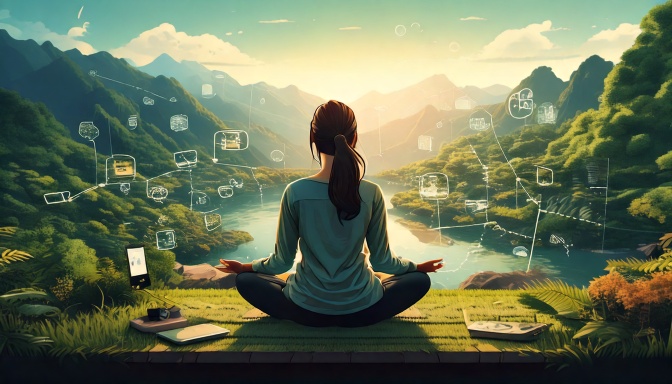
Our daily lives are surrounded by digital technology like smartphones and AI. Have you ever noticed yourself checking your phone the moment you wake up, asking an AI assistant about the weather, and staring at a screen throughout your commute? Behind this convenience, our own time and ability to think may be slipping away. In this article, we explore how to maintain a healthy distance from AI while maximizing the benefits of technology.
I used to spend entire days unable to put down my phone. I would reflexively check every notification sound and had developed a habit of mindlessly scrolling through social media. Especially after AI chatbots arrived, I started asking AI about every little question or concern.
One weekend, I went out and forgot my phone. At first I felt anxious, but gradually I began to notice the scenery around me and the expressions on people’s faces. That experience was the beginning of my digital detox journey.
AI is a wonderful tool that makes our lives more convenient. However, relying on AI for everything may weaken our ability to think and make judgments on our own. To build a healthy relationship, it’s important to use AI as a tool while still valuing your own thinking and decision-making.
A digital detox doesn’t mean eliminating all technology. Rather, it’s about finding a healthy distance from technology. Start with small habits.
When I started the habit of not looking at my phone for the first hour after waking up, my mornings became surprisingly fulfilling. Having time for reading, meditation, and stretching made each day start more peacefully.
Making the two hours after dinner an “AI-free time” is also effective. During this time, focusing on family conversations and hobbies while stepping away from digital devices helps you reclaim time for real human connections and self-reflection.
It’s important to distinguish between what AI excels at and what only humans can do. While AI is excellent at information processing and efficiency, experiences using the five senses, emotional nuance, and creative expression remain uniquely human domains.
Recently, instead of asking AI for a recipe, I had the chance to learn directly from my grandmother. The conversations that emerged during the process and the experience of learning “just the right amount of salt” through physical sensation were precious things that text could never convey.
For those struggling with how to interact with technology, here are specific solutions:
The effects of digital detox have been demonstrated in numerous studies. Multiple studies have reported that reducing smartphone usage by more than 2 hours per day suppresses the secretion of cortisol (the stress hormone) and improves sleep quality.
Research published by a Harvard Medical School team found that one week of social media detox improved anxiety symptoms by 16% and depression symptoms by approximately 25%. Excessive use of digital devices affects the brain’s reward system, altering dopamine release patterns. Regular detox resets the brain’s reward system, restoring the ability to feel joy from real-world experiences.
For digital natives, a complete detox isn’t realistic. Start by turning off social media notifications and placing your smartphone in another room during meals. During study or creative work, consciously avoid over-relying on AI assistants and ensure time for thinking on your own. A “half detox” — spending just half a day offline on weekends — is also effective.
For the generation that uses AI tools daily at work, the key is disconnecting outside working hours. Set the first hour after leaving work as “no screen time” and dedicate it to family conversation or hobbies. On weekends, incorporate outdoor activities in nature and consciously increase experiences using all five senses — this will boost focus and creativity during the workweek.
Seniors tend to spend extended time using AI tools attracted by their convenience. Set daily time limits for health management apps and AI assistants, and dedicate the remaining time to physical activities like walking, gardening, and reading. Participating in local community activities helps maintain human connections that digital tools cannot provide.
To make detox a lasting habit rather than a one-time event, creating the right environment is essential. Don’t bring your smartphone into the bedroom and get a dedicated alarm clock. Also, deciding in advance what to do during detox time helps prevent you from reaching for your devices. Creating a reading list, a list of hobbies you’ve wanted to try, and a list of people you want to meet is effective.
A 21-day challenge with gradual reduction is also recommended. Week 1: turn off notifications and halve social media time. Week 2: no phone during meals and for 1 hour before bed. Week 3: practice a half-day offline session on weekends. By accumulating small wins, you can build the habit without strain.
Keep only your emergency contact phone number active and turn off all other notifications. Letting colleagues and supervisors know about your detox schedule in advance makes it easier to gain understanding.
You don’t need to stop completely. What matters is maintaining a proactive stance of “using tools” rather than “being used by them.” Instead of delegating decisions entirely to AI, develop the habit of making final decisions yourself.
The most effective approach is for the whole family to participate. Rules like no smartphones at the dinner table and making weekend outdoor activities a family tradition naturally create time away from digital devices.
An increasing number of companies are focusing on employee digital well-being. A German automaker introduced a system that automatically stops email sending after work hours, reportedly reducing employee burnout by 30%. In Japan, companies are emerging that pause all internal chat notifications on no-overtime days or designate one day per week as “Analog Work Day.”
These initiatives not only improve employee satisfaction but also lead to enhanced creativity and productivity.
You can also apply corporate initiatives at the personal level. For example, separating notification schedules for work and personal apps, or keeping a “gratitude journal” where you write down 3 things you enjoyed without digital devices at the end of each day — small daily efforts compound into major changes. The key is to continue at your own pace without pushing too hard.
What you do during detox time is the key to success. Recommended analog activities include handwriting journals and sketching, playing musical instruments, cooking, gardening, and board games. Activities that use your hands are particularly effective for mindfulness and ideal for recovering from digital fatigue. Walking in nature and photography also stimulate the five senses and offer refreshing benefits. Film photography is gaining popularity as a way to enjoy photography without using a smartphone, combining detox with a hobby.
To feel the benefits of your detox, recording changes with objective metrics is effective. Beyond tracking screen time numbers weekly, also check sleep quality, sustained focus duration, and frequency of face-to-face communication. Comparing your metrics before starting and one month later will reveal your optimal distance from digital devices. Quantifying results also helps maintain motivation and supports long-term habit formation.
Specifically, just noting three things daily — time from waking to first touching your smartphone, number of times you opened social media, and duration of focused time without digital devices — can provide significant insights. Recording by hand in a paper notebook is itself a digital detox practice, making it a two-for-one method.
A digital detox is not about rejecting AI or technology. Rather, by maintaining a healthy distance from AI, you can receive the benefits of technology even more effectively. Start today with a small step — turning off notifications or placing your smartphone in a different room during meals. By making regular detox a habit, you can live a rich and authentic life even in our digital society.
さらに詳しい情報はAll3DPでご覧いただけます。