AI Coding Tools for 3D Printing: A Complete Guide to Creating Objects with Words
swiftwand swiftwand.ai
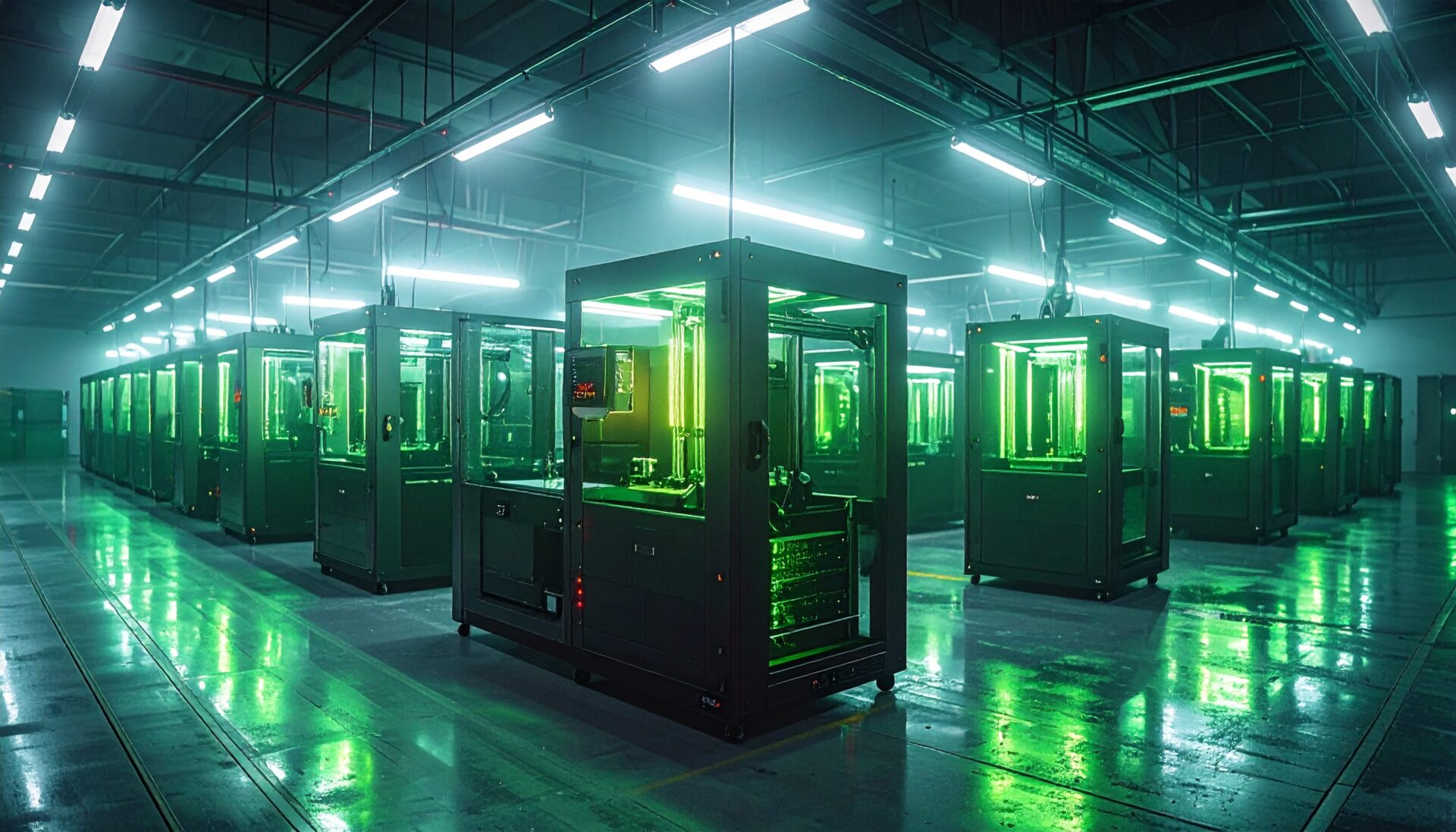
The desktop 3D printer market reached approximately $4.9 billion in 2024 and continues expanding at a CAGR of 17–24%. One of the most exciting trends driving this growth is the “dark factory”—a concept meaning a fully unmanned factory running with the lights off. Originally practiced by industrial giants like FANUC and Siemens, this concept has now descended to personal 3D printers.
Managing multiple printers with AI agents, keeping them running while you sleep—the home dark factory is becoming reality. Individuals running print farms of dozens of machines report monthly revenue of several thousand dollars on Etsy, with some operating 70+ printers generating six-figure annual income. This article provides a comprehensive 2026 guide covering technology foundations, practical setup, revenue models, and challenges to overcome.
The biggest barrier to unmanned operation is automatic detection and response to print failures. Obico (formerly The Spaghetti Detective) is the leading open-source tool: it analyzes camera footage in real-time with machine learning, detecting anomalies like stringing and layer delamination, then automatically pausing the print.
In 2026, a cutting-edge 4-agent integrated framework using LLMs has emerged. Four agents—image analysis, planner, executor, and supervisor—collaborate to analyze each completed layer with vision-language models, auto-generate correction plans, convert them to machine-readable commands, and send them to the printer in real-time. This approach has demonstrated several-fold improvements in tensile strength over conventional methods.
Efficiently managing multiple printers requires dedicated farm management tools. The main options in 2026:
True unmanned operation requires automatically removing finished prints from the build plate. Three main approaches exist:
Primary sales channels are Etsy, Amazon, eBay, and your own website. Etsy excels for custom and niche products with low barriers for individual creators. Amazon suits high-volume sales but limits customer data ownership and upsell opportunities.
Revenue benchmarks: 5 printers running at full capacity can output 100–200 products monthly. At $8–$20 profit per item, that’s $800–$3,000+ monthly net profit. Choosing print-worthy staple products like dragon eggs and lithophanes is key.
Realistic initial investment: 5 printers (Bambu Lab A1 mini class, ~$200 each) = $1,000, filament inventory $200–$350, cameras and networking $150–$200. Total: approximately $1,350–$1,550. At $1,500/month profit, you can recover your investment in 1–2 months. This assumes 80%+ uptime—AI monitoring and auto-recovery are essential to minimize downtime from filament jams, bed adhesion issues, and power problems.
The brain of the home dark factory is the agent orchestrator. The recommended setup uses an edge device (Jetson Orin Nano or Raspberry Pi 5) as the core, processing each printer’s camera feed locally. No cloud dependency means printing continues even during network outages.
The orchestrator has four key roles: job scheduling (optimal assignment from order queue to printers), real-time monitoring (AI camera analysis for anomaly detection), filament management (remaining quantity prediction and dynamic allocation), and reporting (uptime, yield rate, and revenue dashboards).
Klipper firmware delegates motor control to an external computer like Raspberry Pi, enabling advanced control features. Through the Moonraker API, you can programmatically query printer status and send G-code commands—allowing your custom orchestrator to control all Klipper-equipped printers. OctoPrint’s PrintWatch plugin processes camera feeds with ML models for real-time defect detection, auto-executing user-configured actions (pause, notify, or stop).
3D printers use high-temperature nozzles (300°C+) and heated beds (60–110°C) for extended periods—fire risk is real. For unmanned operation, smoke detectors, temperature anomaly auto-shutdown, quality wiring, adequate power supply ratings, and fire-retardant enclosures are essential.
FDM printer noise ranges from 35–75dB. Fans are the primary noise source, and stepper motor quality matters. Using boards with TMC2225 silent drivers significantly reduces motor noise. Running 5+ printers simultaneously warrants soundproof enclosures or a dedicated room.
Each FDM printer averages 100–200W. Five printers running 24/7 consume 360–720kWh monthly. Smart plugs for per-printer power monitoring and auto-heater-off during idle periods are effective energy-saving measures.
Start with one printer to establish stable print quality. Choose a cost-effective model like Bambu Lab A1 mini or Creality Ender-3 V3 KE. Set up remote monitoring with OctoPrint or Bambu Handy. Open an Etsy shop and test-sell to gauge market response. Don’t aim for perfection—focus on collecting data about what sells.
Once you’ve found winning products, add identical printers to reach 3–5 units. Deploy Bambu Lab Farm Manager or OctoPrint + Obico for farm management with automated job queuing and failure detection. Consider adding AMS (Automatic Material System) for multicolor capability and product differentiation.
After confirming stable operation with 5+ printers, introduce automatic ejection mechanisms—flexible plate auto-swap systems or DIY pusher mechanisms. Install smoke detectors and temperature anomaly auto-shutdown circuits without exception. This makes overnight unmanned operation realistic, boosting uptime from 50% to 80%+.
With stable unmanned operation, advance your agent orchestrator: filament remaining prediction with auto-reordering, demand-based production planning optimization, and AI-automated quality control. Once monthly revenue consistently exceeds $3,000, consider moving to a garage or dedicated space and scaling to 10+ printers.
Slant3D is a standout example, operating hundreds of FDM printers for on-demand manufacturing with zero inventory using JIT (Just-In-Time) methodology. Customer orders auto-assign to available printers, with printing through shipping handled at maximum speed. This model is fully applicable at home scale.
Meanwhile, Shapeways—once an on-demand 3D printing pioneer—filed for bankruptcy in 2024, crushed by high overhead costs. The lesson is clear: the home dark factory’s greatest advantage is minimal fixed costs. Operating from home eliminates office rent and staff salaries, making 90%+ profit margins achievable.
Budget-focused: Bambu Lab A1 mini (~$200). Quality/speed balance: Bambu Lab P1S (~$500). Bambu Lab’s farm management software is mature and works well for multi-printer setups. Open-source enthusiasts should consider the Klipper-compatible Creality Ender-3 V3 series.
Minimum requirements: smoke detector, temperature-fused power strip, and fire-retardant enclosure. Strongly recommended: build an auto-shutdown circuit that cuts power via smart plug when Obico or similar monitoring tools detect temperature anomalies.
5 printers at full capacity: $800–$3,000+ monthly. Niche products (lithophanes, custom figurines, functional parts) command higher prices and margins. Factor in Etsy fees (~15% of sales) and shipping costs when pricing.
For Bambu Lab printers, Farm Manager is the easiest and most feature-rich option—LAN-only with built-in job queuing. For mixed-manufacturer setups or maximum customization, OctoPrint + Obico is the better choice.
Bambu Lab AMS automatically switches between 4 filament colors during printing and auto-measures remaining filament, sending alerts when low. For non-AMS machines, DIY solutions using load cells or encoders can track filament consumption.
When selling 3D-printed items, beware of copyright and design patent infringement. Unauthorized reproduction of character goods or brand logos is illegal. Use only original designs or properly licensed models. Also be mindful of product safety regulations.
The home dark factory is no longer science fiction. With Bambu Lab Farm Manager, Obico, and Klipper maturing, and AI failure detection reaching practical levels, individuals can now build unmanned 3D print farms. The key is not aiming for a perfect system from day one. Start with one printer, validate the market on Etsy, and scale incrementally as you find winners. Just as FANUC runs factories unmanned for 30 days, you too can build a system where printers earn money while you sleep—one step at a time.
For more information, visit All3DP.