Zero Trust Pipelines: Securing Your Supply Chain with OIDC and Sigstore in 2026
swiftwand swiftwand.ai
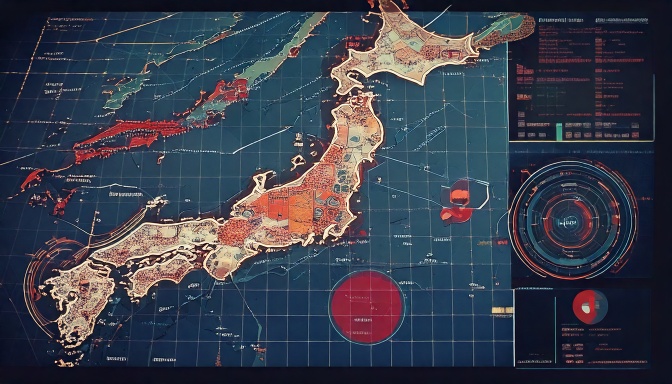
Japan has historically been a global technology powerhouse, but its position in the AI race tells a more nuanced story. While the United States and China dominate AI investment and research output, Japan is carving a distinctive path that leverages its manufacturing expertise, robotics heritage, and unique approach to human-AI collaboration. This article examines where Japan stands in AI development as of 2026, the government and corporate strategies driving progress, and what the future holds.
In terms of raw AI investment, the US leads with companies like Google, Microsoft, and OpenAI collectively spending hundreds of billions on AI research and infrastructure. China follows with massive government-backed AI initiatives and companies like Baidu, Alibaba, and Tencent. Japan ranks behind these two giants but remains a significant player, particularly in applied AI for manufacturing, robotics, and healthcare.
Japan’s AI market was valued at approximately 2.3 trillion yen in 2025, with projections reaching 4 trillion yen by 2028. The growth rate is accelerating, driven by labor shortages that make AI automation not just desirable but essential for maintaining economic output.
The Japanese government has made AI a national priority through several key initiatives. The AI Strategy 2022 (revised through 2025) outlines a framework focusing on social implementation of AI, with emphasis on solving societal challenges like aging population, labor shortages, and disaster prevention.
Key policy developments include substantial investment in AI research through RIKEN and other national institutes, regulatory frameworks that balance innovation with safety (Japan has taken a notably pragmatic approach to AI regulation compared to the EU’s stricter stance), and educational reform initiatives to produce more AI-skilled workers.
The Ministry of Economy, Trade and Industry (METI) has been particularly active in promoting AI adoption in manufacturing, launching programs that help small and medium enterprises integrate AI into their operations.
Japanese corporations are implementing AI across diverse sectors:
Toyota and Automotive AI: Toyota has invested heavily in autonomous driving technology through its Woven by Toyota subsidiary. The company is also using AI for manufacturing optimization, quality control, and predictive maintenance across its global production network.
SoftBank and AI Investment: Through its Vision Fund and direct investments, SoftBank continues to shape the global AI landscape. Domestically, SoftBank has deployed AI-powered customer service solutions and is developing Japanese-language large language models.
NEC and Public Safety: NEC’s AI-powered biometric and surveillance technology is used in airports, stadiums, and public infrastructure. Their facial recognition technology is consistently ranked among the world’s most accurate.
Preferred Networks: This Tokyo-based startup specializes in deep learning for industrial applications, partnering with companies like Fanuc (robotics) and Toyota to bring AI to manufacturing floors.
Despite trailing the US and China in overall AI investment, Japan possesses several distinctive advantages:
Robotics Heritage: Japan has decades of leadership in robotics, and the convergence of AI with robotics creates opportunities that few countries can match. AI-powered robots in manufacturing, healthcare, and service industries represent a natural extension of existing Japanese expertise.
Manufacturing Data: Japan’s precision manufacturing sector generates enormous volumes of high-quality industrial data, which is invaluable for training AI models for quality control, predictive maintenance, and process optimization.
Healthcare AI: With the world’s most aged population, Japan has both the incentive and the data to develop AI solutions for elder care, medical diagnostics, and drug discovery. AI-powered diagnostic tools are already being deployed in Japanese hospitals.
Cultural Acceptance: Japanese society has historically shown greater comfort with robots and AI compared to many Western countries, reducing adoption barriers.
Several obstacles hinder Japan’s AI ambitions. A shortage of AI engineers remains the most critical challenge, with estimates suggesting Japan needs 120,000 more AI specialists by 2027. The language barrier limits access to cutting-edge English-language AI research and tools. Japanese-language AI models have historically lagged behind English-language counterparts, though this gap is narrowing.
Corporate culture also plays a role. Traditional Japanese business practices, including consensus-driven decision-making and risk aversion, can slow AI adoption compared to the move-fast culture of Silicon Valley startups. However, the urgency of labor shortages is gradually shifting these cultural norms.
Japan’s AI future looks promising in specific domains. Rather than competing directly with the US and China in general-purpose AI, Japan is positioning itself as a leader in applied AI for manufacturing, robotics, and healthcare. The convergence of AI with Japan’s existing industrial strengths creates a competitive advantage that is difficult to replicate.
For professionals and businesses in Japan, the message is clear: AI literacy is no longer optional. Whether you are in manufacturing, healthcare, finance, or creative industries, understanding how AI can augment your work is becoming essential for career competitiveness.
Japan’s AI story is not about winning a global race but about finding the right application of AI technology for Japan’s unique challenges and strengths. The combination of world-class manufacturing, advanced robotics, an aging population driving healthcare AI, and increasing government support creates a foundation for sustained AI growth. For anyone interested in the intersection of AI and Japanese industry, the next few years will be particularly exciting to watch.
For more information, visit All3DP.