Complete Guide to Resin 3D Printers: SLA vs DLP vs LCD — Differences & How to Choose for High-Detail Printing
swiftwand swiftwand.ai
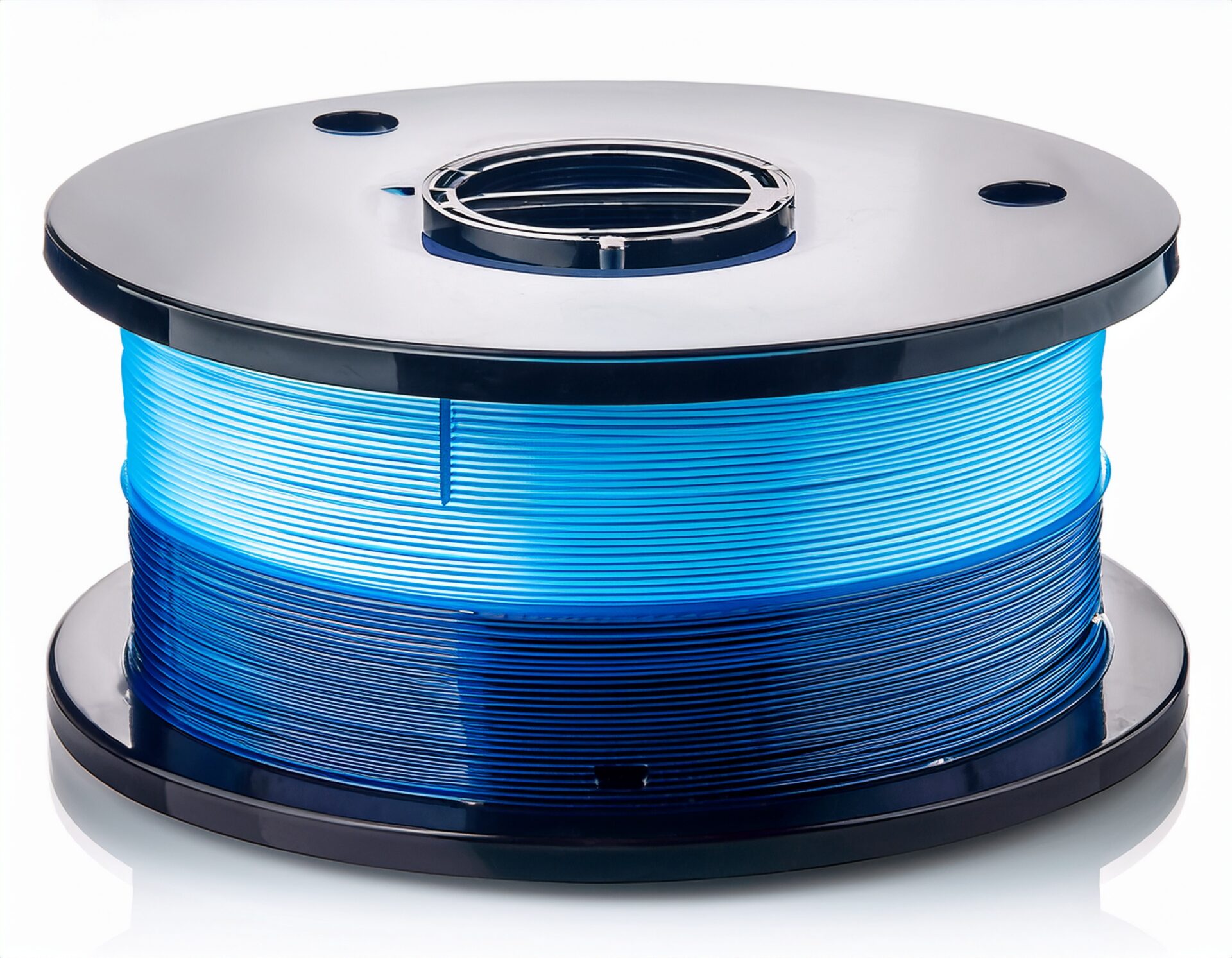
You’ve bought a 3D printer — but which filament should you choose? With options like PLA, ABS, PETG, and TPU, each with different properties and use cases, it’s easy to feel overwhelmed. This comprehensive guide covers everything beginners need to know about filament types, selection criteria, proper storage methods, and troubleshooting common issues. Read on to find the perfect filament for your projects and take your 3D printing to the next level!
One surprisingly common dilemma for beginners is choosing filament color. For your first spool, white or gray is recommended. White hides layer lines well and can be easily painted with acrylic paint or lacquer spray afterward. Gray is ideal for prototyping — dimensional errors and surface roughness are easy to spot.
Black filament produces great-looking finished products but makes it harder to notice print defects like stringing and misalignment during printing. Transparent or clear filaments require very precise temperature settings and are challenging for beginners. Start with standard opaque colors to build experience, then graduate to specialty colors as your skills improve.
The most common beginner mistake is neglecting filament storage. If you leave opened PLA in an unsealed state indoors, moisture absorption progresses visibly within just 2–3 weeks, and you’ll start hearing crackling sounds during printing. Printing with wet filament produces countless tiny bubbles on the surface, severely degrading finish quality.
The author personally experienced leaving five spools on a desk during Japan’s rainy season (tsuyu), only to find all of them had degraded beyond use — wasting thousands of yen. This painful lesson led to adopting a rigorous storage routine using airtight containers and silica gel desiccant packs.
Japan’s climate means humidity varies dramatically by season. During the rainy season through summer, when humidity exceeds 70%, replace silica gel packs in sealed containers weekly. Winter is relatively dry, but watch out for condensation caused by heating. Avoid storing filament near windows where temperature swings are extreme — instead, choose stable locations like the middle shelf of a closet.
For long-term storage, vacuum-sealing is most effective. Budget-friendly clothing compression bags from 100-yen shops work as substitutes — add silica gel and they’ll maintain quality for over six months. Before use, running filament through a dryer for 2–4 hours can fully revive moisture-absorbed spools, especially critical for hygroscopic materials like Nylon and TPU.
With so many filament types available — PLA, ABS, PETG, TPU, and more — understanding their properties and appropriate use cases is essential. Add in issues like unexpected nozzle clogs and inconsistent print quality, and filament selection can feel overwhelming. This guide breaks down the characteristics, selection criteria, proper storage techniques, and common troubleshooting solutions to give you complete confidence in your filament choices.
PLA is a plant-based biodegradable plastic and the most recommended material for 3D printing beginners. It prints at a relatively low 190–220°C, warps minimally, and is very forgiving. Many printers don’t even need a heated bed for PLA, and the low odor makes it perfect for indoor use.
However, PLA has limited heat resistance (around 60°C) and isn’t suitable for outdoor use or high-temperature environments. Its strength is also lower compared to other materials, making it better suited for decorative objects and prototypes rather than functional parts.
ABS is the same durable material used in automotive parts and LEGO bricks. It prints at a higher 230–250°C with heat resistance up to about 100°C. ABS can be vapor-smoothed with acetone for a polished finish.
The downsides are significant for beginners: strong odor during printing, high tendency to warp and crack, and the need for a heated bed (around 100°C) plus an enclosure. This makes ABS a more advanced material.
PETG is a modified version of the same material used in plastic bottles, offering a balanced middle ground between PLA and ABS. It prints at 230–250°C with heat resistance around 80°C. Stronger than PLA but easier to print than ABS, PETG excels in water and chemical resistance — ideal for functional parts and outdoor use.
PETG tends to string slightly more and produces a glossy surface finish. It’s an excellent second material for beginners who’ve mastered PLA.
TPU produces flexible, rubber-like prints perfect for phone cases, grips, and shoe soles. It prints at 220–250°C but requires a direct drive extruder for reliable feeding. Print speeds must be kept slow, making TPU prints more time-consuming.
Verify your 3D printer’s supported temperature range. Some entry-level models max out at 230°C, which may not be sufficient for ABS or PETG. If you plan to use TPU, a direct drive extruder is strongly recommended over a Bowden setup.
Moisture is filament’s worst enemy. PLA, PETG, and especially Nylon are highly hygroscopic and absorb water from the air. When wet filament is extruded, the moisture evaporates and creates bubbles, leading to poor surface quality, reduced strength, and potential nozzle clogs.
If your filament has absorbed moisture, these methods can restore it:
Nozzle clogs are commonly caused by poor filament quality, incorrect temperature settings, and using moisture-absorbed filament. Solutions include:
PLA infused with carbon fiber offers approximately twice the flexural strength of standard PLA while remaining lightweight with excellent dimensional stability. It’s ideal for drone frames, tool jigs, and prototype parts. Note that carbon fiber is highly abrasive — a hardened steel nozzle (0.4 mm or larger) is mandatory. Expect to pay around ¥3,000–5,000 per kg.
PLA blended with 20–40% real wood powder produces prints with a wood-like texture and aroma. By varying temperature, you can achieve different shades — lower temps give a light wood tone, while higher temps create a darker, scorched appearance. Popular for figurines, decorative items, and interior goods. A nozzle diameter of 0.5 mm or larger is recommended for smooth flow.
Silk PLA produces a beautiful glossy, satin-like surface finish. It uses the same print settings as standard PLA, making it accessible to beginners who want professional-looking results. Perfect for vases, art objects, and gift items. Priced at approximately ¥3,000–4,000 per kg.
To save on costs, buy from trusted manufacturers (eSUN, Polymaker, Bambu Lab) during sales events and stock up. However, bulk buying requires proper storage infrastructure — even sealed spools degrade in humid environments without desiccant. Always prioritize storage before stocking up.
Filament doesn’t have a strict expiration date, but quality degrades within months if not stored properly. Highly hygroscopic materials like Nylon and PVA can start deteriorating within 1–2 weeks of opening. With proper storage in airtight containers with silica gel at below 40% humidity, filament can maintain quality for over a year.
Even with the same material type, switching manufacturers mid-print is not recommended. Each manufacturer uses slightly different additives and formulations, which can cause poor inter-layer adhesion at the junction point. Finish one spool completely before switching brands, or stick with a single manufacturer for consistency.
Wet filament can be restored using a food dehydrator or dedicated filament dryer (approximately ¥5,000–8,000). Guidelines: PLA at 50°C for 4–6 hours, ABS at 65°C for 4–6 hours, Nylon at 70°C for 8–12 hours. Home ovens are not recommended due to unstable temperature control. If you hear crackling sounds during printing, that’s a sure sign of moisture absorption.
For reference, a smartphone case–sized print uses about 30–50g, while a palm-sized figurine uses 50–100g of filament. You can significantly reduce material consumption by adjusting infill density: 20–40% for functional items, 10–15% for decorative pieces strikes the optimal balance between cost and strength.
Choosing the right filament directly impacts print quality and the functionality of your creations. Beginners should start with PLA to master fundamental printing skills, then progress to PETG and TPU as confidence grows. In 2026, specialty materials like carbon fiber composites and wood-fill filaments have expanded the possibilities — individuals can now create objects with professional-grade quality and function.
By practicing proper filament storage and understanding each material’s unique characteristics, you’ll unlock the full potential of 3D printing. Your journey of creation starts with the right filament choice!
さらに詳しい情報はAll3DPでご覧いただけます。