Claude 101 Deep Dive 2026 — How to Start the Right Conversation with AI
swiftwand swiftwand.ai

There is a crucial difference between “being able to use AI” and “being able to collaborate with AI.” The 4D Framework from Anthropic is a systematic methodology designed to bridge this gap. This article provides detailed explanations of the four Ds (Delegation, Description, Discernment, and Diligence) that form the core of the 4D Framework, and shows concrete ways to apply them in Japan’s business environment.
The 4D Framework, which sits at the center of AI Fluency, is the methodology taught in Anthropic Academy’s “AI Fluency” course. The course was developed collaboratively by Joseph Feller (University College Cork, UCC) and Rick Dakan (Ringling College of Art and Design).
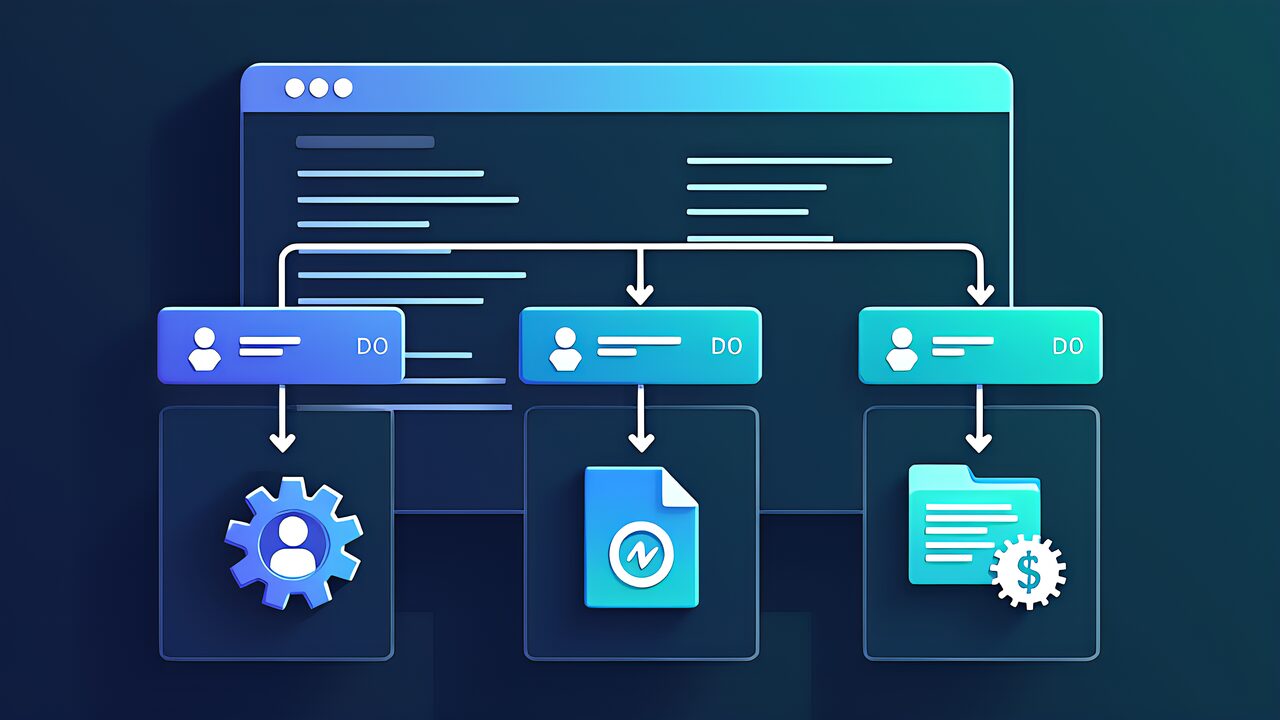
The 4D Framework decomposes AI collaboration into four stages:
These four skills don’t function independently; they work cyclically. By selecting appropriate tasks through Delegation, providing precise instructions through Description, evaluating outputs through Discernment, and conducting final verification through Diligence, the accuracy of AI utilization continuously improves.
Before reading this article, we recommend reviewing “Claude 101 Explained in Detail 2026” to master the fundamentals of Claude’s basic operations, and then advancing to this article as the next step.
Delegation, the first stage of the 4D Framework, is the skill of judging “what to delegate to AI.” Not all tasks are suitable for AI.
The critical point is that Delegation is not “complete hand-off.” Rather, delegating to AI should be a strategic decision accompanied by clear expectations and verification criteria.
Description, the second stage of the 4D Framework, extends beyond simple prompt writing. Specifically, it means treating instructions to AI as “task design.”
Poor: “Write a report.”
Good:
Purpose: Create a Q3 3D printer utilization report
Context: For executive meeting; audience includes non-technical executives
Constraints: A4 format, max 2 pages, 3 graphs maximum
Quality Criteria: All figures must have sources; include 3 improvement recommendations
Format: Executive summary → Numerical findings → Improvement proposals
By designing tasks this way, AI output quality stabilizes and revisions decrease significantly.
Discernment, the third stage of the 4D Framework, is the skill of critically evaluating the quality of AI-generated outputs.
Is the information AI generated based on facts? For numerical data, proper nouns, and technical specifications, always verify against primary sources. Hallucination — where an LLM generates plausible-sounding false information — is a common risk across all LLMs.
Does the output accurately address the original question or request? AI sometimes generates responses that deviate from the intent of the question.
Does it include all requested elements? Verify that there are no partial answers or missing important perspectives.
Is the output unbiased? Especially when requesting comparative analysis or recommendations, verify that the answer isn’t skewed toward a particular viewpoint.
Diligence, the fourth stage of the 4D Framework, is the final verification process conducted before applying AI outputs to actual business operations.
For code outputs, conduct execution tests; for documents, verify facts. Actively leverage tools for automatable verification.
Does the output meet business requirements and stakeholder needs? Ensure domain experts verify the output.
Does the output conform to ethical standards and comply with legal requirements? Exercise particular caution with customer-facing communications.
Diligence is not “bothersome extra work.” Rather, humans bear ultimate responsibility for AI outputs. Diligence is the essential process for fulfilling that responsibility.
Consider a quality assurance department in manufacturing. Monthly quality reports involve multiple processes: data aggregation, graph generation, and documentation. “Data aggregation and graph generation” and “report drafting” can be delegated to AI. However, “analyzing the root causes of anomalies,” “final decisions on improvements,” and “determining what to report to management” require human expertise and judgment.
In IT company customer support, delegating first-level ticket classification and draft responses to AI while having staff conduct final verification and sending is effective. The critical element is pre-agreement within the team on the scope of delegation, documented clearly.
Rather than vaguely saying “write a job posting,” design the task precisely:
Purpose: Create a senior backend engineer job posting
Context: Startup with 50 employees, full remote
Target Audience: Engineers considering career change (5+ years experience)
Constraints: Salary range ¥8-12 million, technologies: Go/Python/AWS
Quality Criteria: Include 5+ specific job responsibilities; convey company culture
Format: Company overview → Position overview → Responsibilities → Required skills → Nice-to-have skills → Compensation
Description precision directly impacts AI output quality. For Japanese companies, include cultural constraints such as “polite/casual tone” and “company name public/confidential.”
When a sales team has Claude generate a market research report, verification checkpoints include:
For numerical data, verification against government statistics and industry association reports is essential.
When the legal department requests AI contract draft review, three-stage verification is required:
None of these verifications should be delegated entirely to AI.
Use the following checklist to self-evaluate your mastery of the 4D Framework. Rate each item as “Can do,” “Partially can do,” or “Cannot do yet.”
If more than half your responses are “cannot do yet,” we recommend taking Anthropic Academy’s “AI Fluency” course to systematically strengthen each skill. If many responses are “partially can do,” you’re at the stage where practical, repetitive practice will solidify your skills.
Japan’s unique horenso culture shows high affinity with AI utilization.
Input weekly progress data (spreadsheet figures) into Claude; automatically generate status reports for supervisors. Format: Conclusion → Results → Issues → Next week’s plan
Generate emails to related departments with appropriate politeness levels and information granularity adjusted per recipient. Technical departments receive details; sales departments receive only key points.
Have Claude generate multiple solution approaches for issues, organize their pros and cons, then present to supervisors. Pre-organizing discussion points with AI improves consultation quality.
Business proposals are crucial documents in Japanese corporate decision-making. Claude can efficiently create documents following patterns of previously approved proposals. However, critical items like amounts and approval routes must always be verified by humans (Diligence).
Input meeting audio transcripts into Claude; structure them into “Decisions/Action Items/Assignments.” Pre-defining the minutes format as part of Description yields consistent, standardized minutes.
Have Claude generate draft responses to customer inquiries; staff verify and adjust content before sending. Specifying cultural elements like honorific language and seasonal greetings in prompts yields appropriate outputs.
Before full company rollout, test the 4D Framework with 3-5 pilot team members. Include not just high-IT-literacy members but also non-technical staff. This enables validation from diverse perspectives.
Document AI delegation criteria per department. Sales: “Initial proposal drafting” and “competitor research data collection” are AI-delegable; “price negotiation decisions” and “customer relationship building” are human. Since criteria differ across legal, HR, and technical departments, discussion with department heads is essential.
Accumulate prompt templates for frequent business tasks in internal knowledge bases. Examples: email creation, meeting minutes structuring, report generation. Optimized templates per department minimize quality variation. Review templates regularly and standardize effective ones.
Critical evaluation skills of AI outputs cannot be learned through lectures alone. Conduct regular workshops with “error detection” exercises where AI-generated documents intentionally contain errors. Learning hallucination patterns experientially improves real-world discernment.
Institutionalize checklists per department for verifying AI outputs before business application. Keep checklist items to 5-8 to prevent becoming mere formality. Review checklist effectiveness quarterly; add items when new risk patterns are discovered.
The 4D Framework is designed from both academic and creative perspectives. Joseph Feller is a professor of Business Information Systems at University College Cork (UCC). Known for research on open-source software, he has long studied relationships between technology and organizations. His academic methodology supports the framework’s systematic rigor.
Rick Dakan teaches at Ringling College of Art and Design. His experience in game design and creative technology brings practical applicability and creative perspective to the framework. Through their collaboration, the 4D Framework combines theoretical robustness with real-world practicality.
The AI Fluency course is built by integrating their insights with Anthropic’s technical team.
The 4D Framework applies directly to 3D printing operations.
Initial slicer parameter suggestions can be delegated to AI. Input material properties, printer specifications, and object geometry to generate recommended initial settings. However, final parameter adjustment is determined by humans based on actual test prints.
When having Claude create 3D model design specifications, make explicit the purpose (what to print), constraints (max size, tolerances, fit conditions), quality criteria (surface finish, dimensional accuracy), and output format (STL resolution settings). Vague specifications yield vague outputs.
Verify AI-proposed print settings against physical laws. For example, if AI suggests “PLA recommended nozzle temperature 260°C,” you can immediately discern this is too high when compared to PLA’s actual melting point (~180°C).
Before executing AI-generated G-code on an actual printer, confirm layer-by-layer behavior using slicer preview. Combine automated verification tools with manual inspection to check for nozzle collisions, insufficient support material, and temperature anomalies.
The essence of the AI Fluency 4D Framework is:
The 4D Framework elevates AI from “convenient tool” to “trusted collaboration partner” through practical methodology. For those interested in API-based application development, see “Claude API Introduction 2026.”
Anthropic Academy’s “AI Fluency” course teaches the 4D Framework through interactive exercises, making it practical and hands-on. Best of all, it’s completely free. Visit the official course: Anthropic Academy