CCA Exam Prep D1 Part 2: Multi-Step Workflows, Agent SDK Hooks, and Task Decomposition
swiftwand swiftwand.ai
When you prepare for the AWS Certified Solutions Architect – Associate (SAA-C03) exam, Domain 2: Design Resilient Architectures carries 26 percent of the scored content. It is the second-heaviest domain after security, so weakness here puts your pass at risk. Resilient design comes down to one consistent question: how do you eliminate single points of failure?
AWS resilient design maps directly to the Reliability pillar of the Well-Architected Framework. SAA-C03 repeatedly tests four building blocks: Multi-AZ deployments, load balancers, Auto Scaling, and loosely coupled architectures. These are not memorization items; they are design decisions you make by working backward from an availability target (SLA).
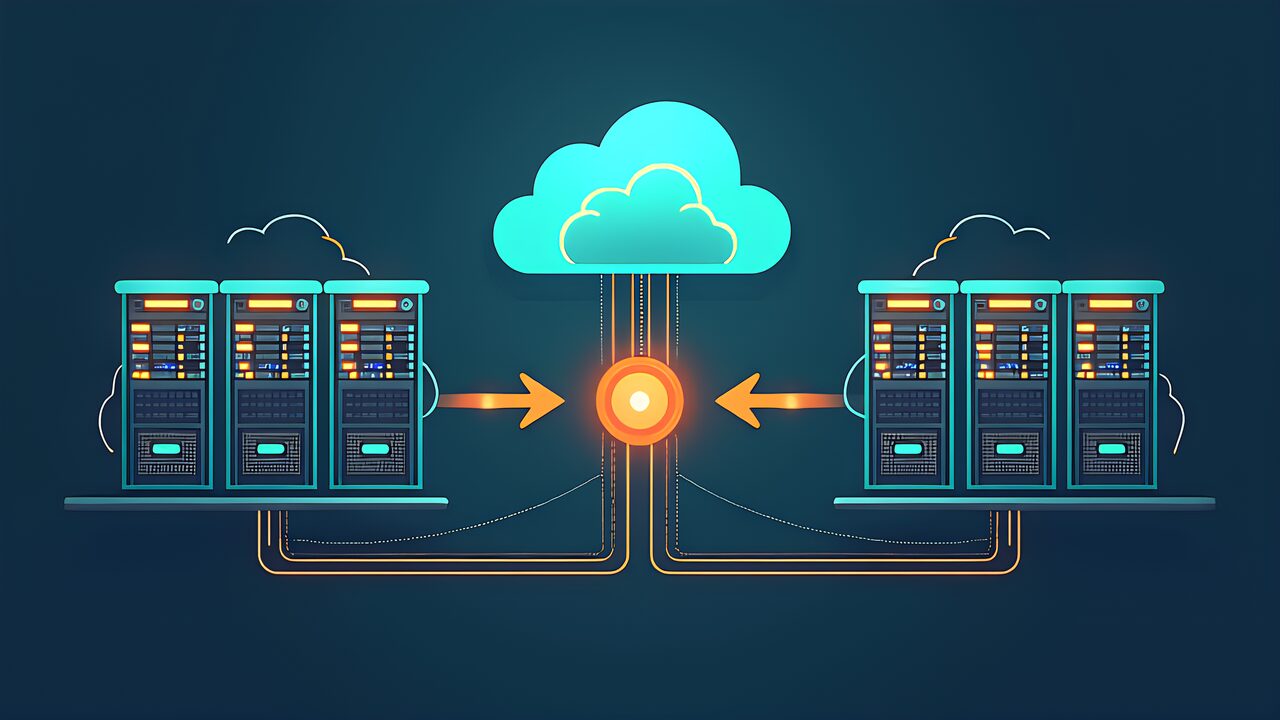
The first question in resilient design is whether to choose Multi-AZ or Multi-Region. Multi-AZ spreads resources across multiple Availability Zones within a single Region and survives an AZ failure. With RDS Multi-AZ deployments, synchronous replication automatically fails over to the standby instance.
Multi-Region, by contrast, makes resources redundant across geographically separate Regions to withstand a full-Region outage. Cost and latency rise, but you can minimize RTO and RPO. On the exam, a requirement to survive a Region-wide failure points to Multi-Region; surviving an AZ failure or achieving cost-efficient high availability points to Multi-AZ.
Elastic Load Balancing comes in several types, and the exam asks you to pick the right one for the use case.
Map them directly: HTTPS path-based routing means ALB; millions of requests at ultra-low latency means NLB; integrating a third-party security appliance means GWLB.
Auto Scaling automatically adjusts instance count with demand, balancing availability and cost efficiency. SAA-C03 tests when to use each scaling policy: target tracking, step, and scheduled.
Loose coupling centers on Amazon SQS and SNS. SQS uses queues for asynchronous processing, breaking dependencies between components. SNS is pub/sub notification that enables the fan-out pattern. On the exam, buffering work or absorbing sudden spikes points to SQS; notifying multiple destinations at once points to SNS.
A frequent trap in resilience questions is reflexive over-engineering toward Multi-Region. When a question weighs cost efficiency against requirements, Multi-AZ is often enough. Unless the requirement explicitly states Region failure or geographic disaster recovery, make Multi-AZ your first candidate.
Another classic is clinging to synchronous processing. SAA-C03 consistently rewards designs that loosely couple components for fault tolerance. A worker that processes through an SQS queue is more resilient to both spikes and failures than an EC2 instance writing straight to a database.
SAA-C03 resilient design comes down to three things: eliminating single points of failure, choosing the right level of redundancy (AZ or Region), and fault tolerance through loose coupling. Default to Multi-AZ, and choose Multi-Region only when Region-level resilience is a stated requirement. Prefer SQS/SNS loose coupling over synchronous processing. Hold these axes and your Domain 2 accuracy rises sharply.
This guide pairs with the Domain 1 security article and the Domain 3 high-performing design article, so you can build a systematic command of the design judgment SAA-C03 demands.