CCA Exam Prep D3: Claude Code Configuration and Workflows to Master 20%
swiftwand swiftwand.ai
When you prepare for the AWS Certified Solutions Architect – Associate (SAA-C03) exam, Domain 2: Design Resilient Architectures carries 26 percent of the scored content. It is the second-heaviest domain after security, so weakness here puts your pass at risk. Resilient design comes down to one consistent question: how do you eliminate single points of failure?
This article contains affiliate links. As an Amazon Associate, we earn from qualifying purchases.
AWS resilient design maps directly to the Reliability pillar of the Well-Architected Framework. SAA-C03 repeatedly tests four building blocks: Multi-AZ deployments, load balancers, Auto Scaling, and loosely coupled architectures. These are not memorization items; they are design decisions you make by working backward from an availability target (SLA).
A current study guide is the fastest way to turn scattered reading into exam-ready coverage.

 ポチップ
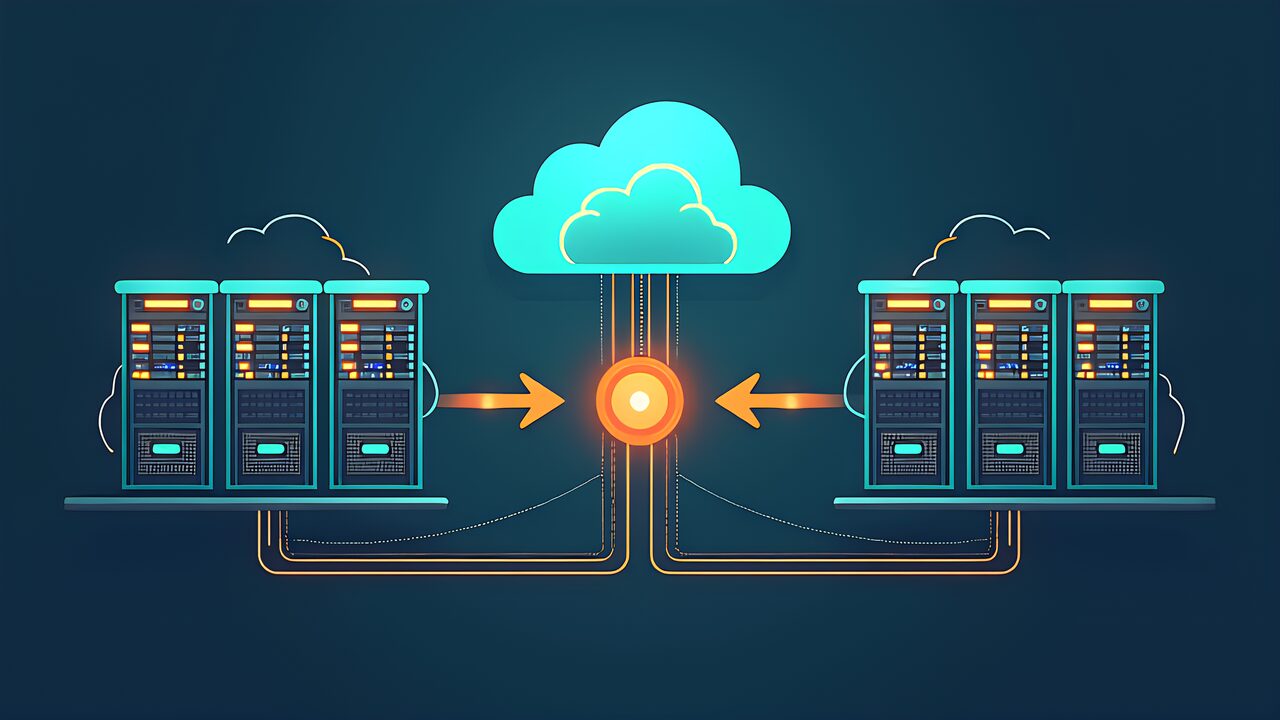
ポチップThe first question in resilient design is whether to choose Multi-AZ or Multi-Region. Multi-AZ spreads resources across multiple Availability Zones within a single Region and survives an AZ failure. With RDS Multi-AZ deployments, synchronous replication automatically fails over to the standby instance.
Multi-Region, by contrast, makes resources redundant across geographically separate Regions to withstand a full-Region outage. Cost and latency rise, but you can minimize RTO and RPO. On the exam, a requirement to survive a Region-wide failure points to Multi-Region; surviving an AZ failure or achieving cost-efficient high availability points to Multi-AZ.
Elastic Load Balancing comes in several types, and the exam asks you to pick the right one for the use case.
Map them directly: HTTPS path-based routing means ALB; millions of requests at ultra-low latency means NLB; integrating a third-party security appliance means GWLB.
Auto Scaling automatically adjusts instance count with demand, balancing availability and cost efficiency. SAA-C03 tests when to use each scaling policy: target tracking, step, and scheduled.
Loose coupling centers on Amazon SQS and SNS. SQS uses queues for asynchronous processing, breaking dependencies between components. SNS is pub/sub notification that enables the fan-out pattern. On the exam, buffering work or absorbing sudden spikes points to SQS; notifying multiple destinations at once points to SNS.
A frequent trap in resilience questions is reflexive over-engineering toward Multi-Region. When a question weighs cost efficiency against requirements, Multi-AZ is often enough. Unless the requirement explicitly states Region failure or geographic disaster recovery, make Multi-AZ your first candidate.
Another classic is clinging to synchronous processing. SAA-C03 consistently rewards designs that loosely couple components for fault tolerance. A worker that processes through an SQS queue is more resilient to both spikes and failures than an EC2 instance writing straight to a database.
SAA-C03 resilient design comes down to three things: eliminating single points of failure, choosing the right level of redundancy (AZ or Region), and fault tolerance through loose coupling. Default to Multi-AZ, and choose Multi-Region only when Region-level resilience is a stated requirement. Prefer SQS/SNS loose coupling over synchronous processing. Hold these axes and your Domain 2 accuracy rises sharply.
This guide pairs with the Domain 1 security article and the Domain 3 high-performing design article, so you can build a systematic command of the design judgment SAA-C03 demands.