Anthropic Academy Complete Guide 2026 — Master Claude with 15 Free Courses
swiftwand swiftwand.ai
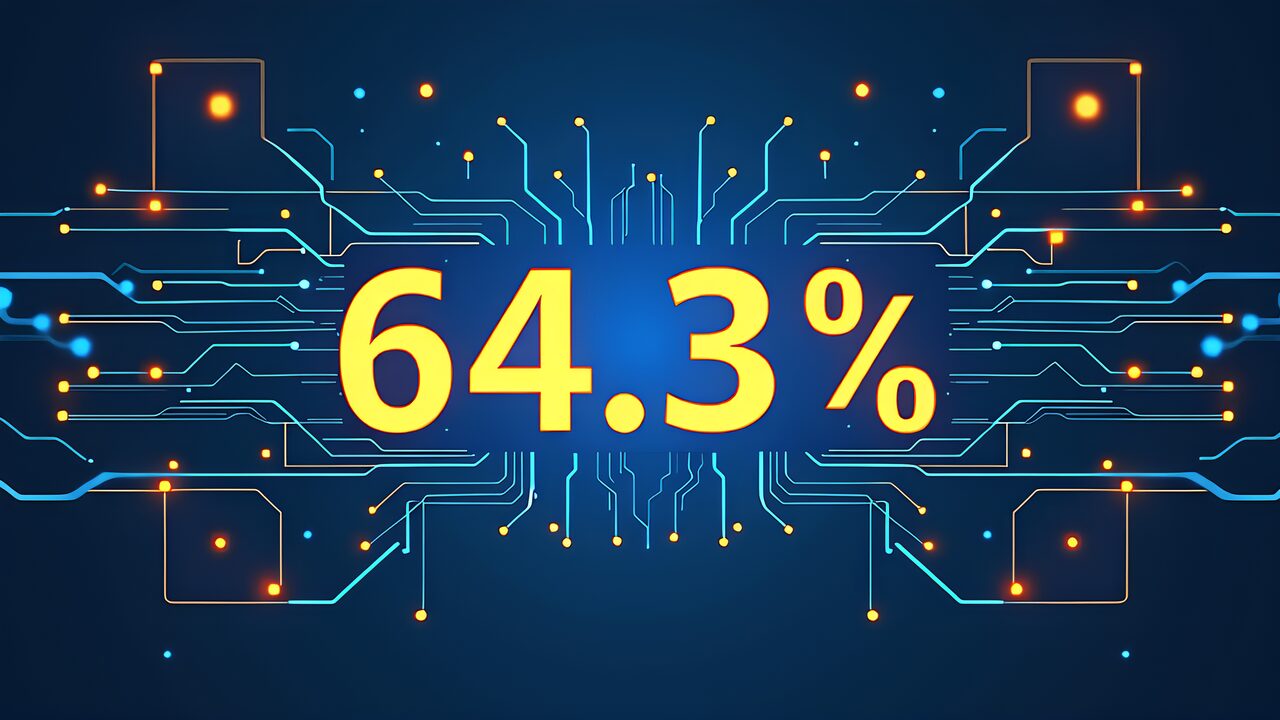
Claude Opus 4.7 2026 was officially released on April 16, 2026, raising the industry standard for coding assistance and agent implementation by a full tier. The figures of 64.3% on SWE-bench Pro, 98.5% visual accuracy, and 70% on CursorBench aren’t just benchmark victories — they signify the “elimination of wait times” and “dramatic reduction in retries” in real-world workflows. This article provides a thorough analysis, based on official data and primary sources published by Anthropic, of exactly what Claude Opus 4.7 2026 changes and the key decision criteria developers and 3D printing businesses should consider when evaluating migration from Opus 4.6.
This article contains affiliate links. As an Amazon Associate, we earn from qualifying purchases.

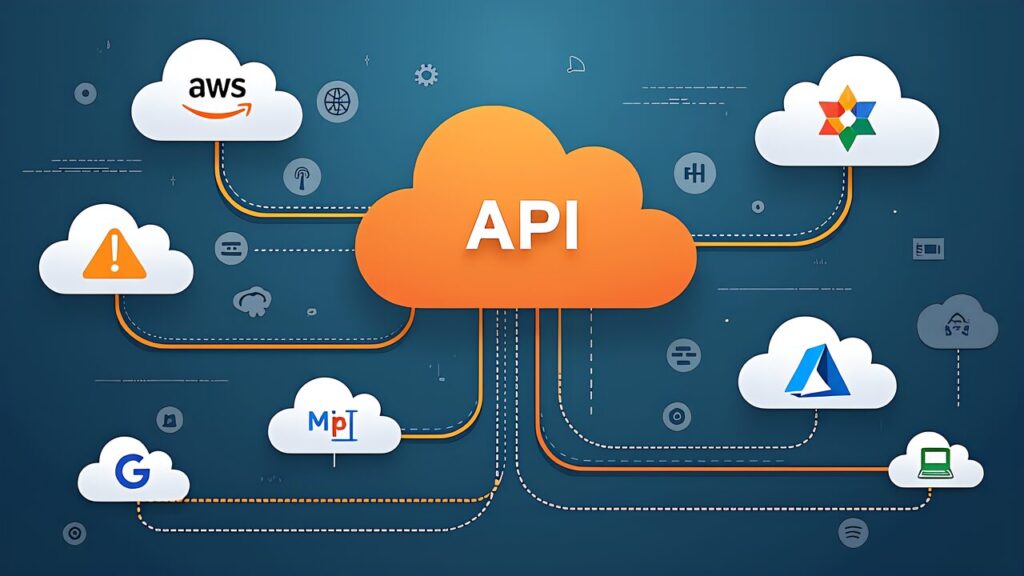
On April 16, 2026, Anthropic simultaneously deployed Claude Opus 4.7 across all channels (Claude products, API, Amazon Bedrock, Google Cloud Vertex AI, Microsoft Foundry). What distinguishes Claude Opus 4.7 2026 is not incremental improvements over Opus 4.6, but rather a fundamental elevation of baseline capabilities.
The key metrics officially published can be summarized as follows.
| Metric | Opus 4.6 | Opus 4.7 | Difference |
|---|---|---|---|
| SWE-bench Pro | 53.4% | 64.3% | +10.9pt |
| CursorBench | 58% | 70% | +12pt |
| Visual Accuracy (Internal Eval) | 54.5% | 98.5% | +44.0pt |
| Supported Image Resolution | 1.25MP | 3.75MP | 3x |
| Coding Quality | Baseline | +13% | — |
| Production Task Solving | Baseline | 3x | — |
| Multi-step Workflow | Baseline | +14% | — |
| Tool Call Errors | Baseline | ~1/3 | Reduced |
For reference, the SWE-bench Pro scores of competing models available at the same time were 57.7% for GPT-5.4 and 54.2% for Gemini 3.1 Pro, confirming that Claude Opus 4.7 2026 maintains the top position in this category. While benchmarks don’t fully reflect real-world capability, the fact that the “percentage of hard problems solved” shifted by 10+ points suggests that some tasks previously impossible even for Opus have now entered the “Opus 4.7 can handle it” territory.
What’s particularly noteworthy is the magnitude of visual accuracy improvement. The 98.5% figure means it has reached a level where tasks like extracting UI element coordinates from screenshots, converting handwritten notes to text, and interpreting architecture diagrams in technical documents can be completed “without needing to retake the image.” For 3D printing businesses, this brings significant benefits in areas such as reading design drawings, defect detection from print photos, and slicer UI screenshot analysis.

What deserves attention in Opus 4.7 is not just the scores but the improvement in “reliability.” The roughly one-third reduction in tool call errors is something any agent developer can immediately appreciate. In late 2025 agent implementations, the problem of entire workflows halting when even one step’s arguments broke during chained tool calls had been a persistent headache for developers.
The 14% multi-step workflow improvement means the completion rate for chained tasks with 3+ steps (search → extract → summarize → write, etc.) noticeably increases. Anthropic uses the phrase “3x production task solving ability,” which refers to completion rates in internal evaluations — meaning that with the same prompts and tool sets, 3x more tasks complete without human intervention compared to Opus 4.6.
This paradigm shift changes the economics of agent businesses. If the human supervision cost per automation task drops from 10 minutes to under 3 minutes, the same team can handle 3x or more cases. The value Claude Opus 4.7 2026 delivers isn’t about model performance improvement — it’s about reducing human supervision costs.
The pricing structure has been kept identical to Opus 4.6.
Model ID: claude-opus-4-7-20260416Keeping prices unchanged while substantially improving performance means that existing Opus 4.6 users can switch model IDs without any budget revision. For new adopters, the argument of “Opus is expensive” is weakened by the fact that per-task costs are actually decreasing — if a task that previously required 3 retries now completes on the first attempt, the effective token cost drops to one-third.
Tutorial — Migration Decision Flow from Opus 4.6
: SWE-bench tasks, repository-wide fixes, test-driven debugging, etc. The +10.9pt improvement transforms "passes on the 2nd or 3rd try" into "passes on the first try."Workflows involving visual recognitionThe following workloads are fine with Haiku 4.6 or Sonnet 4.6 variants, so there’s no rush.
Pricing tables make sense once you understand how foundation-model applications actually consume tokens.

 ポチップ
ポチップ
Short responses under 100 tokens
Edge case detection as a first-pass filter
: Opus 4.7 interprets instructions more accurately, so overly detailed “workaround” prompts may become unnecessary. Simplify where possible
: In addition to completion rate and latency, add “human intervention frequency” as a metric. This is where Opus 4.7’s value most clearly appears
: Configure automatic fallback to Opus 4.6 via API error handling during the transition periodLogging enhancement: Record each tool call success/failure to quantify Opus 4.7's error reductionTeam communication
How does the capability improvement of Claude Opus 4.7 2026 change actual workflows? Here we dive deep into 3 scenarios from the perspective of 3D printing businesses and technical bloggers.
The task of taking pull request diffs as input and flagging security, performance, and readability issues sees a dramatic increase in completion rate with Opus 4.7. In particular, the +14% multi-step improvement directly benefits the area of “tracking cross-file dependencies while making suggestions.”The basics of calling the Claude API are covered in our Claude API Introduction.
The implementation tip is to give Opus 4.7 an explicit 3-stage prompt: “First understand the entire file structure, then evaluate the diff, and finally provide feedback in priority order.” The multi-step processing improvement is maximized with this kind of “stage separation” design.
An agent that takes technical documents containing PDFs and images as input and answers specific questions is the use case that benefits most from 98.5% visual accuracy and 3.75MP support. For example, feeding a 3D printer service manual (hundreds of pages with many diagrams) and extracting the “recommended extruder temperature range” is clearly more accurate than conventional OCR+LLM setups.
As an implementation example, we recommend uploading PDFs to Anthropic API’s files API and querying claude-opus-4-7. When referencing multiple documents, combining with prompt caching significantly speeds up responses from the second query onward.
For 3D printing businesses, Claude Opus 4.7 2026 delivers powerful automation in the following areas.
Each of these is possible with Sonnet 4.6 alone, but when implementing agents that chain multiple tasks, Opus 4.7’s “reliability” becomes a prerequisite for production deployment.For those preparing for certification, also refer to our CCA Exam Preparation Guide.
Here’s a projection for a mid-sized business handling 1,000 business inquiries per month switching from Opus 4.6 to Opus 4.7.
| Item | Opus 4.6 | Opus 4.7 |
|---|---|---|
| Auto-completion Rate | ~60% | ~85% |
| Human Interventions/Month | 400 cases | 150 cases |
| Human Intervention Time/Case | 5 min | 3 min |
| Total Human Hours/Month | 33 hours | 7.5 hours |
The 25.5-hour/month difference translates to approximately ¥76,500/month in cost savings at an hourly rate of ¥3,000. Since API costs remain unchanged, this represents an annual profitability improvement of over ¥900,000.

When leveraging Claude Opus 4.7 2026 in production, simply swapping the model ID won’t maximize the performance gains. Here we outline the optimization points to address at the implementation level.
Opus 4.7’s input token pricing of $5/Mtok is in the same range as other flagship models. However, by utilizing prompt caching, you can reduce the effective cost of repeatedly referenced system prompts and document contexts by up to 90%. For agents with long system instructions, RAG pipelines referencing large knowledge bases, and chat applications sending multiple queries within the same context, caching design determines the break-even point.
The key implementation insight is the separation of “what to cache vs. what not to cache.” System prompts, tool definitions, and large documents are cache targets. User inputs, time-dependent information, and session-specific variables should be separated as non-cache targets. Since the Anthropic API allows explicit specification of cache blocks, performing this separation at the design stage is the key to cost optimization.
Opus 4.7’s one-third reduction in tool call errors delivers immediately noticeable improvement in existing agent implementations. However, to maximize this benefit, there’s room for improvement on the tool definition side as well.
Recommended best practices for tool definitions are as follows.
x → target_file_path, opts → retry_options{"path": "/usr/local/bin"}” with concrete examplesThese have been recommended since before Claude Opus 4.7, but because Opus 4.7 reads type information and descriptions more accurately, well-crafted tool definitions yield even greater returns than before.
With 3.75MP support, Opus 4.7 can directly process higher-resolution images than previous models. However, when sending images via API, keep the following points in mind.
Just adding these preprocessing steps can improve effective visual task accuracy by several points.
Claude Opus 4.7 2026 has a large context window. When handling lengthy inputs, the arrangement order of tokens is known to affect output quality. The recommended arrangement pattern is as follows.
This arrangement maximizes Claude Opus 4.7’s tendency to “prioritize information closer to the end when it’s relevant to the task.” Conversely, placing important instructions at the beginning and burying them under background information has been observed to reduce reference accuracy.
If Opus 4.7 doesn’t produce the expected output, we recommend checking the following in order.
These checks resolve over 90% of issues. The remaining 10% are cases requiring a redesign of the prompt itself.
Prompt design becomes repeatable once you treat it as engineering rather than phrasing.
Designing a system centered on Claude Opus 4.7 2026 while mixing in other models based on task characteristics leads to long-term cost optimization.
Sonnet 4.6 is a mid-tier model with excellent speed-cost balance. We recommend processing the following tasks with Sonnet 4.6.
A workflow routing design of “Sonnet 4.6 for first-pass processing, Opus 4.7 only for difficult cases” is rational. This reduces average costs by 30-50% while maintaining Opus 4.7-level accuracy for complex problems.
Ultra-lightweight tasks are best suited for Haiku models. Applicable scenarios include:
Placing Haiku on the front line and routing only “difficult” cases to Opus 4.7 in a cascade design is a frequently adopted pattern in enterprise environments.
The structure can be illustrated with the following pseudocode.
___CODE_11___
When incorporating this routing into Claude Opus 4.7 itself, fixing the routing judgment prompt via prompt caching also keeps the judgment cost down.
Here we outline the security and compliance considerations when adopting Claude Opus 4.7 2026 in enterprise environments.
Anthropic has published a policy that user data sent via the API is not used for model training. This provides a foundation for confidently using the service even for workloads containing confidential or personal information.
However, the following points must be addressed on the user’s side.
When adopting in large enterprises, alignment with the following policy items needs to be verified.
Claude Opus 4.7 2026 provides feature sets that address these requirements through Enterprise contracts.
For high-compliance industries such as finance, healthcare, and government agencies, the following additional measures are recommended.
Taking the release of Claude Opus 4.7 2026 as a starting point, here’s a summary of observations on how the AI model competition will evolve in the latter half of 2026.
GPT-5.4 scored 57.7% on SWE-bench Pro and Gemini 3.1 Pro scored 54.2%, putting the gap with Opus 4.7 at 6-10 points. The focus is on when OpenAI and Google will close this gap, but based on past trends, Anthropic’s advantage is likely to persist for about six months.
Meanwhile, there are indications that Anthropic itself is advancing research toward the next generation of the Opus line (5.0 series), and further breakthroughs may be announced in the second half of 2026. When making adoption decisions now, it’s rational to invest with the premise that “Opus 4.7 will remain a cutting-edge model for at least six months.”
Claude Opus 4.7 2026 is not just a model update — it’s an event that “redraws the profitability line for agent implementations.” SWE-bench Pro 64.3%, visual accuracy 98.5%, CursorBench 70%, tool errors reduced by 1/3, production task solving 3x. Individually, these numbers may look like “10-point improvements,” but when integrated across agent operations, they hold the potential to halve human supervision costs.
Pricing is identical to Opus 4.6, available on all major cloud channels, and migration primarily involves changing the model ID — with these three conditions met, there’s virtually no reason to hold off on migration. Workloads involving long-running coding, visual tasks, and multi-step processing should consider “switching this week.” Meanwhile, lightweight tasks that Haiku handles well should continue to be delegated separately, maintaining the approach of optimizing model selection by use case.
Starting tomorrow, this series will dive deep into Anthropic’s new product lineup one by one.Claude Design provides a thorough guide to Claude Design.
For detailed specifications of Claude Opus 4.7, API reference, and recommended prompt engineering patterns, please refer to the official Anthropic documentation (https://docs.anthropic.com/). The latest release information and capability updates are regularly published on the Anthropic official news page (https://www.anthropic.com/news). Detailed benchmark breakdowns and evaluation methodologies are available in the official blog release posts.