Complete Guide to 3D Printer Filaments: Types, Selection & Storage Tips for Beginners (2026)
swiftwand swiftwand.ai
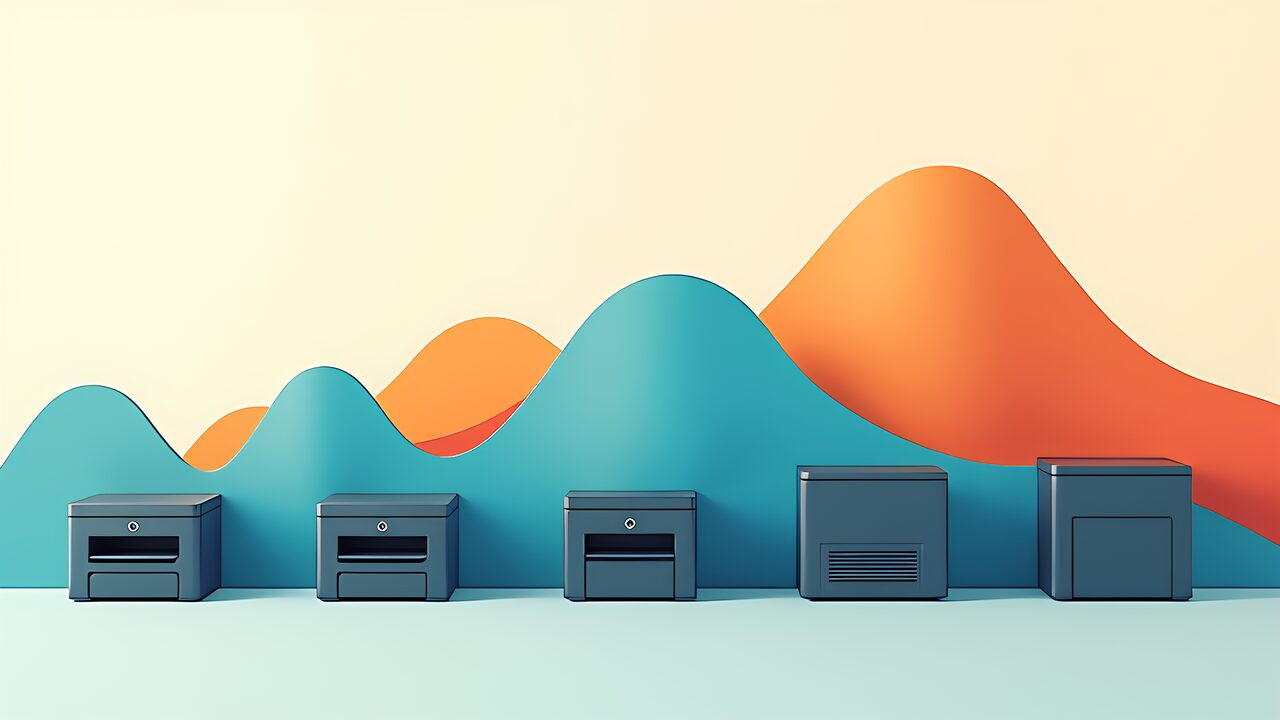
In the second half of 2026, a remarkable number of new desktop 3D printers arrived in a very short window: Bambu Lab’s X2D and H2C, Creality’s K2 Plus, Hi Combo and K3, and the INDX toolchanger that Prusa Research built for the CORE One. Line their spec sheets up side by side and the top speeds and build volumes look nearly identical, so the obvious question — “which one should I actually buy?” — has no obvious answer. The key to reading the AI 3D printer market of late 2026 is not to chase individual models, but to grasp the three simultaneous “waves” moving underneath them.
This article contains affiliate links. As an Amazon Associate, we earn from qualifying purchases.
Those three waves are the standardization of AI-camera quality control, the democratization of the toolchanger, and the arrival of practical multi-material printing. They are usually discussed separately, but in practice they interlock — and together they are rewriting the very criteria by which we decide to upgrade. Below, we place each maker’s next-generation machine alongside its concrete specs, neutrally, and draw a map you can use to judge which wave actually matters for your own work.
This article does not push any single machine. Assuming each maker follows a different design philosophy, we separate the units that are already shipping from those still at the announcement stage, so you can decide for yourself whether to act now or wait. All prices are confirmed values as of late June 2026; dollar figures are converted at roughly 161.6 yen to the dollar.
There is a clear reason behind this concentrated launch. Across 2024 and 2025, the competitive axis for consumer machines converged on one experience: pull it out of the box and print fast, high-quality parts immediately. CoreXY motion, automatic bed leveling, speeds beyond 500 mm/s, and enclosure-based temperature control all became standard on higher-end machines. In other words, the easy-to-understand spec race ran its course, and features saturated.
In a saturated market, makers look for the next axis of differentiation. What surfaced were technologies that had previously belonged to industrial machines or DIY builders: autonomous quality control, efficient color and material changes, and toolchangers. Put differently, mechanisms that were once the exclusive domain of high-end hardware have descended into consumer price brackets. That descent is exactly what 2026 represents.
The first wave is the spread of AI-based failure detection from an optional add-on to a built-in feature. A camera watches the print in real time and flags spaghetti failures, first-layer problems, and flow inconsistencies before they waste hours of filament. Bambu Lab processes this on-device, keeping the footage local; Creality’s K2 Plus splits the job across dual AI cameras, one near the nozzle for flow and calibration and one on the frame for monitoring and failure detection.
What changes with this wave is the cost of unattended printing. When a machine can stop a doomed print on its own, long overnight jobs and parallel farms become realistic for home users. The trade-off is vendor lock-in: built-in detection is effortless but tied to the maker’s ecosystem, whereas an add-on tool such as Obico or OctoEverywhere takes more setup but works across machines.
The second wave is the toolchanger reaching consumer price points. Traditional single-nozzle multi-color printing wastes filament on every change, because the nozzle must purge the old color before laying down the new one. A toolchanger sidesteps this by giving each material its own dedicated nozzle, so there is no cross-contamination and no purge tower of wasted plastic. Creality’s KliTek system, debuting on the K3 series, claims up to 80% less filament per print and nozzle swaps in about five seconds, while Prusa’s INDX brings eight dedicated tools to the CORE One as an upgrade kit rather than a whole new machine.
The convergence point across all of these is “purge-free.” Whether through Bambu’s Vortek hotend-swap system, Creality’s KliTek, or Prusa’s INDX, the makers are independently arriving at the same goal: eliminate the waste mountain that color changes used to create, at the level of the mechanism itself.
The third wave is multi-material printing becoming genuinely usable at home. Dedicated nozzles prevent a soft material from contaminating a rigid one, which unlocks designs that single-material printing struggles with: living hinges that integrate moving parts, composite structures that absorb vibration, and water-soluble supports for models with complex internal cavities. This expands the 3D printer’s role from “a tool that outputs shapes” to “a tool that assembles functions.”
That said, “possible” and “easy” are not the same. Mixing materials brings its own chemistry and physics: rigid and flexible resins want different temperatures and cooling rates, bonding the boundary cleanly requires understanding their compatibility, and hygroscopic materials need careful drying before printing or they invite bubbles and weak parts. The hardware is a necessary condition, not a sufficient one — without matching slicer settings and workflow, quality will not be stable. Wave three has reached “now possible,” not “now effortless.”
With the three waves in mind, here is the distinction that bears directly on a purchase: is the machine already shipping, or still at the announcement stage? The table below summarizes the current status of the major models.
| Model | Positioning | Status | Price (late June 2026) |
|---|---|---|---|
| Bambu Lab X2D | Affordable dual-nozzle successor to the X1 Carbon | Shipping (announced Apr 2026) | Approx. 126,000 yen / 165,000 yen Combo |
| Bambu Lab H2C | Vortek flagship multi-material machine | Shipping (Japan launch Jan 2026) | About 400,000 yen Combo |
| Creality K2 Plus | Dual AI camera, CFS up to 16 colors | Shipping | Around 200,000 yen Combo |
| Creality Hi Combo | Entry-level multi-color via CFS | Shipping | About 70,000 yen |
| Creality K3 (KliTek) | Nozzle-changing toolchanger machine | Announced (Q3 2026 planned) | Not yet announced |
| Prusa CORE One INDX | 8-material toolchanger upgrade kit for the CORE One | Prusa Edition shipping from June 2026 | About 749 USD kit |
The takeaway is that, as of late 2026, there is already a rich selection of next-generation machines you can buy today. Waiting for an announced mechanism is a legitimate choice, but it is no longer the only path to the three waves.
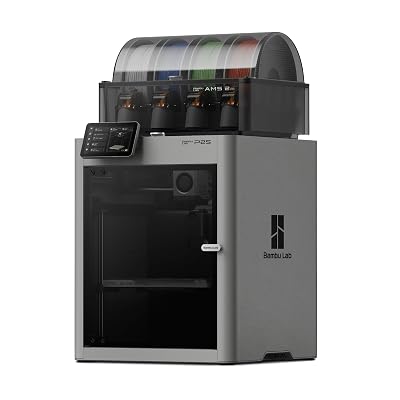
Two examples of what you can buy today: the K2 Plus Combo with AI cameras, and the P2S Combo with a multi-material unit.

 ポチップ
ポチップThe old criteria were roughly three: top speed, build size, and price. These still matter, but on next-generation machines they have flattened out and no longer decide anything. In the AI 3D printer generation, the three questions worth asking are different. First, do you want AI quality monitoring built into the machine, or bolted on with a general tool like Obico? Built-in is easy but vendor-dependent; add-on takes effort but offers freedom. Second, do you genuinely need multi-color or multi-material? If your work finishes in a single color, the added cost of a toolchanger is not justified. Third, is a shipping machine enough, or is an announced mechanism worth waiting for?
The answers depend heavily on what you make. A prototyping engineer, a figurine hobbyist, and a small-batch manufacturer are each served by a completely different wave. Consider a concrete example: a hobbyist mass-producing intricate figures with hollow interiors benefits most from waves two and three, where water-soluble supports come into play, while AI cameras drop in priority. An engineer running many long prototypes in parallel, by contrast, values wave one most — the ability to stop a failure early. The same “next-gen machine” yields opposite best choices once the thing you make changes. The shortcut to an upgrade you will not regret is to start from the pain in your own output, not from the feature the marketing pushes hardest.
The late-2026 market has moved past feature saturation and shifted its competitive axis to three waves: autonomous quality control, the toolchanger, and multi-material printing. Bambu’s X2D and H2C, Creality’s K2 Plus, Hi and K3, and Prusa’s CORE One INDX each place their center of gravity on a different wave. Hold the three waves as a map, and you can ignore the look-alike spec sheets and reason backward to the one machine that fits your use. Start from what you build, and the right next-generation printer becomes far easier to choose.
Bambu Lab H2C official product page; Bambu Lab X2D official product page; Creality KliTek (K3) official campaign page; Prusa Research: INDX 8-material upgrade announcement (official blog); Tom’s Hardware: Bambu Lab and Prusa show off new 3D printers at Formnext (3DPrint).