AI Coding Agent Comparison 2026: Claude Code vs Codex vs Cursor – The Big Three's Real Capabilities and When to Use Each
swiftwand swiftwand.ai
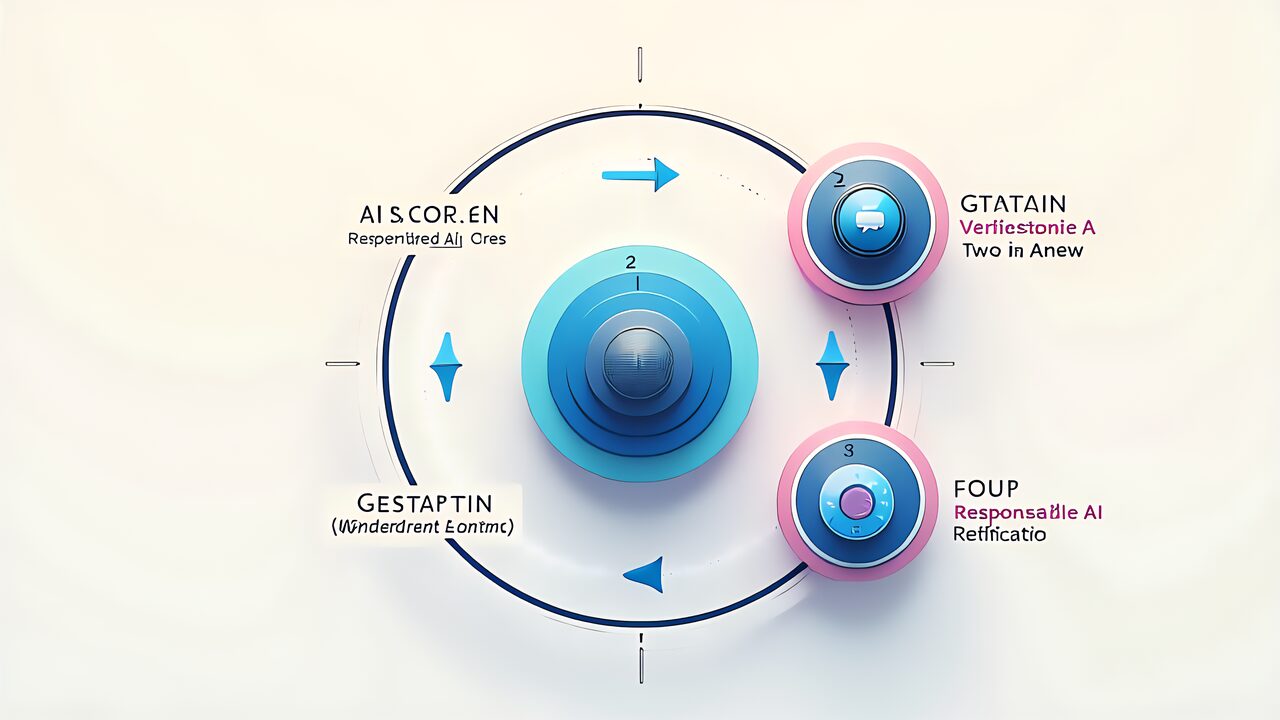
Part 1 captured two-thirds of the Generative AI Leader score with the fundamentals and the Gemini offerings. This second part covers the back two domains — techniques to improve model output (~20%) and business strategy for a successful gen-AI solution (~15%) — which turn raw model capability into reliable, responsible solutions.
This article contains affiliate links. As an Amazon Associate, we earn from qualifying purchases.
Domain 3 is about overcoming the limits of a foundation model; Domain 4 is about deploying gen AI responsibly and with a business case. Together they are about 35% of the exam.
A foundation model on its own hallucinates, goes stale, and lacks your private context. The exam expects you to know the toolkit for closing those gaps. Prompt engineering is the first lever, ranging from zero-shot and few-shot to chain-of-thought and ReAct-style reasoning. Grounding and RAG feed the model correct, current evidence so answers cite real sources rather than guessing. And sampling parameters such as temperature and top-p control how deterministic or creative the output is. Know which lever fixes which problem: prompting for shaping, grounding for accuracy, sampling for control.
Cloud-vendor exams assume you know how foundation-model applications are actually built, which is where this one starts.

 ポチップ
ポチップThis domain steps back to the organizational view: building a business case, measuring value, and deploying AI responsibly. The responsible-AI material is central — Google frames it through SAIF (the Secure AI Framework) and a set of responsible-AI characteristics including transparency, fairness, explainability, and privacy, backed operationally by Security Command Center and IAM. Expect questions on accountability: who owns the risk, how outputs are governed, and how security best practices apply specifically to AI systems.
| AWS / general concept | Generative AI Leader equivalent |
|---|---|
| Bedrock Knowledge Bases (RAG) | RAG API / pre-built RAG with Agent Search |
| Bedrock Guardrails | Safety settings / responsible AI |
| Prompt engineering | Zero-shot / few-shot / chain-of-thought and more |
| Understanding hallucination and bias | The limits of foundation models |
| Responsible-AI characteristics | Transparency, fairness, explainability, privacy |
| Security best practices | SAIF / Security Command Center / IAM |
The recurring mistake is reaching for fine-tuning when grounding or RAG is the right fix. If the problem is stale or missing facts, grounding solves it more cheaply than retraining. The second trap is treating responsible AI as a vague ideal: the exam wants the specific framing — SAIF and the named responsible-AI characteristics — so learn them as concrete terms rather than general sentiment.
The back two domains convert model output into dependable, governable solutions: prompting, grounding, and sampling for quality, and SAIF-based responsible AI for trust. Combine them with the fundamentals and offerings from Part 1 and you cover the full Generative AI Leader blueprint with room to spare.
Google Cloud official Generative AI Leader certification page and exam guide (domain weightings), the Secure AI Framework (SAIF) overview, and Google Cloud Skills Boost learning path.