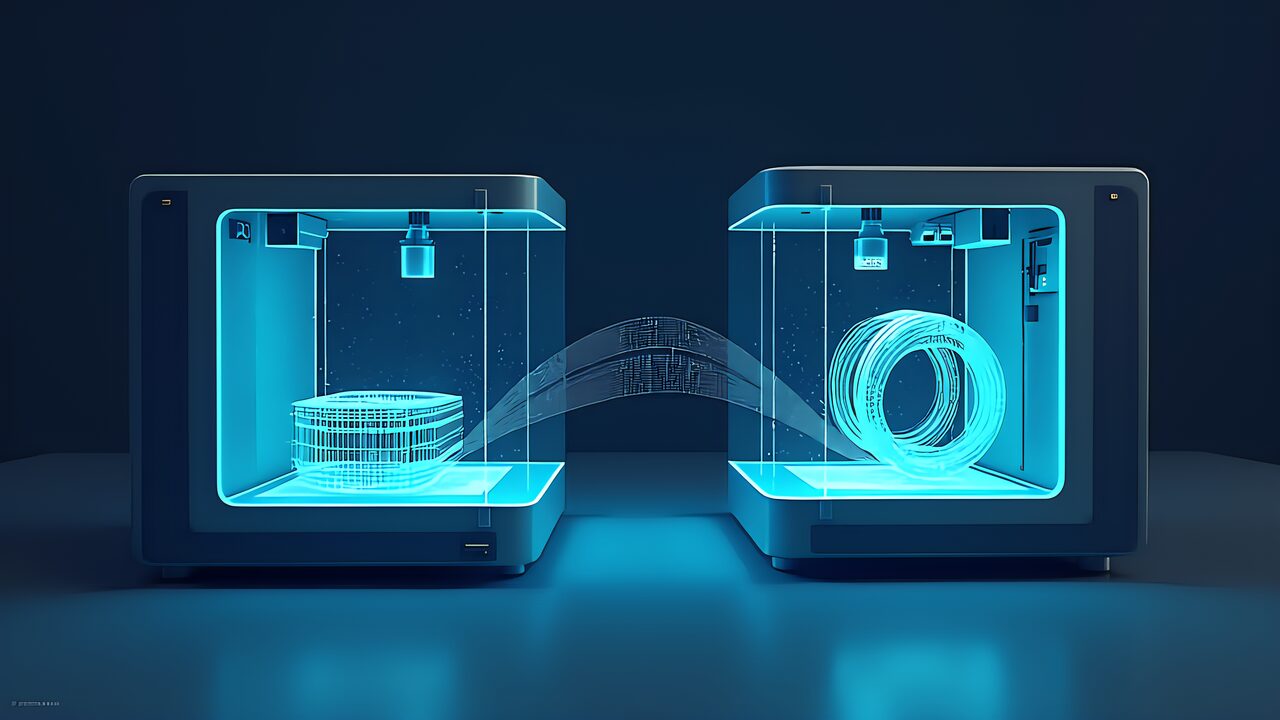
Digital Twin × 3D Printing: Eliminating Failures Before Printing with AI Simulation
swiftwand swiftwand.ai

The first sale feels good. Around the tenth, a different feeling arrives: does this need to be declared. Search for the answer in Japan and the phrase no filing needed below 200,000 yen comes up first, and proceeding on that understanding has a trap in it. The 200,000 yen figure is income rather than revenue, and it concerns national income tax rather than local residence tax. On top of that, a significant change on the consumption tax side arrives in autumn 2026.
This article contains affiliate links. As an Amazon Associate, we earn from qualifying purchases.
What follows organises the steps that become necessary once money starts arriving, based on material published by the National Tax Agency. It is general information, not tax advice; a tax accountant or your local tax office is the place for your own circumstances.
For an employee receiving salary from one place where the whole of it is subject to withholding, a return is required where the total of income other than employment income and retirement income exceeds 200,000 yen.
The word is income, not revenue. Income is what remains after deducting necessary expenses from sales. Sell 500,000 yen of prints with 350,000 yen of filament, electricity, packaging, postage and platform fees and the figure being tested is 150,000 yen, not 500,000 yen. Which is also why the cost calculation has to exist before this question can be answered at all.
Receiving salary from two or more places changes the test: a return is required where the total of salary not covered by year end adjustment plus income other than employment and retirement income exceeds 200,000 yen. There is a further note attached, under which a person is not required to file where salary income minus deductions other than the casualty loss, medical expenses, donation and basic deductions comes to 1.5 million yen or less and other income totals 200,000 yen or less. Remembering only the 200,000 yen figure loses that 1.5 million yen condition.
Residence tax is a separate system with a separate administrator. Whether a local filing is needed when no national return is required is a question for your municipality. Reading the rule as nothing to do below 200,000 yen is where this goes wrong.
Whatever the project, a reliable spool of PLA+ is the material most of these prints will actually run on.

 ポチップ
ポチップFiling a notification of commencement of business opens the option of blue return filing, which carries a special deduction set out in three tiers: 550,000 yen, 650,000 yen, and 100,000 yen for blue return filers who do not meet the conditions for the larger two. Where the special provision for cash basis accounting has been elected, the 550,000 and 650,000 yen deductions are not available.
Whether this is worth the bookkeeping depends on scale, but the deduction only applies from the year you are approved, so the notification has to come before the income does.
Equipment is treated by acquisition cost. Items with a useful life under one year or costing under 100,000 yen can be expensed in the year they go into service. Between 100,000 and 200,000 yen, lump-sum depreciable asset treatment allows one third of the total acquisition cost to be taken as a necessary expense in each of the three years from the year the asset is placed in service, subject to conditions. Between 100,000 and 300,000 yen, a special provision for qualifying blue return filers allows the acquisition cost to be expensed up to a total of 3 million yen per year.
In practice a printer under 100,000 yen is fully expensed in its first year, one in the low hundreds of thousands can be spread across three, and the under 300,000 yen provision requires blue return status and carries the annual cap.
If the machine itself is the expense in question, an entry-level printer like this is the price point most of these rules are written around.
Consumption tax runs on its own logic. A business is exempt where taxable sales in the base period do not exceed 10 million yen. There is a second test: where taxable sales during the specified period, for an individual the first six months of the previous year, exceed 10 million yen, the exemption does not apply even if the base period was under the threshold. Side business scale normally sits inside the exemption, which is what makes the next question the important one.
Registering as a qualified invoice issuer means becoming a taxable business. Even with sales under 10 million yen, registration brings consumption tax filing and payment with it.
The reason to consider it is the buyer. A buyer who is a taxable business wants to claim input tax credit on what it buys from you, and if you are not registered the proportion it can claim is restricted. Where your customers are businesses, that can affect terms. Selling to individuals on marketplaces, the buyer is not claiming input tax credit at all, so remaining exempt is a defensible choice for someone selling 3D printed goods to consumers.
The transitional measure letting buyers claim part of the input tax on purchases from exempt businesses changes in October 2026, and the schedule itself was revised so that the decline is gentler and the end date is two years later than previously planned.
| Period | Deductible proportion |
|---|---|
| Oct 2023 to Sep 2026 | 80% |
| Oct 2026 to Sep 2028 | 70% |
| Oct 2028 to Sep 2030 | 50% |
| Oct 2030 to Sep 2031 | 30% |
| From Oct 2031 | none |
A cap also applies: where purchases from a single exempt business exceed 100 million yen in a year, reduced from 1 billion yen, the excess does not qualify for the transitional measure, effective for taxable periods beginning on or after 1 October 2026. Side business scale is nowhere near that, but the direction of travel is worth noting.
There is a change on the registered side too. The 20 percent special measure, which eased the burden for exempt businesses that became qualified invoice issuers, ends with the taxable period containing 30 September 2026.
What replaces it is a 30 percent special. For individual business operators who are qualified invoice issuers, for the 2027 and 2028 tax years, the amount deducted from the consumption tax on the taxable base can be set at 70 percent of it, making the payable amount 30 percent of the tax on the taxable base. Conditions apply: as with the 20 percent special, it is limited to taxable periods in which the exemption is unavailable because the person became a qualified invoice issuer or filed an election to be a taxable business, and the return has to note that the special is being applied. The National Tax Agency material shows the 30 percent special as available to individual business operators and not to corporations.
The relationship with simplified taxation changed as well. A business that applied either special can file an election for the simplified system by the filing deadline for the taxable period following the one in which the special was applied, and use simplified taxation from that following period; this applies where that following period ends on or after 1 October 2026. Simplified taxation itself lets a business with taxable sales in the base period of 50 million yen or less compute tax using deemed purchase ratios by category, set at 90, 80, 70, 60, 50 and 40 percent for categories one through six, with manufacturing in category three. Which category a given activity falls into depends on its particulars, and the election normally binds for two years.
First, get to a state where income can be calculated: sales minus necessary expenses, tested against the 200,000 yen figure if you are an employee, with residence tax checked separately. Second, consider the blue return and file the notification before the income arrives. Third, treat consumption tax as a separate question decided by the base period, and register only if your buyers are businesses that need it.
On timing: in October 2026 the buyer side transitional credit falls from 80 to 70 percent. The 20 percent special ends with the taxable period containing 30 September 2026, and the individual-only 30 percent special covers the 2027 and 2028 tax years. This is a snapshot as of August 2026 and the rules move; confirm against the agency material before acting.