Claude vs ChatGPT vs Gemini 2026 May — Maker AI Combo Strategy
swiftwand swiftwand.ai
Surveying the Claude 2026 Spring Roadmap CCA in a single article is the most efficient way to elevate the new features accumulated over the past six months from “individually learned knowledge” to an “integrated business workflow.” Understanding Opus 4.7, Claude Design, Claude Code new features, Agent Skills, Agent Teams, and Claude Cowork individually is not enough.
This article integrates the learning content from all 7 articles in the series (Claude Opus 4.7: Opus 4.7 / Claude Design: Claude Design / Claude Code Spring 2026: Claude Code / Agent Skills: Agent Skills / Agent Teams vs Subagents: Agent Teams vs Subagents / Claude Cowork: Claude Cowork) and presents role-specific roadmaps for engineers, designers, and team managers.
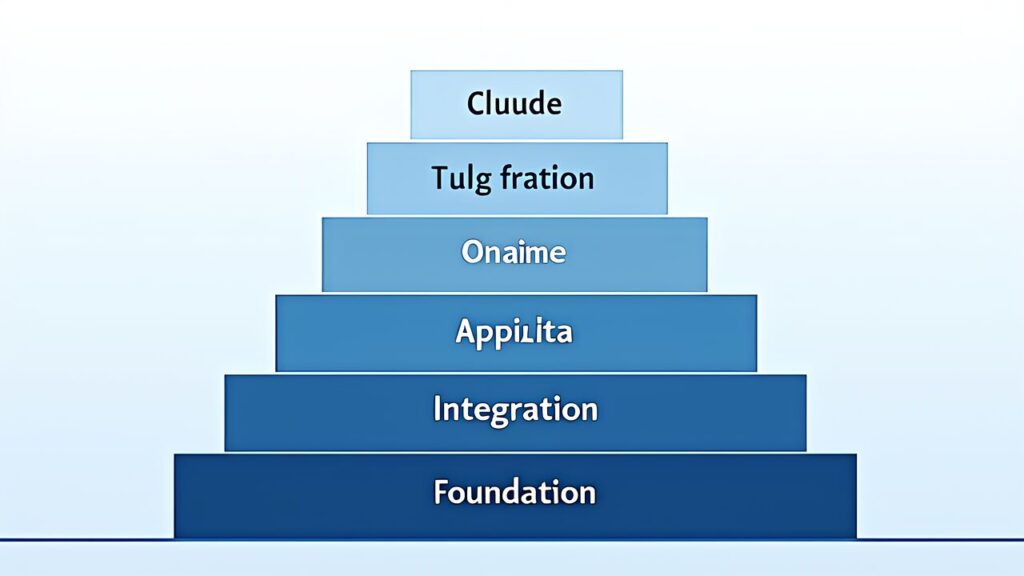
The 6 features covered in this series may appear to be independent functions, but they actually overlap and complement each other. To understand the Claude 2026 Spring Roadmap CCA, you first need to organize the interrelationships among the 6 features.
Opus 4.7 serves as the “model’s foundational capability.” It updates the previous generation across reasoning quality, code generation accuracy, long-text comprehension, and multimodal support, providing the foundation for the other 5 features to operate at high quality. Running Agent Teams without Opus 4.7 would likely result in unstable inter-agent coordination.
Claude Design is the “expansion into the visual/design domain.” It handles UI design, brand assets, and marketing material generation. For 3D printing businesses, it’s used for generating first drafts of product catalogs, social media post images, and package designs.
Claude Code new features provide the “developer-oriented CLI environment.” The directory structure of .claude/commands/ .claude/skills/ .claude/agents/, subagent definitions, plugin integration, and other local development workflow foundations.
Agent Skills provide “reusable instruction sets.” SKILL.md files placed in .claude/skills/ are automatically invoked based on context. They serve as a means to formalize tacit knowledge of individuals and teams.
Agent Teams and Subagents handle “multi-agent coordination patterns.” Use Subagents for independent tasks and Agent Teams for coordination tasks.
Claude Cowork enables “autonomous progression of entire business operations.” The Desktop version runs persistently at the OS level, continuously executing multi-step tasks.
These 6 features form a layered structure: foundational model (Opus 4.7) → visual expansion (Design) → development platform (Code) → reusable units (Skills) → coordination patterns (Teams/Subagents) → business integration (Cowork). This order is also natural as the learning sequence for the Claude 2026 Spring Roadmap CCA.

For developers and engineers, the core of the Claude 2026 Spring Roadmap CCA centers on three points: Opus 4.7, Claude Code, and Agent Skills.
First, leverage Opus 4.7’s code generation capability to progress daily implementation work in a pair programming style. Delegate complex refactoring, multi-file editing, test generation, and more to Claude, while you focus on design decisions and final review. At this stage, you’ll feel savings of several hours per week.
Next, set up Claude Code’s .claude/ directory. Define routine commands in .claude/commands/, auto-triggered Skills in .claude/skills/, and specialized subagents in .claude/agents/ for each project. This setup requires an initial investment of 1-2 days, but the benefits continue for months.
As your Agent Skills design improves, the processes where you “typed the same explanation to Claude every time” disappear. Once you establish print failure analysis Skills, BOM generation Skills, and model optimization Skills for 3D printing, those tasks are completed with a single command.
The final stage of the engineer’s roadmap is automating complex projects with Agent Teams. Once you can run web app development spanning frontend, backend, testing, and DB with a lead agent + specialist agent configuration, you gain the productivity to run mid-scale projects solo.

For designers and creative professionals, the Claude 2026 Spring Roadmap CCA is structured around Claude Design and Cowork.
First, establish an asset generation cycle using Claude Design. Receive briefs from clients, generate multiple variations of initial concepts with Claude Design, then select and refine before submitting. This dramatically shortens initial concept creation time.
Next, introduce Cowork Desktop to integrate client communications, asset version management, and delivery processes. Accumulate past delivery history and client information in Cowork, creating a state where similar projects can be instantly referenced for new requests.
Effective uses of Agent Skills for designers include brand guideline compliance check Skills, social media post size conversion Skills, and color palette generation Skills. Using Skills enables automatic application of “design quality standards.”
For 3D printing business design work, the main targets include product package design, manual typesetting, and social media promotion images. The combination of Claude Design + Cowork enables building a system to handle these on the side between core business tasks.
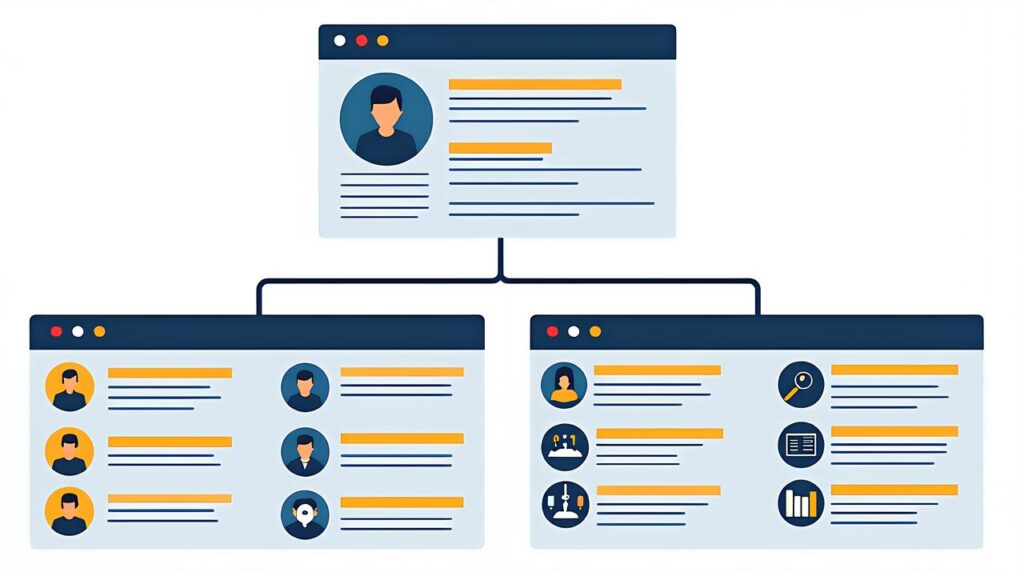
The Claude 2026 Spring Roadmap CCA for team leaders and enterprise administrators rests on three pillars: Agent Teams, Cowork, and Enterprise management features.
Agent Teams serves the role of consolidating multiple members’ work. By giving the lead agent a project manager-like role and having specialist agents assist each member’s work, you can get an overview of the entire team’s progress.
Cowork Desktop enables organizational deployment when combined with Enterprise features. By leveraging user group management, custom role assignment, and department-specific feature restrictions, you can achieve productivity improvements while maintaining organizational governance.
For introducing Enterprise management features, the following sequence is recommended.
This phased deployment minimizes the organizational deployment risk of the Claude 2026 Spring Roadmap CCA.
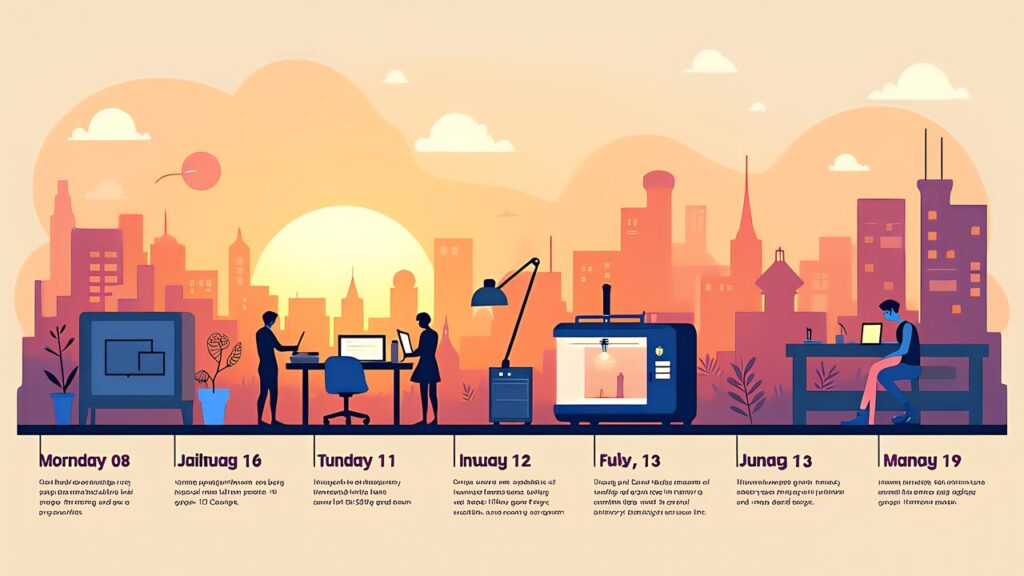
As a practical vision of the Claude 2026 Spring Roadmap CCA, let’s illustrate a day in the life of a 3D printing business operator.
Upon arriving at the office and starting the PC, Cowork Desktop notifies you of overnight processing results. The “this week’s order analysis report” submitted the previous evening is complete, with reorder rates by customer, consumption by filament, and average delivery times all listed. Cowork also shows specific next actions like “Filament A stock will run out next week, ordering recommended.”
A new order arrives via email. Cowork automatically triggers the order processing Skill upon seeing the subject line. Customer information verification, past project reference, estimate draft generation, and delivery time estimation are completed in 5 minutes. You only perform the final estimate amount confirmation and reply to the customer.
Modifying your in-house slicer auto-adjustment tool (Python script). Open the file in Claude Code and instruct “Add support for the new Bambu X2 Carbon.” Opus 4.7 analyzes the current code and presents a modification proposal adding a new model profile. Completed in 1 hour including test code.
For a new product announcement, request Claude Design to create “minimal, industrial-feel social media announcement images.” Multiple proposals are generated; you select one and make fine adjustments. Work that would take half a day manually finishes in 30 minutes.
Conduct a prototype results review for the next product using Agent Teams. The lead agent distributes tasks to designer, strength analysis, cost, and manufacturing agents. Each agent writes their perspective on the shared task list, cross-referencing to compile a comprehensive evaluation. Far faster than one person sequentially reviewing four perspectives.
Pass 10 prototype photos to Subagents, evaluating each photo’s quality independently. Surface finish, dimensional accuracy, support material residue, and more are checked in parallel. Evaluations for all 10 photos are ready in minutes.
Before leaving, request Cowork to “prepare this week’s financial summary and next week’s task list by tomorrow morning.” Cowork references accounting data and calendar, preparing materials overnight.
In this day’s flow, all 6 features naturally combine. The true value of the Claude 2026 Spring Roadmap CCA only becomes apparent when reaching this level of integrated operation.

Claude Certified Associate (CCA) Foundations is a certification program that systematically validates foundational knowledge of the Claude ecosystem. Combined with the CCA preparation article series covered in this series from March-April 2026 (CCA Foundations Exam Complete Guide 2026), systematic learning is possible.
The CCA Foundations Domain structure consists of 4 areas.
The 6 features covered in this series correspond to each Domain as follows.
| Feature | Corresponding Domain |
|---|---|
| Opus 4.7 | Domain 2 (Prompt Design, Model Selection) |
| Claude Design | Domain 2 (Prompt Application) |
| Claude Code | Domain 3 (CLI Configuration Overall) |
| Agent Skills | Domain 3 (Skills Design) |
| Agent Teams / Subagents | Domain 1 (Agent Design) |
| Claude Cowork | Domain 4 (Operational Governance, Security) |
The recommended learning path for passing CCA Foundations is:
After passing, the path to Claude Certified Professional (CCP) higher certification also opens. With Advanced certification announcements expected in late 2026, early Foundations acquisition is advantageous.

After completing the Claude 2026 Spring Roadmap CCA learning, let’s outline the outlook toward late 2026.
First, refinement of multi-agent systems. More advanced patterns such as nested operations of Agent Teams and Subagents, dynamic agent generation, and inter-agent transaction processing are expected to enter practical use.
Second, expansion of on-device execution. Options for running some Claude functions locally will expand for privacy-focused operations. This is particularly beneficial for handling sensitive data like 3D printing business design files.
Third, enrichment of industry-specific Skills. Through the Anthropic Marketplace, publicly available Skills optimized for industries like manufacturing, healthcare, legal, and education will increase. Operations combining existing Skills rather than building from scratch may become mainstream.
Fourth, formalization of CCP (Claude Certified Professional) higher certification. Upper-level certifications by job function (Engineer/Designer/PM) are expected to be positioned above Foundations, establishing a structured certification system.

Here are 3 project proposals to solidify the knowledge from the Claude 2026 Spring Roadmap CCA through practice.
Select one of your daily tasks (e.g., weekly report creation, invoice issuance, social media posting) and fully automate it with Cowork Desktop. Duration: 2-4 weeks. Goal: reaching a state where “the only manual step is final approval.”
Operate one collaborative project using Agent Teams in a small team of 5 or fewer. Design the lead agent as the team leader’s assistant, assigning specialist agents to each member. Duration: 1-2 months. Goal: improved project progress visibility and reduced meeting time.
Convert your industry’s specialized knowledge into Skills and organize them in a form shareable by individuals or teams. For 3D printing businesses, create a set of print failure analysis Skills, material selection Skills, and BOM generation Skills. Duration: 2-3 months. Goal: knowledge asset creation within the industry, and potentially posting to the public Skills marketplace.

After completing the Claude 2026 Spring Roadmap CCA, learning directions broadly divide into three paths.
Advance into multi-agent sophistication, MCP (Model Context Protocol) integration, and custom tool development. Centers on deep technical learning for developers. Reference: regular subscription to Anthropic’s official Engineering Blog.
Redesign your company’s operations centered on Cowork. Extends to AI-driven business processes, organizational restructuring, and talent development reform. A direction suited for executives and managers.
Climb the certification ladder from CCA Foundations → CCP → Advanced. Effective for career visibility and building external credibility. Regularly check Claude official certification program information.
All routes start from the integrated understanding of the 6 features cultivated in this series. The Claude 2026 Spring Roadmap CCA is not an endpoint, but the beginning of the next journey.

The 6 features of the Claude 2026 Spring Roadmap CCA have different effective combinations depending on the industry. Let’s organize optimal solutions for major industries.
The core is Claude Code + Agent Skills + Agent Teams. Set up .claude/skills/ for each project, standardizing coding convention check Skills, test generation Skills, and pre-deployment verification Skills. Use Agent Teams for complex feature implementation, with parallel development using a 4-specialist-agent configuration of frontend, backend, testing, and DB.
The core is Cowork + Agent Skills + Claude Design. Automate order processing, inventory analysis, and customer response with Cowork, and streamline specialized tasks with industry-specific Skills (failure analysis, BOM generation, specification verification). Leverage Claude Design for product catalog and marketing material generation. Agent Teams are partially utilized for design reviews on large projects.
The core is Cowork + Agent Skills + Agent Teams. Information gathering, document creation, and report preparation are handled by Cowork. Establish case law search Skills, contract check Skills, and industry analysis Skills to streamline repetitive tasks. For complex cases, multiple specialist agents (legal, tax, finance, etc.) coordinate with Agent Teams. Due to confidentiality priority, strictly operate local execution options and audit logs.
The core is Claude Design + Cowork + Agent Skills. Generate initial concepts from client briefs with Claude Design, with version management and client communication handled by Cowork. Establish brand guideline compliance check Skills, delivery check Skills, and social media post optimization Skills.
The core is Claude Cowork + Agent Skills + Claude Design. Cowork handles teaching material creation, student progress management, and individual tutoring material creation. Establish difficulty-graded problem generation Skills, feedback creation Skills, and progress report Skills. Leverage Claude Design for visual teaching material generation.
The core is Cowork + Agent Skills + Claude Design. Cowork handles product description generation, price research, review analysis, and inventory management. Establish category-specific description Skills, customer segment analysis Skills, and social media post generation Skills. Leverage Claude Design for product image variation generation.
Organizations that fail to adopt the Claude 2026 Spring Roadmap CCA share common patterns. Knowing them in advance makes them easier to avoid.
Simultaneously introducing all 6 features causes learning costs to explode, leading to team indigestion. The common failure is half-heartedly dabbling in all features, mastering none, and reverting to pre-adoption workflows after six months.
The avoidance strategy is introducing features one at a time, progressively. First month: Cowork only. Next month: add Agent Skills. The following month: Agent Teams. Building success experiences with each feature before moving to the next dramatically improves adoption rates.
The failure of trying to write “perfect” Skills and agent definitions, never escaping the design phase. Endlessly searching for theoretical optimal solutions before deploying to production.
The avoidance strategy is the attitude of “start operating at 70% quality and improve while using.” Initial Skills can be imperfect. Once you start using them in actual work, areas for improvement become clearly visible. Through iterative improvement, you arrive at practical designs that theory alone could never reach.
Simply replacing existing inefficient workflows with AI yields limited results. AI just executes inefficient tasks faster — no fundamental improvement occurs.
The avoidance strategy is viewing AI adoption as an opportunity to review business processes. Question whether “this task is really necessary” and whether “the same results could be achieved with simpler procedures,” then redesign the work itself. AI is introduced as the execution platform for that new process.
Initially prioritizing security during deployment, but cutting corners as operations stabilize, leading to incidents where confidential information is unintentionally sent to external APIs.
The avoidance strategy is embedding security design into operational processes. Always conduct security reviews when adding new Skills, check audit logs weekly, and perform quarterly permission audits — systematize these as regular operations.
Even if deployment progresses at the field level, it won’t last without management understanding and commitment. Many cases see deployment projects halted due to budget cuts, policy changes, or organizational restructuring.
The avoidance strategy is involving management from the early stages of deployment. Regularly share ROI analysis, risk assessments, and success stories to convince management that it’s “the right investment decision.” Present effect measurement results in numbers and continuously provide justification for continued investment.
In the context of the Claude 2026 Spring Roadmap CCA, let’s also organize comparisons with other AI platforms. This is not a simple superiority comparison, but material for right-tool-for-the-job decisions.
Strengths include broad third-party integration and brand recognition. Claude differentiates through code generation, long-text comprehension, and safety design. Organizations using both are increasing, with use-case-based selection being practical.
Strengths include deep Google Workspace integration and search connectivity. Claude Cowork’s Google Workspace integration is advancing, but can’t match Google’s native integration feel. On the other hand, Claude has the advantage in agent design flexibility.
Strengths include complete integration with the Microsoft 365 ecosystem. If a company’s IT infrastructure is Microsoft-centric, Copilot becomes the first choice. Claude is practically used complementarily for deep automation of specific tasks.
Strengths include fully on-premises operation and low cost. Open source models suit operations with extremely high confidentiality or those needing high-volume inference. Claude can be differentiated for tasks requiring high-quality judgment.
In conclusion, the Claude 2026 Spring Roadmap CCA should be viewed not from the premise of “covering all operations alone,” but from the realistic perspective of “building an optimal business foundation by combining with other tools.”
Community participation is effective for accelerating learning of the Claude 2026 Spring Roadmap CCA.
Official resources include the Anthropic Discord (official community), GitHub Discussions, and the Anthropic Academy learner community. They provide answers to practical questions, exchange of latest information, and sharing of best practices.
Contributing to the Skills Marketplace (gradually expanding) offers opportunities to share your Skills within the industry. Outstanding Skills are refined through feedback from other users, and learning is accelerated through publication.
Sharing Claude usage cases in industry-specific communities (3D printing, developers, designers, legal, etc.) is also highly valuable. Concrete success and failure examples within the same industry serve as the best learning materials for considering applications to your own business.
The Japanese community is also growing. Claude usage articles are continuously posted on X (formerly Twitter), Qiita, and Zenn. Opinion exchange is possible on challenges unique to domestic businesses (Japanese language-specific handling, adaptation to Japanese business customs, etc.).
To effectively advance the Claude 2026 Spring Roadmap CCA, here are action plans based on the learner’s current level.
In the first month, get accustomed to basic chat functionality with a Claude Pro plan. Grasp the feel of dialogue with Claude through low-risk uses like daily consultations, document draft creation, and email text refinement. Advanced features are unnecessary at this stage.
In the second month, install Claude Code CLI and create 3-5 simple custom commands in .claude/commands/. Even without coding tasks, custom commands for document management and information gathering are effective.
In the third month, install Claude Desktop and challenge automating one business task with Cowork. Don’t fear failure — the attitude of just trying it first is important.
It’s time to start serious Agent Skills operation. Convert 5-10 repetitive tasks into Skills and create a system where over half of daily tasks are processed through Skills.
Try Subagents. Experience the effectiveness of parallel processing for independent tasks (reviewing multiple files, researching from multiple sources, etc.).
Begin CCA Foundations exam preparation. Combine this series’ 6 articles with Anthropic Academy and CCA preparation article groups to comprehensively study all 4 Domains.
Operate complex projects with Agent Teams. Set up lead agent + specialist agent configurations for full-scale projects spanning frontend, backend, testing, DB, design, and more.
Lead organizational deployment. Take on the role of propagating your learned Claude utilization methods to teams and departments. Aim for organizational contributions like posting to the Skills Marketplace, hosting internal study sessions, and establishing operational rules.
Begin preparing for CCP higher certification (scheduled for late 2026 release). As Advanced certifications are expected to be optimized by job function, choose the certification matching your career direction.
Focus on ROI analysis and organizational design rather than technical details. Quantitatively estimate deployment scale, investment amount, and expected effects to prepare material for management decisions.
Consider redesigning entire business processes. AI adoption is not mere tool adoption but an opportunity for business reform. Have the perspective of redesigning to AI-native new processes rather than simply AI-ifying legacy processes.
Establish a governance framework. Document and continuously improve security policies, audit log operations, educational frameworks, and incident response processes. Leverage Enterprise plan management features to expand adoption while maintaining organizational control.
Understanding the full picture of the Claude 2026 Spring Roadmap CCA requires considering the broader AI platform market movements.
As of spring 2026, the AI platform market consists of four major forces — OpenAI, Anthropic, Google, and Microsoft — plus the open source camp (Meta Llama, etc.). Anthropic/Claude differentiates through “safety, high-quality reasoning, and agent design flexibility.”
From an enterprise adoption perspective, Microsoft Copilot is widely adopted in Microsoft 365-centric IT infrastructures, while Google Gemini tends to be adopted in Google Workspace-centric organizations. Claude excels in deep automation of specific tasks, agent design, and developer CLI, with increasing patterns of co-use alongside Microsoft/Google ecosystems.
In the Japanese market, adoption of Claude Pro / Claude Max progressed significantly from 2025 to 2026. Enterprise adoption by domestic companies is also gradually expanding, with early cases emerging in finance, manufacturing, and IT sectors. Further enhancement of Japanese UI and support systems is expected from late 2026 onward.
Among individual creators and developers, development workflows centered on Claude Code are becoming established. Claude usage cases are posted daily on GitHub, Discord, Qiita, and Zenn, with active community-driven knowledge sharing.
Learning the Claude 2026 Spring Roadmap CCA requires understanding these broader ecosystem movements to determine your own position and learning direction.
Let’s reflect on the significance of completing all 7 articles in this series.
For learning individual features, official documentation and standalone articles are sufficient. However, the perspective of “using 6 features as an integrated workflow” is difficult to gain from individual sources. The value of a series lies in learning multiple features consecutively and internalizing their interrelationships.
Additionally, organizing knowledge at the temporal milestone of spring 2026 enables instant judgment of “where new features from late 2026 onward fit in the existing framework.” This greatly improves the efficiency of continuous information gathering.
From the perspective of business application, the 3D printing business examples covered in this series may appear industry-specific, but the business process design thinking is applicable regardless of industry. Translating to your own industry advances the concretization of deployment plans.
Learning the Claude 2026 Spring Roadmap CCA is not mere skill acquisition, but gaining the perspective of a “business designer for the AI era.” This perspective directly connects to career development over the coming years.
Surveying the Claude 2026 Spring Roadmap CCA reveals the magnitude of changes Anthropic achieved in this half year. Model performance improvement (Opus 4.7), visual domain expansion (Design), development platform establishment (Code), reusable unit establishment (Skills), coordination pattern establishment (Teams/Subagents), and business integration realization (Cowork) — these connect along a single axis, forming the Claude ecosystem as of spring 2026.
Learning individual features alone leaves you with fragmented knowledge. By following the integrated workflow, role-specific roadmaps, a day in the life of a 3D printing business, and the path to CCA certification presented in this article, Claude transforms from “a convenient AI tool” to “core business infrastructure.”
The previous Claude Cowork Practical Guide 2026 covered Desktop version utilization, and connecting it with the foundational model understanding from the series’ first day, Claude Opus 4.7 Benchmark and Migration Guide 2026, completes the spring 2026 learning journey. For CCA Foundations preparation, refer to CCA Foundations Exam Complete Guide 2026, and for foundational learning reinforcement, also reference Anthropic Academy Complete Guide 2026.
Anthropic has planned continuous feature expansion for late 2026 as well. The integrated perspective gained from this series becomes the foundation for instantly judging whether to “incorporate new features into existing workflows” as they appear. Official documentation is continuously updated at docs.anthropic.com, so we strongly recommend developing the habit of checking for new information monthly. Today marks the completion of the Claude 2026 Spring Roadmap CCA learning, but the journey of redesigning your work together with Claude truly begins here.