AI 3D Print Workspace Setup: Build Your Home Fab Lab
swiftwand swiftwand.ai
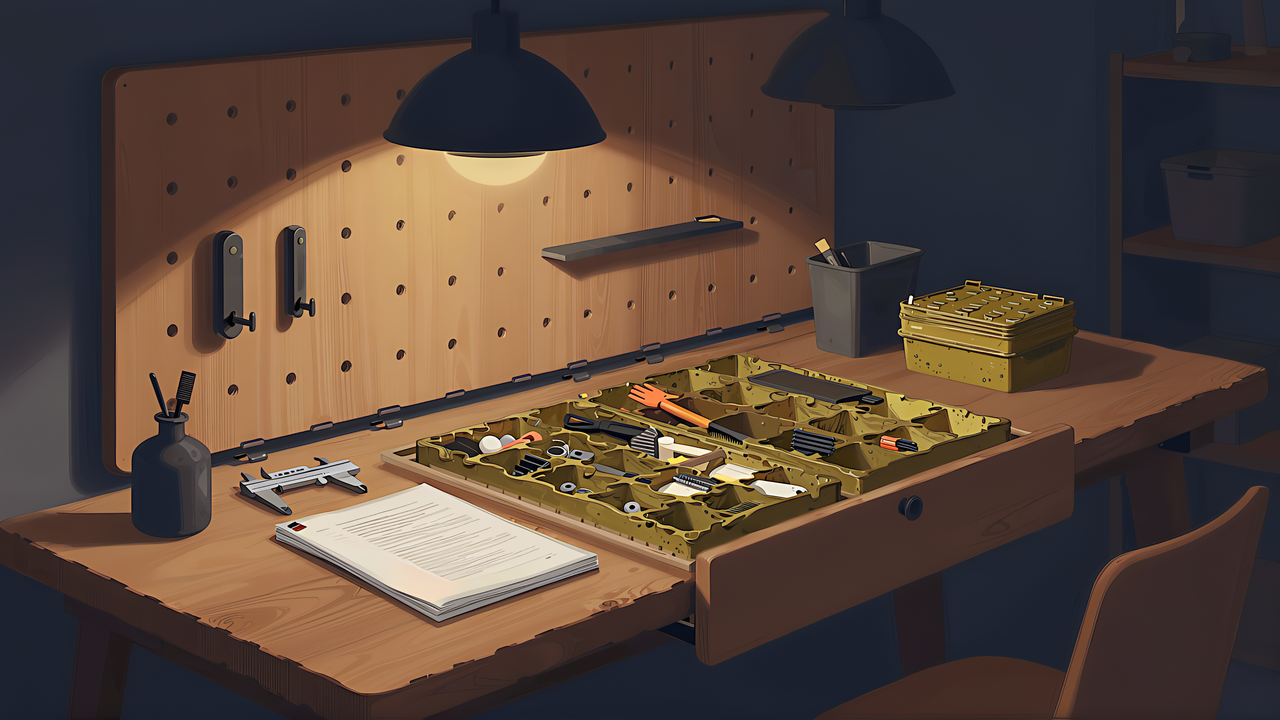
Every time you open the toolbox, a hex key rolls out. The screws you carefully sorted into separate bags have somehow ended up in the same bag. You buy a divider tray and it does not match the length of the tools you actually own, so half of it sits empty and takes up the shelf anyway. 3D printed storage is appealing because it solves the mismatch on the box side rather than the tool side.
This article contains affiliate links. As an Amazon Associate, we earn from qualifying purchases.
There is one thing to settle before you start printing, though, and it is not the shape of the box. It is which standard you commit to. Storage is never a one-off. If the first one works you will make a second, and six months later you will have dozens. If the later boxes do not interlock with the first, all you have done is accumulate containers of different sizes.
And when people compare standards, there is one column most write-ups leave for the last line: the license. The three major grid standards all look identical in that they are free to download, yet what you are permitted to do with them differs completely. That is where this article starts.
Here is the conclusion first. The table below reflects the terms each standard publishes, checked on 2026-08-26.
| Standard | License | Personal use | Redistributing the original files | Selling printed items |
|---|---|---|---|---|
| Gridfinity | MIT (per the creator announcement) | Yes | Yes | Yes |
| openGrid | CC BY 4.0 | Yes | Yes (attribution required) | Yes (attribution required) |
| MultiBuild (rebranded from Multiboard) | Custom license | Yes (non-commercial only) | No | Paid subscription required |
Same word, different terms from the third column onward. MIT is close to permission for anything as long as you keep the license text and copyright notice. CC BY 4.0 is generous but attaches attribution as an obligation. MultiBuild is free for an individual printing parts for personal use, and everything beyond that carries conditions.
None of this is visible to someone printing a single bin for a hobby. It becomes visible the moment you try to hand copies to a friend, or list something on a marketplace. Switching standards at that point means every box you have already printed no longer fits. So you read it first.
Whatever the project, a reliable spool of PLA+ is the material most of these prints will actually run on.

 ポチップ
ポチップBefore the licenses, sort the standards by the plane they were designed for. Horizontal surfaces and vertical surfaces are different problems, and no standard is good at both.
| Standard | Grid | Surface | Board thickness |
|---|---|---|---|
| Gridfinity | 42 x 42 mm | Drawers and desktops | Baseplate, varies by generator |
| openGrid | 28 x 28 mm | Walls and side panels | Full 6.8 mm, Lite 4 mm |
| MultiBuild | Its own board grid | Walls and side panels | Board product of the ecosystem |
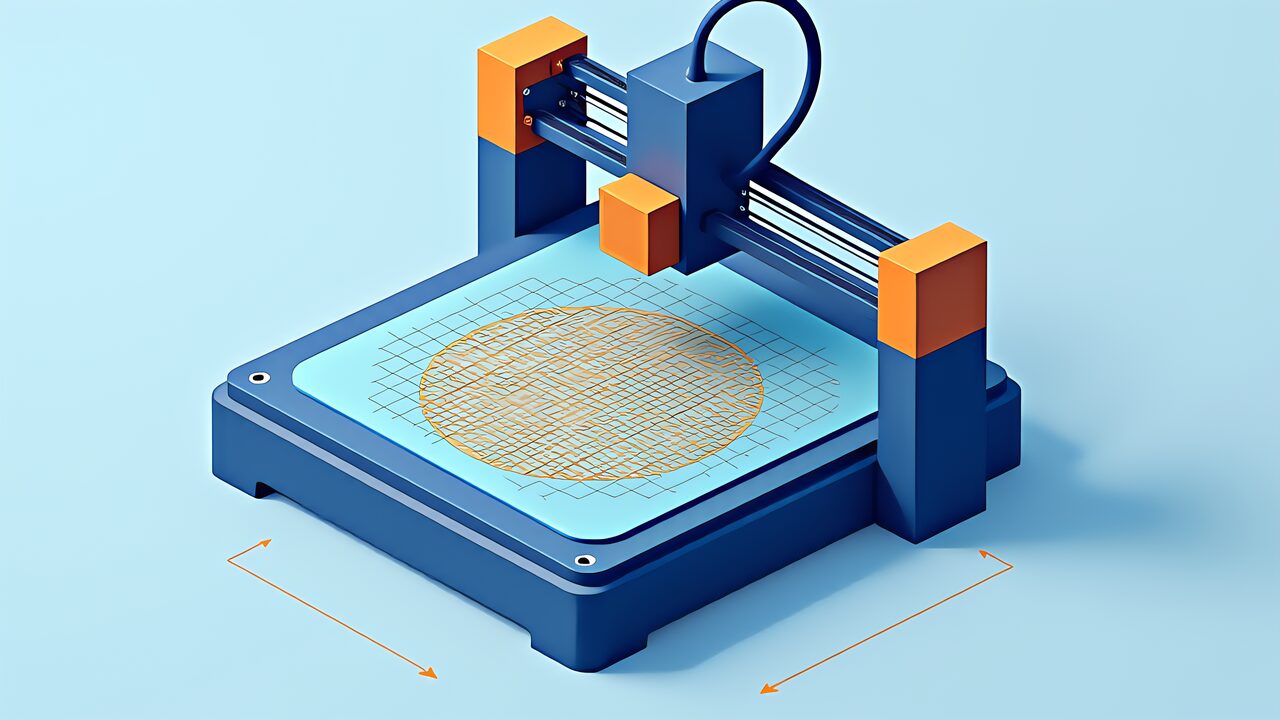
Gridfinity puts bins into a horizontal grid; the width and depth units are 42 mm slots and the height is counted in 7 mm units. openGrid is built around a 28 mm grid and publishes two board thicknesses, a Full board at 6.8 mm for heavy-duty use and a Lite board at 4 mm for light loads and confined spaces. If you are filling a drawer, the wall standards do not help you, and the reverse holds too.
There is a second axis that matters as much as freedom, and it is documentation. Gridfinity is the most permissive of the three and yet has no official specification maintained by its creator. The dimensions people rely on are a de-facto standard shared by distributed files and community implementations, written up in an unofficial wiki and a community-authored spec. openGrid is the opposite: it publishes a documentation site with printing guidance, board guides, and snap guides. MultiBuild has the most conditions and also the most complete legal text.
One more thing that resists tabulation but decides outcomes: how much data exists for a standard. A grid is only a container. What actually saves you time is the individual model for the specific tool you own. Standards that have been around longer, with fewer restrictions, accumulate more community work, so the odds of finding what you need are better.
This is the point most easily missed. A standard being free to use and the tool that produces parts for it being free to use are entirely separate questions.
Here are four Gridfinity bin generators with the license each one publishes.
| Tool | Kind | License |
|---|---|---|
| gridfinity-rebuilt-openscad (kennetek) | OpenSCAD | MIT |
| gridfinity_extended_openscad (ostat) | OpenSCAD | GPL-3.0 |
| FusionGridfinityGenerator (Le0Michine) | CAD add-in | CC BY-NC-SA 4.0 |
| tracefinity | Photo to bin | MIT |
Same purpose, four different sets of terms. The CAD add-in carries a non-commercial clause even though it costs nothing to install, which means an output you generated with it is not automatically something you can sell. The listing page saying free tells you about the price, not about the permission.
A directory page showing a license field is not a substitute for reading it either. When a listing shows no license, that usually means it could not be parsed, not that no terms exist. A minute of checking here saves a rebuild after you have started selling.
The safe order is standard, then generator, then the output data. Three layers, each with its own terms. The practical side of selling models is covered in the article on copyright, design rights, and reading licenses.
Writing only about the benefits would not be fair. Committing to a grid has a price.
First, you lose dimensional freedom. Snapping to a 42 mm grid means that a 100 mm gap gets an 84 mm box, two units wide, and 16 mm is thrown away. The interior of a drawer almost never happens to be a multiple of the grid pitch.
That remainder shows up as area. For a drawer with an interior of 380 x 280 mm, a 42 mm grid fits nine columns along the long side, 378 mm, and six along the short side, 252 mm, leaving a 28 mm strip. In area terms, roughly one tenth of the drawer floor falls outside the grid. What you do with that strip decides whether the result looks deliberate. Forcing a custom shape into it throws away the benefit of the standard, so it is easier to leave it open for long thin items, or accept one non-conforming tray and move on.
Second, you have to print the foundation first. Bins alone do nothing; they need a baseplate underneath or a board on the wall. That first investment scales with area, in both time and filament.
Third, the box itself occupies volume. Wall thickness and the grid rim mean the usable interior is smaller than the exterior. For large quantities of small parts, that loss adds up.
The reason to commit anyway is that compatibility pays off over time. When you acquire a new tool a year from now, it drops into the existing grid. The cost is paid once at the start and the benefit continues, which is an asymmetry worth having. The inverse also holds: if you know for certain you are making exactly one box, a purpose-built box wastes less. The same reasoning appears in the reverse guide to designing functional parts.
This is where the differences stop being academic. The MultiBuild license states that personal use is free, that you may not share or redistribute copies of the original designs, that selling printed works requires a commercial subscription with total sales not exceeding 50,000 USD per annum, and that the license can be withdrawn or cancelled at any time. It also states that sharing a remixed design grants the rights holder a non-exclusive, royalty-free, sub-licensable, worldwide and irrevocable license to use and modify that remix.
None of that is hidden. It is written plainly in the published license, which is more than can be said for standards whose terms live in a video description. But it is a contract shape that people step into without noticing, particularly the irrevocable grant on derivatives. If you intend to publish modified versions, read that clause before you publish, not after.
For CC BY 4.0, the obligation is attribution, and the practical question is where you put it. If you distribute data, it goes in the description; if you sell prints, it goes on the product page. It looks like a chore and takes one line.
The mechanics of selling data are covered in the article on selling STL data. None of this is legal advice. If the amounts grow, or this becomes an ongoing business, that is the point to take the actual text to a professional.
Taking on paid work means throughput, and a larger enclosed machine is usually the first bottleneck to clear.
 ポチップ
ポチップIf all three answers are no, honestly, any of them will serve. Filling your own drawer is a case where the differences never surface, so pick the one with the most available community models.
The order matters because of what it costs to go back. Changing standards later means reprinting; noticing a license later means rebuilding. Both get harder the more you have printed. If you cannot decide, starting small on the most permissive standard keeps your options open.
The first decision in 3D printed storage is not the shape of the box, it is the standard. To recap:
Once the standard is fixed, the next question is how to produce bins without hunting for them, which is the parametric generator comparison. If you are starting from a wall instead, go to the wall mounting article. The whole series is indexed in the workshop reverse guide.